





If you like our site, mark us as a preferred source on Google — so you’ll see our articles more often in search!
★Mark us as a preferred sourceKoh Larn, one of the most popular and picturesque island destinations off the coast of Pattaya, Thailand, has been battling an escalating and unsustainable accumulation of municipal waste for years. Today, the crisis has reached a highly critical threshold, with the island’s accumulated garbage dump officially surpassing a staggering 150,000 tons. This massive environmental burden poses severe ecological, public health, and tourism-related risks for the entire region. In a definitive move to manage this escalating crisis, the Pattaya City administration has officially commissioned a new, dedicated waste management and incineration facility directly on the island. Authorities hope this significant infrastructural investment will provide a long-term, highly effective solution. This objective analysis explores the anatomy of the island’s waste emergency and the projected impacts of the newly implemented technological infrastructure.
The Anatomy of the Crisis: 50 Tons of Daily Waste and a Growing Mountain of Garbage
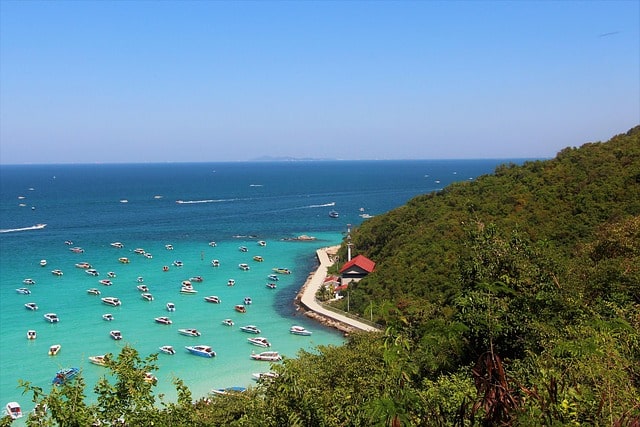
Koh Larn, frequently referred to as Coral Island, is located just a few kilometers off the bustling coast of Pattaya. Recently, it has emerged as one of the biggest beneficiaries—and simultaneous victims—of the post-pandemic resurgence in global and domestic tourism. The island welcomes thousands of international and local visitors every single day. Consequently, the logistical supply chain and the sheer volume of consumption generate a drastic and relentless environmental footprint.
According to official municipal data, Koh Larn generates approximately 30 to 50 tons of fresh Municipal Solid Waste (MSW) every single day. Because the island has a relatively small geographic footprint and highly restricted logistical capabilities, local authorities spent decades attempting to transport the daily garbage via barges back to the mainland city of Pattaya for processing. However, this maritime transport system quickly became overwhelmed. Transporting garbage by sea is an inherently expensive, weather-dependent, and sluggish process that consistently failed to keep pace with the accelerating volume of generated refuse.
The direct consequence of this severe infrastructural deficit is the massive open-air landfill located in the Khao Nom area of the island. Here, the historical backlog of unprocessed garbage has steadily grown, recently hitting the shocking milestone of 150,000 tons. This monumental mountain of waste not only physically degrades the island’s visual appeal but also carries continuous odor issues, the severe risk of groundwater contamination, and substantial public health hazards for both local residents and visiting tourists.
The Key to the Solution: The New On-Site Incinerator Facility
Recognizing that the situation had become entirely untenable, the Pattaya City Council and regional environmental authorities initiated strategic steps to construct a localized waste processing unit directly on the island. The primary objective of this new strategy was to completely eliminate the costly, inefficient, and unreliable maritime transportation of garbage, opting instead to neutralize the waste at its exact point of origin.
The tangible result of this municipal strategy is a modern waste incineration and management facility specifically engineered to eradicate the island’s localized problem. The newly constructed plant has a dual-purpose capacity: it is designed to manage the 50 tons of freshly generated daily waste while simultaneously and systematically reducing the massive 150,000-ton historical backlog. The facility’s operational mechanism relies on a high-temperature thermal destruction process. This advanced incineration method rapidly converts solid municipal waste into inert ash, drastically reducing its physical volume while safely neutralizing harmful biological materials and pathogens contained within the refuse.
Infrastructural Challenges and Strict Technological Parameters
Executing heavy industrial investments within an isolated, highly sensitive island ecosystem presents a unique set of specialized technological and logistical requirements. The construction and commissioning of the Koh Larn waste management facility required overcoming significant engineering hurdles.
First, the island suffers from severe space constraints. With minimal land available for industrial development, the facility required a highly compact architectural design that could still deliver maximum operational throughput without dominating the local landscape.
Second, strict emissions control was an absolute necessity. Because Koh Larn is a heavily marketed tourist paradise with a fragile marine and terrestrial ecosystem, preserving pristine air quality is the highest priority. Therefore, the incinerator must be equipped with advanced flue gas cleaning systems, commonly known as scrubbers. These integrated environmental safety systems are strictly required to filter out particulate matter (PM), toxic dioxins, heavy metals, and dangerous gases—such as sulfur dioxide and nitrogen oxides—before any exhaust is released into the atmosphere.
Finally, there is the challenge of energy consumption. The optimal, continuous operation of a high-temperature incinerator demands a stable and robust power supply, which can be highly volatile on an isolated island power grid.
According to official communications from the Pattaya city administration, the immediate operational priority following the facility’s launch is to achieve a “zero daily backlog”—meaning all newly generated waste is processed within 24 hours. Once daily stability is achieved, the excess processing capacity will be directed toward systematically dismantling the historic 150,000-ton mountain of garbage. Authorities acknowledge that the complete remediation of the Khao Nom dumpsite will be a lengthy, multi-year endeavor.
Economic Dependencies and Long-Term Tourism Implications
A substantial portion of Pattaya’s broader tourism revenue is directly tied to the enduring appeal of Koh Larn. Pristine beaches, such as Tawaen Beach and Samae Beach, alongside crystal-clear waters, remain the island’s primary economic engines. The 150,000-ton waste backlog represents far more than a mere aesthetic nuisance; it is a profound economic threat. Negative reviews and viral images of garbage accumulation on international travel platforms and social media networks have the potential to inflict devastating financial damage on the local hospitality industry, small businesses, and municipal tax revenues.
Consequently, the successful operation of the new waste management facility is not merely an environmental obligation, but the absolute cornerstone of the island’s economic survival. If the project operates successfully according to its planned technological parameters, and if the emission filtration systems genuinely prevent air pollution, Koh Larn could rapidly transform into a model of success. It could serve as a vital blueprint for other Southeast Asian island destinations—such as Bali or Boracay—that are currently grappling with identical waste management crises. Looking to the future, the Pattaya municipality aims to implement a comprehensive, sustainable island strategy incorporating elements of a circular economy, where aggressive waste prevention and rigorous recycling initiatives play an equally prominent role alongside incineration.
Reference and Official Source:
