




If you like our site, mark us as a preferred source on Google — so you’ll see our articles more often in search!
★Mark us as a preferred sourceOn the occasion of Africa Day 2026, leading environmental organizations, including the Global Alliance for Incinerator Alternatives (GAIA) and Break Free From Plastic (BFFP) Africa, have called on the international community for decisive and urgent action against the increasingly severe “waste colonialism” on the continent. The export of toxic and hazardous waste disguised as recycling—including plastics, electronic, and textile waste—from high-income countries has triggered an unprecedented environmental and public health crisis. Although Africa is responsible for only 5 percent of global plastic production, it has become one of the world’s main dumping grounds. Our analysis below, based on facts and recent data, outlines the unequal burden-sharing, the most affected African hotspots, the threats to the population, and the urgent policy demands essential to stop the crisis.
The Anatomy of “Waste Colonialism” and the Responsibility of Exporting States
The term “waste colonialism” refers to the global, systemic, and increasingly destructive practice wherein developed, high-income industrial states export their own generated, often toxic and non-recyclable waste to the African continent. The joint press release by GAIA and BFFP clearly points out that this process is not merely an isolated environmental problem but one of the most glaring examples of global inequality. Wealthy nations continuously enjoy the economic benefits of mass production, rapid industrial growth, and overconsumption, while passing almost the entirety of the environmental costs and pollution stemming from this unsustainable model onto developing nations.
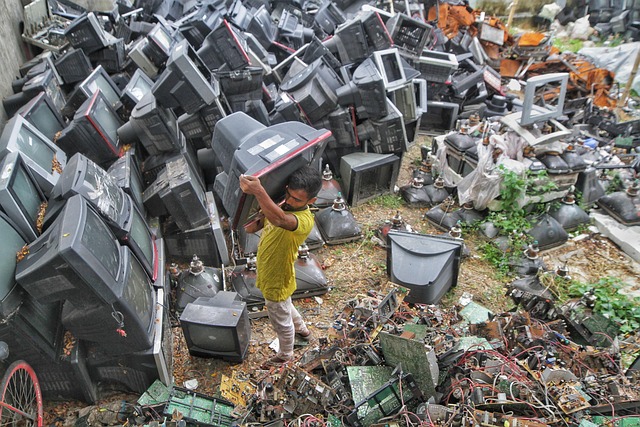
According to the organizations’ detailed analyses and published official data, developed countries such as the United States of America, Italy, Germany, and Greece routinely ship massive quantities of e-waste (electronic waste), plastic waste, textile waste, and various chemical wastes to African countries. These international transactions mostly take place under the guise of “recycling,” thereby presenting the process as legal and environmentally conscious. However, evidence clearly shows that only an extremely negligible fraction of globally produced plastic waste is actually recycled. The bulk of the shipments arriving on the continent ultimately ends up in already overburdened local ecosystems, largely unprocessed.
Telling Quantitative Data and the Main African Hotspots of the Crisis
The dramatic severity of the situation is also clearly supported by the available quantitative data included in the report. The released statistics highlight the staggering disproportion that Africa accounts for only 5 percent of global plastic production and consumes a mere 4 percent of the world’s global plastic volume. Despite this minimal contribution, the continent has become one of the biggest victims of the global waste crisis.
Due to the complete lack of adequate waste management infrastructure, approximately 90 percent of the waste generated in Africa and flowing in from abroad ultimately ends up in completely unregulated dumpsites or illegal landfills. This practice is almost always accompanied by the open burning of waste—especially plastics and cables—which causes further, irreversible environmental and climate damage in the region through the release of toxic gases.
Environmental and civil organizations have expressed grave concern over the major cities that have become the continent’s largest waste hotspots. The report specifically names Accra in Ghana, Nairobi in Kenya, and Lagos in Nigeria. In these areas, massive, illegal, and saturated dumpsites have formed, literally overwhelmed by non-biodegradable toxic plastics imported from the developed world, components of discarded electronic equipment, and thousands of tons of unsellable used clothing—i.e., secondhand textile waste. Local infrastructure is incapable of coping with this massive volume of burden from external sources.
Public Health Threat and the Burdens of Vulnerable Communities
Continuous and large-scale waste dumping not only destroys the natural environment but also threatens a direct, severe, and daily public health disaster. The statement by GAIA and BFFP Africa sharply condemned the inhumane practice that exposes the most vulnerable layers of society, impoverished local communities, to toxic substances and continuous environmental pollution. The situation is particularly alarming for informal waste pickers working in illegal and toxic dumpsites—and most tragically, children. These workers are forced to come into contact with the most dangerous chemicals daily without basic protective equipment, occupational safety, or healthcare. This exposure drastically increases the risk of fatal health conditions, respiratory diseases, and severe toxic poisoning.
In the dramatic words of the press release: “We see our environment, our communities, and our informal waste workers bearing a burden that is not theirs.” This single but highly emphatic sentence perfectly illuminates the ethical, economic, and human rights injustice of waste colonialism. It is an asymmetrical system where the beneficiaries producing profit and convenience, and the victims paying with their daily health and environment, are sharply separated both geographically and socially.
Strict Enforcement of the Bamako Convention and Protecting the Future
To eradicate the problem, rights advocacy and environmental organizations demand immediate and concrete steps from African governments and the entire international community. One of the most important, specific policy demands is the immediate tightening and enforcement of the Bamako Convention. This regional international treaty is specifically designed to legally prohibit any importation of hazardous waste into Africa. In practice, however, illegal waste imports continue to flourish today. The organizations urge African decision-makers to build strong defense lines, prevent the entry of new import shipments, and protect the continent’s ecological sovereignty.
The primary importance of prevention is also emphasized by Sirine Rached, GAIA’s Global Policy Advisor, who pointed out in her statement: “Preventing plastic waste, which begins with tackling the overproduction of plastics, is critical.” This means that the crisis cannot be solved merely by improving and modernizing waste management systems; the root of the problem, namely excessive global production, must be drastically restricted.
The organizations’ statement concludes with a firm, forward-looking, and cautionary message to world decision-makers: “Africa’s future generations must not be left to pay the price for the world’s waste. Africa is not a dumping ground.” GAIA and BFFP Africa strongly and urgently call on the entire international community to finally place global environmental justice and truly sustainable, local waste management solutions at the very top of the international political agenda, instead of continuously and unjustly shifting toxic and harmful environmental burdens onto developing countries.
References and Sources:
-
Original press release link: no-burn.org/media-release-stop-dumping-on-africa…
-
Official website of the issuing organization: Break Free From Plastic official portal
