




If you like our site, mark us as a preferred source on Google — so you’ll see our articles more often in search!
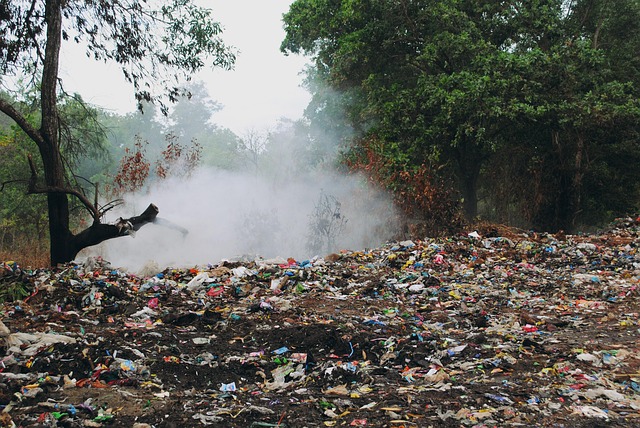
★Mark us as a preferred sourceAlbania’s waste management system is on the verge of a new era. A newly introduced government draft decision, currently open for public consultation, would fundamentally rewrite current practices for waste treatment and disposal. The proposal introduces strict restrictions on the types of materials that can end up in landfills, aiming to drastically reduce environmental pollution and align with European Union standards.
Transitioning from a Linear to a Circular Economy in Albania
The overarching goal of the new draft decision “On Waste Landfills,” developed by the Albanian Ministry of Environment, is for the country to successfully transition from a traditional, linear economic model to a more sustainable circular economy. The document establishes new, mandatory rules for the design, construction, daily operation, and final closure of landfills. A major focus is placed on the progressive reduction of waste disposal, particularly for materials that can still be recycled or reused.
Strict Ban List and Exceptions
One of the most important and stringent elements of the draft legislation is the general prohibition on depositing recyclable waste in landfills. Under the draft, the disposal of such materials will only be permitted in cases where it can be conclusively proven that the procedure provides the best possible environmental outcome.
The draft is also explicit regarding specific bans. In the future, it will be strictly prohibited to dispose of the following in landfills:
-
liquid waste,
-
infectious hospital waste,
-
used tires,
-
industrial batteries,
-
electric vehicle batteries.
Ambitious Quantitative Targets for 2045
The explanatory report attached to the proposal also sets out specific, long-term quantitative targets that are closely aligned with the objectives established by the European Union. The fundamental goal of the draft is that by 2045, only 10 percent of all generated municipal waste will be deposited in landfills. This drastic reduction in proportion underpins the country’s long-term environmental and sustainability strategy.
Financial Guarantees and a 30-Year Monitoring Obligation
The proposed measures impose significantly stricter requirements not only regarding the types of waste but also on the public and private entities operating the landfills. The draft obliges operators to provide adequate financial guarantees for the operation of the facilities and their subsequent safe closure. Furthermore, the regulation mandates continuous post-closure tracking and monitoring of landfills for at least 30 years, thereby ensuring long-term environmental safety.
Sources and References:
-
Original article: Euronews Albania: Draft Decision Introduced: Disposal of Recyclable Waste in Landfills to Be Prohibited
-
Original government reference (Public Consultation): Albanian Ministry of Environment – Projektvendimi “Per Landfillet e mbetjeve”
Consistent structure, quick answers: every article is built so that both readers and AI search tools can find the key points easily. Our content is produced with the help of AI tools and reviewed by our editor.
