
'/%3E%3C/svg%3E)




If you like our site, mark us as a preferred source on Google — so you’ll see our articles more often in search!
★Mark us as a preferred sourceIn the ongoing search for sustainable and renewable energy sources, science is paying increasing attention to the energetic upcycling of agricultural waste. A recent study published in ACS Omega, a scientific journal of the American Chemical Society, demonstrates that Date Palm Surface Fibers (DPSF)—which are available in massive quantities in the Middle East—can serve as an excellent, high-yield feedstock for bio-oil production. The thermo-kinetic and GC/MS (gas chromatography-mass spectrometry) analysis, conducted by the University of Sharjah (United Arab Emirates) and international partners, provides concrete quantitative data to support the industrial and bioenergetic potential of pyrolyzing lignocellulosic biomass.
The Date Palm as a Massive Untapped Biomass Resource
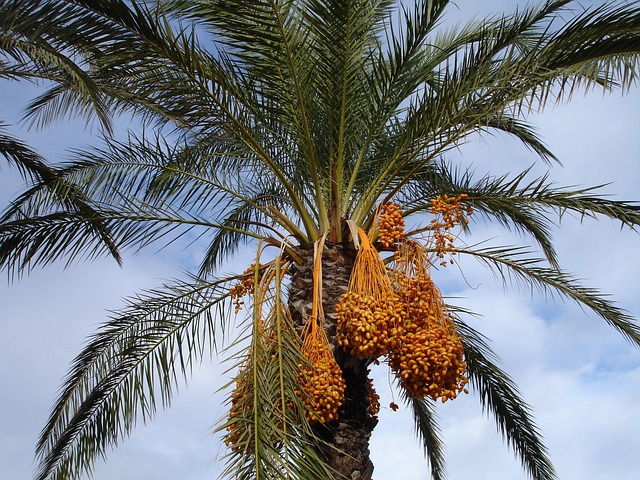
In the Middle East and North Africa (MENA) region, the date palm (Phoenix dactylifera L.) is one of the most widespread agricultural crops. The research highlights that the United Arab Emirates alone is home to approximately 42 million date palm trees. On plantations, these trees generate significant amounts of agricultural waste, primarily in the form of Date Palm Surface Fibers (DPSF).
Because these fibers are lignocellulosic materials by nature (meaning they contain cellulose, hemicellulose, and lignin), they possess tremendous potential for bioenergetic utilization. The research team’s goal was to convert this waste—which is currently mostly burned or banished to landfills—into valuable bio-oil through a thermal process known as pyrolysis, thereby establishing the physical and chemical foundations for a low-carbon, sustainable energy source.
The Pyrolysis Process and Laboratory Preparations
During the examined experiment, surface fibers were collected from palm trees located on the University of Sharjah campus. To remove impurities and dust, the samples were cleaned with compressed air and then ground using laboratory ultra-centrifugal mills to an extremely fine particle size of 120 micrometers (μm).
The researchers investigated the thermal decomposition (pyrolysis) in a horizontal quartz tube flow reactor within a temperature range of 20 to 400 °C, utilizing a heating rate of 40 °C/min. The essence of this thermochemical process is that the biomass is heated in an oxygen-free, inert environment (the experiment used nitrogen gas with a flow rate of 60 mL/min). Because of the lack of oxygen, the material does not burn; instead, it decomposes into gases and a valuable, condensable liquid known as bio-oil.
Qualitative Composition of the Bio-Oil (GC/MS Analysis)
The most crucial quantitative results of the research were provided by the gas chromatography and mass spectrometry (GC/MS) qualitative analysis of the condensed bio-oil. Based on the normalized peak area percentages, the bio-oil derived from date palm fibers consists of highly valuable industrial compounds. The fraction ratios were distributed as follows:
-
Aliphatic compounds: 42.28%
-
Aromatic compounds: 38.68%
-
Furans and other oxygenates: 13.47%
The high aromatic content is of paramount importance for fuel manufacturing. The analysis revealed that the main components of the aromatic compounds were benzene (10.54%) and toluene (10.94%), while among the furans, furfural (6.735%) was dominant. The authors of the study emphasize that this rich aromatic composition not only enables direct biofuel applications but is also ideal for the targeted chemical extraction of BTX (benzene, toluene, xylene) and phenolic compounds.
Thermo-Kinetic Modeling and Activation Energy (Ea)
In addition to the bio-oil composition, the kinetics of thermal decomposition were examined in detail using thermogravimetric analysis (TGA) at heating rates of 10, 20, 30, and 40 °C/min. The scientists applied three different model-free approaches (Ozawa-Flynn-Wall – OFW, Kissinger-Akahira-Sunose – KAS, and Starink – STK) to calculate the activation energy.
Within the conversion range of 0.2 to 0.8—which represents the active pyrolysis stage—the activation energy (Ea) values moved closely together: the OFW model showed 154.52 kJ/mol, the KAS model 152.40 kJ/mol, and the STK model 152.37 kJ/mol. These energetic data points are essential for maximizing the efficiency of future industrial-scale reactors, as they map the precise fragmentation behavior of plant cellulose, hemicellulose, and lignin.
Promising Past Yields and Heating Values
Alongside its own results, the article also references other relevant experiments examining date palm waste (such as seeds or pits), which verify the economic viability of the technology. In a referenced study, the pyrolysis of date palm seeds in a fixed-bed reactor at a temperature of 500 °C and a runtime of 120 minutes resulted in exactly a 50 weight percent (wt%) bio-oil yield. The heating value of this oil reached 28.63 MJ/kg, which is an excellent value for traditional raw biomass. Other analyses utilizing fluidized bed reactors under optimized conditions (500 °C, 30-minute residence time) were able to achieve yields of up to 68 weight percent.
Summary
The publication, authored by Abrar Inayat and international fellow researchers, and built on verified data, unquestioningly proves that date palm surface fibers can no longer be viewed merely as agricultural waste destined for the landfill. The bio-oil extractable via pyrolysis, rich in valuable aliphatic and aromatic compounds, offers a highly promising, sustainable alternative with a low carbon footprint compared to fossil fuels in the future energy sector.
Reference and Official Source:
-
Original scientific publication (ACS Omega): Bio-Oil Production from Date Palm Surface Fibers: Thermo-Kinetic and Pyrolysis GC/MS Analysis
Consistent structure, quick answers: every article is built so that both readers and AI search tools can find the key points easily. Our content is produced with the help of AI tools and reviewed by our editor.
