


If you like our site, mark us as a preferred source on Google — so you’ll see our articles more often in search!
★Mark us as a preferred sourceWith every single wash, millions of invisible plastic particles enter the drains, and from there into oceans and drinking water reservoirs. To curb the worsening global pollution, European developers, including a Bristol-based startup, have come up with innovative filter devices. The technology is already available, and the focus is increasingly shifting toward legal regulation: in the future, the installation of these filters in household appliances could become mandatory across the European Union.
Garments made from synthetic materials—such as polyester, nylon, or acrylic—make up about 60 percent of everyday wardrobes. Due to the friction and turbulence that occur during the cleaning of textiles, fibers break off and leave the machine along with the wash water. The research and available data are staggering: approximately 35 percent of microplastic pollution in the oceans comes directly from household washing machines.
In quantitative terms, a single average 5-6 kilogram wash cycle can release at least 700,000, but up to 12-17 million microplastic fibers into the wastewater. This represents about 1 gram of plastic per wash. Although this amount may seem small on its own, it poses a massive burden at the macro level: in the United Kingdom alone, nearly 18 tonnes of textile fibers enter the drains daily, which reaches 6,000 to 87,000 tonnes annually.
How Do the New Generation Filters Work?
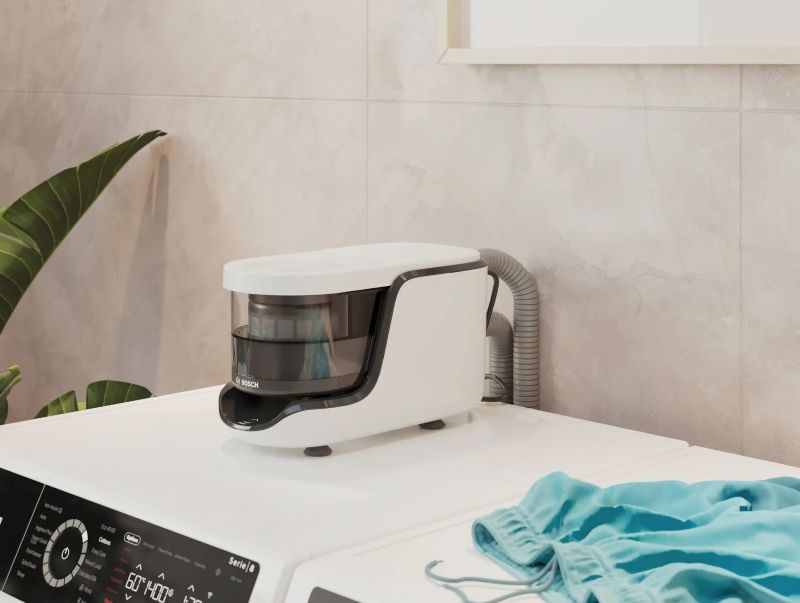
To physically address the problem, one of the pioneers is a Bristol-based company (Matter), which has developed a microplastic filter that cleans the water leaving the washing machine before it reaches the sewer. Unlike traditional, easily clogged fine mesh filters, the latest technologies (such as “Gulp” and the industrial-use Regen) can capture 90-97 percent of microfibers. Modern devices also feature a self-cleaning function, which prevents the mesh from clogging and ensures the continuous flow of wastewater.
Another important aspect of the filters’ efficiency is the afterlife of the captured plastic. Proper systems collect the microplastics as a tightly compressed material, which users can return. Thus, through chemical or physical recycling, the waste can become raw material for new textiles or other products, instead of ending up in a landfill.
Planned Future Obligations in Europe
Currently, the installation of filter devices largely depends on the voluntary decision of environmentally conscious consumers, connected to machines as external accessories. However, the legislative process has already begun in the European Union that would make their integration mandatory. A white paper recently submitted to the EU explicitly advocates for mandating washing machine filters as the only immediately viable, short-term solution against microfiber pollution of waters.
The pioneer of regulation is France, which was the first in the world to enact such a requirement into law: according to the legislation, from January 1, 2025, every newly marketed washing machine must be equipped with a built-in microplastic filter. This step could set a precedent for introducing a comprehensive, EU-wide mandate in the near future.
References and Source Links:
-
Original report reference: Euronews – Microplastic filters for washing machines could soon be mandatory in the EU


