


If you like our site, mark us as a preferred source on Google — so you’ll see our articles more often in search!
★Mark us as a preferred sourceResearchers at ETH Zurich in Switzerland have found an innovative, circular solution to the dual problems of global warming and food waste. Using protein-rich byproducts from the dairy and tofu industries—which have largely been destined for disposal until now—they developed special, porous beads capable of extracting atmospheric carbon dioxide (CO2) at room temperature. The process, published in the scientific journal PNAS, is significantly more efficient than traditional, energy-intensive technologies. Furthermore, the used beads can be repurposed as fertilizer or biofuel at the end of their lifecycle.
The Hidden Link Between Climate Change and Food Waste
The latest IPCC (Intergovernmental Panel on Climate Change) assessment makes it clear that keeping global warming below 1.5 degrees Celsius requires more than just reducing emissions; the active removal of hundreds of billions of tons of carbon dioxide already in the atmosphere is also necessary. Meanwhile, human-induced greenhouse gas (GHG) emissions reached 53.0 gigatons (Gt) of CO2 equivalent in 2023. Food production accounts for nearly one-third of this. Based on 2017 data, food loss and waste alone accounted for nearly 9.3 Gt of CO2 equivalent emissions.
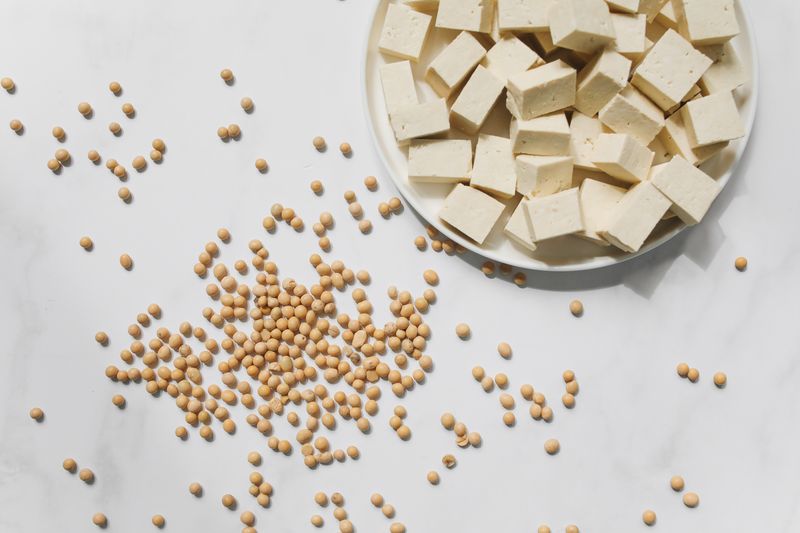
The dairy industry produces around 145 million tons of whey annually, of which only 54% is utilized. Concurrently, tofu production generates 14 million tons of soybean pulp (okara) and enormous amounts of wastewater. These waste streams contain 10–30% protein by mass in their dry matter. The loss of this protein causes a hidden environmental burden of 15–750 kg CO2 equivalent per kilogram due to upstream processes (such as animal farming).
Limitations of Traditional CO2 Capture Technologies
Direct Air Capture (DAC) is crucial in the fight against climate change. However, existing methods—such as technologies based on metal-organic frameworks (MOFs) and amine-based compounds—are extremely costly and energy-intensive. The biggest challenge is regeneration, or the separation of the captured carbon dioxide: for most systems, this requires heating the absorbent material to 80–120 degrees Celsius. In addition to significantly increasing operational costs, this leads to the chemical degradation of the materials and the formation of hazardous byproducts (e.g., amine degradation) in ambient air, which has an average CO2 concentration of 420 ppm (parts per million).
Swiss Innovation: Nanostructured Carbon Trap from Waste
Materials scientist Raffaele Mezzenga and his colleagues at ETH Zurich—including lead researcher Zhou Dong—took a completely new approach. Instead of designing synthetic, toxic materials, they utilized whey protein isolate (WPI) and soy protein isolate (SPI) generated during the production of dairy products (yogurt, cheese) and tofu. The extracted proteins were transformed into long, thread-like structures called amyloid fibrils (AF) through heat treatment (90 °C) in an acidic medium (pH 2).
Precise, atomic-level analysis revealed that neighboring glutamine (Gln-13) and lysine (Lys-14) amino acid pairs, as well as independent Lys-8 amino acids within the fibrils, create specific binding pockets. These protein fibers were combined with potassium hydroxide (KOH) and then freeze-dried to form porous beads measuring 0.5–1 centimeter in diameter. The hydroxyl groups introduced during the alkaline treatment and the amino acids provide abundant active binding sites: as air flows through, the potassium hydroxide reacts with the carbon dioxide, locking it into a stable salt structure as bicarbonate.
Quantitative Data and Outstanding Absorption Performance
During tests with real ambient air, the capacity of the protein-based beads reached 2.20 mmol/g, meaning that 1 gram of material captured 97 milligrams of carbon dioxide. In simulated (oxygen-free) air, this performance was even higher, at 2.51 mmol/g. This value exceeds the efficiency of most traditional DAC absorbents by 10–50 percent. Based on the research team’s calculations, just 1 kilogram of beads can theoretically remove 100 grams of carbon dioxide from the air in a single operational cycle.
Athermal Regeneration: A Breakthrough in Energy Efficiency
The most revolutionary innovation of the technology is that the separation of CO2 and the regeneration of the beads happen completely without heat (athermally). The researchers drew inspiration from the dynamic pH balance of the oceans, the Earth’s largest carbon sink. Instead of energy-intensive heating, the beads are alternately sprayed with dilute, mildly acidic, and alkaline vapor (mist) at room temperature for just 10–12 minutes.
This delicate chemical process breaks the chemical bonds holding the carbon dioxide without any thermal impact. The acid and base used can be fully recycled in the next cycle. Tests clearly demonstrated that the material showed no significant performance degradation even after 30 complete capture and release cycles. Mezzenga estimates that the beads would only need actual replacement after several thousand cycles.
Complete Circularity: Lifecycle and Industrial Vision
The system developed by the Swiss researchers is truly circular: the input of the process is surplus waste from the food industry, and the output is extracted carbon dioxide. Because the beads are made from 100 percent organic, food-grade materials, they do not become problematic waste even after they are worn out. At the end of their lifecycle, they can be directly added to agricultural soil, where they support plant growth as a nutrient (fertilizer), or they can be processed as biofuel. Additionally, the method performs exceptionally well in closed spaces: during experiments, it was successfully used in food packaging containing roasted coffee to absorb the generated CO2.
Although only a few grams of material were tested in the laboratory during the demonstrated experiment (which still captured about 50 grams of CO2 over the cycles), the technological foundations for industrial scaling are in place. The acid-alkaline spraying process is already widely used in heavy industry, so the necessary infrastructure does not need to be developed from scratch. The involvement of food industry waste as a cheap, widely accessible raw material, combined with the complete elimination of the heating phase, could radically reduce the per-ton cost of carbon dioxide removal, opening entirely new horizons toward a more sustainable future for atmospheric purification.
Referenced and Used Sources:


