




If you like our site, mark us as a preferred source on Google — so you’ll see our articles more often in search!
★Mark us as a preferred sourceA new study led by the University of Plymouth has generated the world’s first global overview of marine litter based on usage types. The comprehensive analysis, covering 112 countries, revealed that the most common pollutants of oceans and coastlines are unequivocally plastics related to food and drinks. The results also prove that it is impossible to solve this problem solely by optimizing waste management; reduction at the source of production is inevitable.
Comprehensive Global Overview of Marine Plastic Pollution
Published in the scientific journal One Earth on May 20, 2026, the study relies on an unprecedentedly broad dataset. Researchers examined 7 continents, 9 major ocean systems, 13 regional seas, and 112 nations, representing approximately 86 percent of the global population. As part of the project, experts collected and evaluated data from over 5,300 beach litter surveys using a harmonized, rank-based method. The primary goal of the research was to identify the most abundant waste categories at national, regional, and global levels, thereby providing critical evidence for policymakers and the industry to determine intervention points.
The Most Common Types of Waste: Focus on Plastic Food Packaging
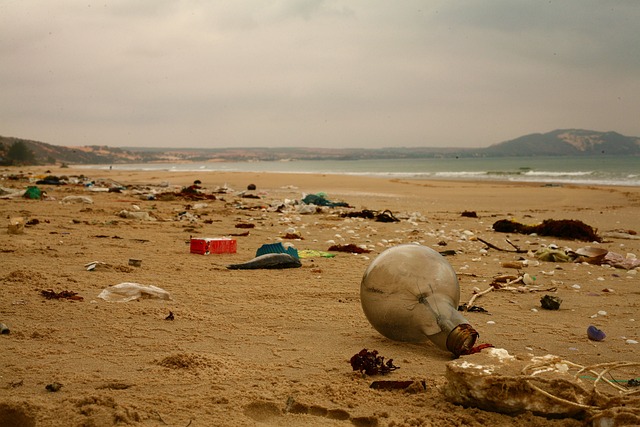
The quantitative data of the research paints a dramatic picture of the state of coastal areas. It is estimated that 20 million tonnes of plastic waste enter the natural environment each year. Based on the data, food and beverage-related plastics rank among the top three most common waste types in 93 percent of the countries examined. This proportion extends to the world’s five most populous countries: India, China, the United States, Indonesia, and Pakistan, as well as the United Kingdom.
Single-use, short-lived products pose a critical problem. The analysis pointed out that plastic food packaging, caps and lids, and plastic bottles are ranked first among individual waste items in more than half of the nations. Specifically: food packaging was among the top three leading pollutants in 53% of the countries, while caps, lids, and plastic bottles were in 51-51% of the countries. In frequency, these disposable items are followed by plastic bags (39%) and cigarette butts (38%) as the most widespread coastal litter types. Although fishing and boating equipment was also identified, the primary source of pollution is undisputedly the food and beverage industry.
.jpg)
Waste Management Alone Is No Longer Sufficient
The authors of the report emphasize: plastic pollution is a severe global environmental problem that has fatal impacts on marine ecosystems, economies, and human health. It particularly affects coastal communities and lower-income countries severely, where pollution can even threaten food security.
Dr. Max Kelly, the lead author of the study and a postdoctoral researcher at the University of Plymouth, highlighted that the results provide irrefutable evidence: single-use food and beverage packaging is the main cause of ocean plastic pollution. Professor Richard Thompson OBE FRS, founder and head of the university’s International Marine Litter Research Unit, added that in light of this data, it is undeniable that the problem cannot be solved by waste management methods alone.
According to experts, immediate “upstream” measures—focusing on the very beginning of the process, the source—are needed. This includes a drastic reduction in the amount of plastics produced, the establishment of reuse systems, the reform of packaging design, and stronger policy action. For example, they mentioned the importance of manufacturing only plastics that bring essential benefits to society. Professor Susan Jobling also confirmed that in the highly diverse national contexts examined—such as Indonesia—the same short-lived plastics dominate the coastlines, proving the need for targeted source reduction.
Background and Funding of the Research
The comprehensive analysis was created as part of a broader international scientific collaboration, the £3.8 million PISCES (Plastics in Indonesian Societies) project. The program is led by Brunel University of London and funded by the UK’s Natural Environment Research Council (NERC) and the UK Global Challenges Research Fund.
Sources and References:
-
Original press release by the University of Plymouth: Food and drink related litter dominates global plastic pollution
-
Original published study (DOI): 10.1016/j.oneear.2026.101712 (One Earth journal: “Food and beverage plastics dominate global shorelines”)
-
State funder source: UK Research and Innovation – Natural Environment Research Council (NERC)
Consistent structure, quick answers: every article is built so that both readers and AI search tools can find the key points easily. Our content is produced with the help of AI tools and reviewed by our editor.
