




If you like our site, mark us as a preferred source on Google — so you’ll see our articles more often in search!
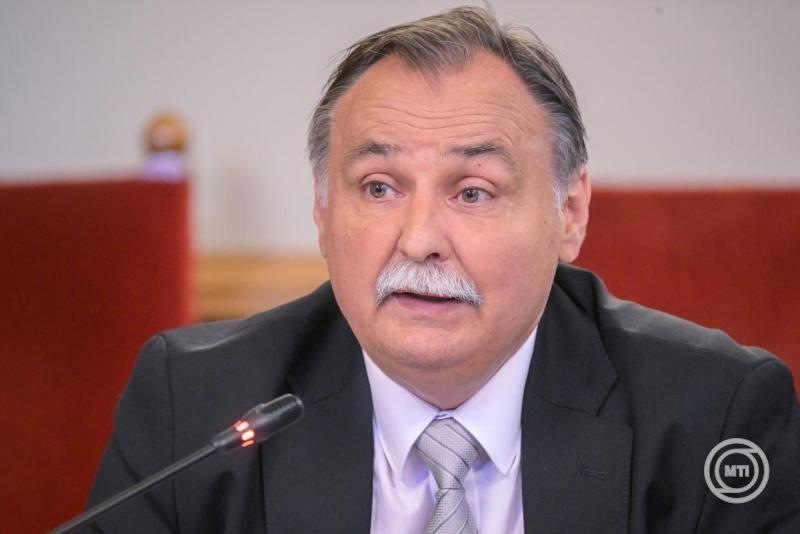
★Mark us as a preferred sourceA new national environmental authority is expected to be established in September. Its primary task will be to audit industrial companies, including battery manufacturers. Under the Tisza government, the strictest sanctions and largest fines in Europe will be applied to polluters, said László Gajdos, the minister-nominee for the Living Environment, during his committee hearing in Parliament on Monday.
László Gajdos stated that while the presence of industrial manufacturing companies is important, the health of the people and the protection of the environment are the top priorities. The organization will audit large polluting industrial plants based on strictly professional grounds through continuous and consistent inspections, he noted, adding that pollution limits would be tightened.
The authority will also be responsible for monitoring water and air quality, and animal welfare wardens will be integrated into the organization as well.
He mentioned that from January 1st, Hungary—as the last country in Europe to do so—will ban the use of elephants, pinnipeds (seals), big cats, and primates in circuses. Horses, domestic animals, camelids, and parrots may still be used.
László Gajdos explained that the name of the ministry was inspired by David Attenborough’s series, The Living Planet. He believes that the policy of the “living environment” represents a new form of patriotism, as land, water, forests, and the landscape are the foundations of a country’s productivity.
“Our greatest allies in protecting the living environment are the Hungarian youth. The policy of the living environment is also about protecting the future and the youth,” he emphasized, noting that this policy also embodies social justice, as crises are always felt most acutely by the most vulnerable.
He highlighted that as minister, the focus must be on prevention rather than retrospective financing of damages. Another key principle is the “polluter pays” principle: funds collected from these fines will be dedicated specifically to environmental purposes.
In times of energy crises and technological competition, green policy is a vital and strategic pillar of economic sovereignty and security. He opined that the defining question for the coming decades is how countries will adapt to the climate crisis and water shortages.
The past 16 years were a period of missed opportunities; since the abolition of the independent ministry, the powers of environmental authorities have been curtailed, permit issuance has been accelerated, social consultation has become a formality, and NGOs have been treated as obstacles, he explained.
László Gajdos emphasized that as minister, he will rely on the professional work and ideas of civil organizations and will treat them as partners. He spoke in several contexts about the importance of education and awareness-raising. In addition to daily contact, a civil consultation forum would be established annually involving relevant stakeholders.
A shift in perspective is required at national parks and forestry services; the “industrial” approach to domestic forest management must be ended, the minister-nominee underlined.
They intend to introduce a moratorium on logging in protected forests and will halt clear-cutting. The operations of the 21 state forestry companies must be reconsidered, placing ecological considerations at the forefront.
He spoke in detail about the role of water management and the importance of water retention. In recent drought-stricken years, the soil has lost an amount of water equivalent to five times the volume of Lake Balaton. The discharge of our major rivers has decreased by 10-15 cubic kilometers, and it is observed that neighboring countries, Romania and Ukraine, are retaining some of the water in their own catchment areas, he pointed out.
He also mentioned that the 80,000–90,000 kilometer drinking water network infrastructure is in a mixed state. Water loss averages 20-22 percent, but in some places, it reaches 50 percent; therefore, the network must be continuously modernized. He announced that a 51 billion HUF EU tender would soon open for this purpose.
According to László Gajdos, significant opportunities lie in wastewater treatment and reuse. He indicated his readiness to cooperate with the leadership of the Ministry of Agriculture on water management issues. One element of this is to resolve support for farmers who allow their lands to be flooded.
He believed that irrigation methods must be changed, giving more space to drip irrigation technologies.
László Gajdos spoke about the importance of maintaining GMO-free status and declared that if an EU decision contrary to Hungary’s interests is made on the matter, the government is prepared to turn to the European Court of Justice.
The animal welfare wardens operating within the new environmental authority will have an educational role alongside their power to sanction, supporting responsible pet ownership. Stray animals are a major problem; there may be 3-4 million dogs in Hungary today, but “we only know about 900,000,” and the number of livestock exceeds 50 million, he said. He mentioned plans to establish a central animal shelter by the end of the term, which would house exotic animals alongside domestic pets.
Responding to a point raised by Representative Zsófia Koncz (Fidesz), László Gajdos stated that thematic, environmental awareness programs introduced during the previous administration that have proven successful will be retained.
Answering a question from Zsolt V. Németh (Fidesz) regarding asbestos contamination causing issues in several settlements in Western Hungary, he said this is currently one of the most important issues, and they will find the resources to handle it. He will visit the site this week to assess the situation.
László Gajdos announced that he has invited Zoltán Orbán, spokesperson for the Hungarian Ornithological and Nature Conservation Society (MME), to serve as the ministry’s spokesperson.
The committee approved the appointment of László Gajdos to the ministerial post with six votes in favor, one abstention, and no votes against.
Source: mti
