


If you like our site, mark us as a preferred source on Google — so you’ll see our articles more often in search!
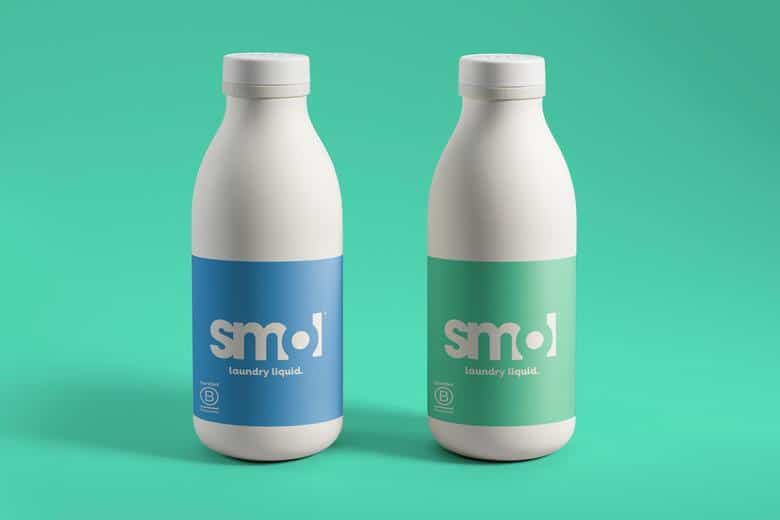
★Mark us as a preferred sourceBritish household cleaning brand Smol has partnered with packaging technology company Pulpex to introduce a recyclable paper laundry detergent bottle in the United Kingdom. Scheduled to roll out later this autumn, the wood pulp fibre container responds directly to the more than 58 million plastic laundry liquid containers sold across the UK each year, offering a solution that can enter standard household paper and card recycling streams once its recycled plastic dosing cap is removed.
In short: UK cleaning brand Smol (founded in 2018) and packaging technology specialist Pulpex are launching a wood pulp fibre bottle for liquid laundry detergent in autumn 2026. The packaging innovation addresses a major waste stream in the United Kingdom, where more than 58 million plastic laundry liquid containers—amounting to over 8,120 tonnes of plastic, or roughly 500,000 wheelie bins—are sold every year, while only 12% of UK household plastic packaging is actually recycled. Moulded as a single piece from FSC- and PEFC-certified forestry fibres and treated internally with an ultra-thin, water-based barrier coating, the bottle can be recycled in regular household paper and card collections after removing the 100% recycled polypropylene (rPP) dosing cap.
58 Million Plastic Containers and 8,120 Tonnes of Annual Laundry Waste in the UK
For decades, the liquid detergent aisle has relied almost exclusively on single-use rigid plastic containers. According to Circana (formerly IRI) UK laundry liquid sales data from 2023–2024 cited by Smol, more than 58 million plastic laundry liquid containers are sold annually in the United Kingdom. In terms of material weight, these containers generate more than 8,120 tonnes of plastic every single year.
To put the volume into perspective, 58 million containers equate to approximately half a million (500,000) wheelie bins filled with plastic bottles annually. Most of these containers are used only once before disposal, yet conventional plastics can persist in the environment for decades. Furthermore, data from Greenpeace UK and Everyday Plastic (The Big Plastic Count 2022) indicates that only 12% of the UK’s household plastic packaging is actually recycled. Eliminating unnecessary single-use plastic at the source aligns closely with UK public policy initiatives, including the UK Government’s Smart Sustainable Plastic Packaging programme and regional waste strategies documented by the Greater London Authority on household plastic waste.
Commenting on the environmental scale of the problem, Smol co-founder Nick Green stated that keeping clothes clean comes at a high cost to the planet, noting that UK laundry habits alone generate 58 million plastic liquid detergent containers every year—roughly half a million wheelie bins of single-use plastic that can remain for decades. This shift toward intuitive, fibre-based formats reflects the broader market dynamics analysed in our recent report on Sustainable Packaging Trends in 2026: What Consumers Really Want, which highlights strong consumer preference for paper packaging with straightforward disposal routes.
How the New Paper Laundry Detergent Bottle Is Engineered and Manufactured
Developing a paper laundry detergent bottle capable of safely holding liquid cleaning products without sacrificing structural integrity required specialized materials engineering from Pulpex. While commonly referred to as a paper bottle, fibre bottle, or cellulose bottle, the container’s main body is produced from renewable plant-based cellulose fibres sourced from sustainably managed forests certified by both the Forest Stewardship Council (FSC) and the Programme for the Endorsement of Forest Certification (PEFC).
Pulpex manufactures the container using a patented, proprietary moulding process. During production, wet forestry pulp is injected into a porous mould and subsequently dried to form a strong, lightweight, and durable single-piece bottle. Because liquid detergent requires reliable moisture protection, the interior of the bottle is treated with an ultra-thin, water-based, food-safe polymer dispersion barrier coating.
According to Pulpex, this internal barrier coating is engineered to be so thin that it does not interfere with standard paper recovery processes, allowing the bottle body to be processed directly within conventional household paper and card recycling streams. Meanwhile, the closure assembly consists of a polypropylene (PP) cap with a dosing cap manufactured from 100% recycled polypropylene (100% rPP).
Household Recycling Instructions and Smol’s Packaging Milestones
A central objective of the new paper laundry detergent bottle is to make household recycling effortless within existing UK municipal collection systems. Once the liquid detergent has been used, consumers follow a two-step disposal process:
-
Remove the 100% recycled polypropylene (rPP) dosing cap and place it into the standard household plastic recycling collection.
-
Place the wood pulp fibre bottle body directly into the standard household paper and card recycling bin.
Since launching in 2018, Smol has systematically targeted unnecessary packaging waste across the home care sector. The company’s previous packaging innovations include introducing plastic-free cardboard laundry packs in 2020, refillable “bottles-for-life”—including aluminium refill bottles launched at the end of 2025—concentrated refills designed to avoid shipping excess water, and carton refill systems that utilize significantly less plastic than conventional bottles. Similar large-scale transitions from rigid plastic to paper-based formats are accelerating across Europe, as seen in the recent Mondelez European plastic packaging replacement initiative.
Scott Winston, Managing Director of Pulpex, noted that bringing Pulpex fibre bottle technology into the laundry category alongside Smol marks a significant milestone for the company’s commercially scalable fibre packaging platform. He added that the autumn launch proves renewable fibre packaging can satisfy the performance, scalability, and commercial demands of mainstream consumer goods while reducing reliance on conventional plastic packaging and lowering carbon emissions across the category.
Frequently Asked Questions (FAQ)
What is the Smol and Pulpex paper laundry detergent bottle made from?
The main body of the bottle is moulded as a single piece from renewable wood pulp (cellulose) fibres sourced from FSC- and PEFC-certified sustainably managed forests. The interior features an ultra-thin, water-based polymer dispersion barrier coating to hold liquid detergent safely, while the dosing cap is made from 100% recycled polypropylene (rPP).
How do consumers recycle the pulp fibre laundry bottle?
Consumers simply remove the plastic dosing cap and place it into their household plastic recycling bin, then place the wood pulp fibre bottle itself directly into their standard UK household paper and card recycling collection.
How much plastic waste do liquid laundry bottles generate in the UK each year?
According to industry sales data (Circana, 2023–2024), more than 58 million plastic laundry liquid containers are sold in the UK every year, generating over 8,120 tonnes of plastic waste—equivalent to roughly half a million wheelie bins filled with single-use plastic bottles.
When will Smol’s new pulp fibre bottle become available?
The new recyclable pulp fibre laundry detergent bottle developed by Smol and Pulpex is scheduled to launch and become available from Smol later in autumn 2026.
Original and Official Regulatory Sources:
-
Primary News Source: The Grocer – Smol launches recyclable paper laundry detergent bottle
-
Official Company Announcements: Smol – Paper laundry bottles: will pulp fibre replace plastic? and Pulpex – smol launches recyclable paper laundry detergent bottle
-
Industry Press Release Documentation: Packaging Europe – Smol and Pulpex launch pulp fibre laundry detergent bottle
-
UK Government & Public Authority References: UK Government – Smart Sustainable Plastic Packaging and Greater London Authority – Household plastic waste


