


If you like our site, mark us as a preferred source on Google — so you’ll see our articles more often in search!
★Mark us as a preferred sourceIn a joint call issued on June 16, 2026, Recycling Europe and numerous industry partners urge the European Commission to proceed with a timely and targeted revision of the Textile Labelling Regulation (TLR). While the legislation has historically played an important role in providing harmonised information to EU consumers, the signatory organisations argue that the framework adopted in 2011 is now significantly outdated. The regulation was created in an era when information was static and provided exclusively via physical labels. Today, however, rapid technological progress, new market realities, and the EU’s modernised textile policy guidelines necessitate immediate intervention—namely, a digital and content-related overhaul.
Outdated Technical Rules: New Tolerance Margins Needed for Recycled Materials
The authors of the statement rank the immediate updating of existing technical rules among their primary tasks. The authorised fibre names and the tolerances used to verify fibre composition were originally optimised for the conventional materials market. Today, these frameworks are incapable of handling the increased market share of recycled, organic, and entirely newly developed fibres.
A quantifiable and critical issue is that the current TLR tolerance margins—which permit a maximum deviation of 2% for single-fibre textile products and 3% for multi-fibre products—completely ignore the natural and inevitable variability of recycled fibres’ composition. This rigid regulatory environment makes it almost impossible for manufacturers to communicate recycled content lawfully and accurately. The document urges the introduction of higher tolerance margins adapted to industry realities.
Digitalisation of Textile Labelling – Sustainability and Efficiency
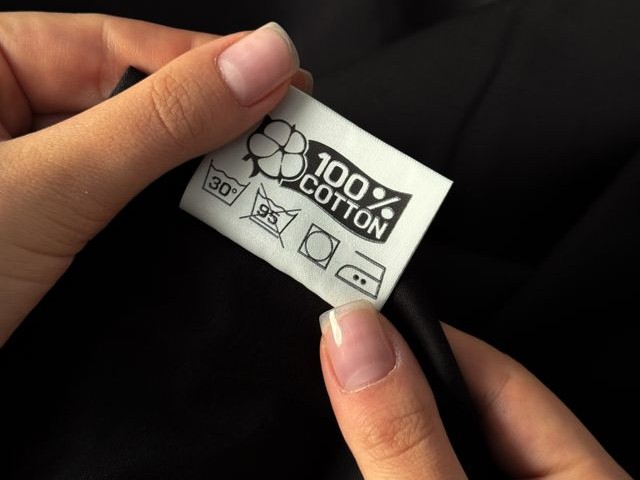
The second major industry priority is establishing the digitalisation of textile labelling and curbing physical waste. The current TLR focuses exclusively on physical labels, whose functional capacity is extremely limited. Due to the mandatory data set required, labels sewn into garments are becoming increasingly bulky, often spanning multiple pages. The joint call highlights a telling statistic: according to a 2025 Ipsos-GINETEX study, approximately 70% of consumers simply cut out uncomfortable, large labels from products.
This general consumer practice completely nullifies the informational purpose while causing significant material waste and additional costs for the industry. The signatories demand that physical labels should only contain the most essential basic information, with detailed data made accessible digitally. This approach would also closely integrate with the objectives of the EU’s 2025 Single Market Strategy.
Eliminating Internal Market Fragmentation
The third pillar of the statement is the elimination of the increasingly severe fragmentation of the EU internal market. The main cause of this fragmentation is that different Member States apply divergent national labelling rules—including specific language requirements, national pictograms, and format regulations. Led by Recycling Europe, the coalition calls for the harmonisation of these national interpretations and the creation of a truly unified EU market.
Avoiding Parallel Regulations in the Era of the Digital Product Passport (DPP)
The final point of the document warns against legislative overlaps and duplications. According to the industry, communication tools must be clearly separated: the TLR should remain responsible for defining core data (such as fibre composition), while detailed ecodesign and product performance indicators should be conveyed by the Digital Product Passport (DPP). The professional coalition firmly requests policymakers to properly integrate the existing TLR and the new DPP as a first step, before forcing any additional labelling requirements (such as the ESPR regulation for sustainable products) onto the market.
References and Official Sources:
-
Original Industry Call (Source): Recycling Europe: Joint call for a timely and targeted revision of the Textile Labelling Regulation (TLR)
-
Official EU Source – Official text of the referenced TLR regulation: Regulation (EU) No 1007/2011 of the European Parliament and of the Council on textile fibre names and related labelling and marking of the fibre composition of textile products (EUR-Lex)


