


If you like our site, mark us as a preferred source on Google — so you’ll see our articles more often in search!
★Mark us as a preferred sourceDriven by modern industry needs and tightening environmental regulations, the industrial use of recycled PET (rPET) has come into global focus. According to the latest market report by Allied Market Research, the sector is demonstrating highly dynamic and sustainable growth: valued at $8.4 billion in 2022, the market is projected to nearly double, reaching the $16.2 billion milestone by 2032. The global market’s Compound Annual Growth Rate (CAGR) will be 6.7% over the coming economic decade, spanning from 2023 to 2032.
The comprehensive research report, titled “Recycled PET (rPET) Market by Type (Flakes and Chips), Source (Bottles and Containers, and Films and Sheets), and Application (Packaging, Fiber and Textiles, Sheet and Thermoforming, Building Materials, Automotive Parts, and Others): Global Opportunity Analysis and Industry Forecast, 2023-2032,” provides detailed factual data underpinning the dynamic transformation of the industry.
Regulatory Pressure and Sustainability Goals Drive Growth
The primary and most decisive drivers behind the expansion of the global rPET market are tightening governmental and authoritative regulations. Governments worldwide are increasingly introducing targeted legal measures aimed at stimulating recycling processes and drastically reducing plastic waste that increases our ecological footprint. Global legislation, such as Extended Producer Responsibility (EPR) directives, various bans on single-use plastics, and strict mandates regarding the recycled content of manufactured products, directly incentivize the everyday industrial use of rPET, thereby boosting global market demand.
Technological Challenges and the Question of Quality
Despite the undeniably significant industrial growth potential, the market also faces serious challenges, primarily due to industrial technological limitations. The physical quality and mechanical performance of recycled PET materials can often still lag behind those of newly produced, virgin (primary) PET. During the recycling and processing phases, the initial raw material can degrade, which ultimately leads to weaker mechanical properties and a lower level of aesthetic appearance.
Furthermore, the presence of foreign materials and contaminants entering the waste stream—such as labels affixed to surfaces, industrial adhesives, and other mixed polymers—makes the economical, large-scale production of high-purity rPET suitable for diverse commercial applications extraordinarily difficult. Successfully overcoming these technological limitations that directly affect quality requires the continuous, innovative development of advanced sorting, deep cleaning, and modern refinement procedures.
Demand Distribution: Dominance by Types and Sources
In the market breakdown by type, the flakes segment was clearly the most dominant in the 2022 base year: this specific raw material category accounted for approximately three-fifths of the global rPET market revenues. Companies in both economically advanced and rapidly developing countries are setting ambitious, long-term sustainability goals. These tightening corporate commitments inevitably necessitate the increased use of recycled materials, especially rPET flakes, in mass-produced goods and end-user product packaging.
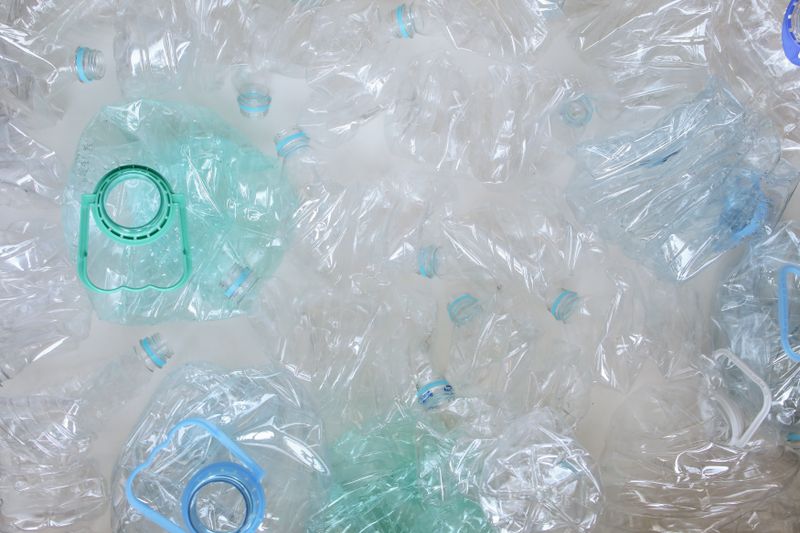
Regarding secondary input sources, the bottles and containers segment leads confidently, generating more than half of the global industry revenues in 2022. Widespread societal and scientific concerns regarding global plastic pollution—particularly the threat to ocean ecosystems and vulnerable wildlife—have drastically prioritized the targeted collection and industrial recycling of disposable PET bottles.
This proactive process not only effectively mitigates the global industrial raw material demand for new, virgin plastic but also conserves extremely important and finite natural resources. Moreover, it substantially reduces harmful greenhouse gas emissions closely associated with plastics industry energy generation and raw material utilization. Furthermore, everyday end-consumers are gradually becoming more environmentally conscious in their purchasing decisions, so the accumulating market pressure also encourages suppliers and manufacturers to favor sustainable, rPET-based packaging technologies.
Areas of Application: The Role of Fibers and Packaging
The processed professional report presents an interesting market distribution regarding specific processing areas. Based on the published data, the fiber and textiles segment accounted for more than one-quarter of global rPET market revenues in 2022, securing the largest absolute share among the application categories included in the study. This increased capacity ratio is largely a direct consequence of the latest available recycling technologies and the development of global infrastructural supply systems.
At the same time, the continuous integration of rPET into various industrial and residential packaging sectors has an indisputably prominent economic significance. The widespread use of recycled PET raw materials in packaging technology measurably and significantly increases the resilience of modern global supply chains against crises. This raw material diversification effectively reduces unilateral dependence on increasingly expensive and scarce finite natural resources, as well as the procurement and logistical risks stemming from extreme price fluctuations and supply chain disruptions.
Geographical Superiority: The Defining Role of the Asia-Pacific Region
Analyzing the macroeconomic regional market distribution, it is clearly visible that economically, the Asia-Pacific region dominated this specialized industry in 2022, realizing nearly two-fifths of global revenues. According to the official industry forecasts of independent market researchers and analysts, this Asian region will unquestionably register the highest outstanding growth rate—reaching a striking 7.3% annually—during the examined decade-long period ahead.
The extraordinary and continuous population growth characteristic of this vast geographical area, strong societal urbanization within these countries, and the inevitably rising macro-trend of retail consumer spending all exponentially boost the dynamically operating packaging industry there. In addition, massive infrastructural and technological investments in the Far East region—specifically supported by both state and private capital—make the organized collection, professional sorting, and large-scale industrial recycling of valuable recyclable raw materials easier, logistically more transparent, and measurably more cost-effective year by year.
Leading Market Players
According to the final conclusion of the detailed and comprehensive industry analysis, the global recycled PET market is currently dictated by several multinational, well-capitalized, and specifically technology-driven major companies. These agile, competition-focused players constantly strive not only to maintain but to directly increase and stabilize their own global market share through new, innovative product launches, long-term strategic partnerships, corporate acquisitions, and intensive industrial capacity expansion. The market corporate players specifically named by the research material as holding absolute leadership positions internationally include the following industry-shaping companies:
-
Indorama Ventures Public Company Limited
-
Plastipak Holdings, Inc.
-
Alpek SAB de CV
-
Clear Path Recycling
-
CarbonLite Industries, LLC
-
Evergreen Plastics
-
Phoenix Technologies International LLC
-
M&G Chemicals
-
Loop Industries, Inc.
-
Placon
The strong and deliberate shift in focus by dominant large enterprises toward sustainable and high industrial-quality secondary raw materials clearly and unquestioningly proves the long-term future stability and economic viability of the rPET industry, as well as its essential, unavoidable technological and ecological role in the unfolding modern circular economy.
Original Reference for the Analysis:
The original market analysis published by Allied Market Research, from which the above data was derived, can be viewed on the institute’s official website: Allied Market Research – Recycled PET (rPET) Market


