If you like our site, mark us as a preferred source on Google — so you’ll see our articles more often in search!
★Mark us as a preferred sourceWhile searching for solutions to the global plastic waste crisis, researchers at the U.S. Department of Energy’s (DOE) laboratory accidentally created a material that could revolutionize the multi-billion-dollar adhesive market. Scientists turned PET waste into a super glue.The new technology outperforms commercial epoxy resins and bonds perfectly even underwater.
The Global PET Crisis in Numbers
Plastic pollution is an ever-growing issue, with global plastics production expected to double by 2050. Unlike glass and paper, mechanical recycling of plastics decreases their value every time the process is repeated. As a result, a vast majority of plastic waste is never recycled.
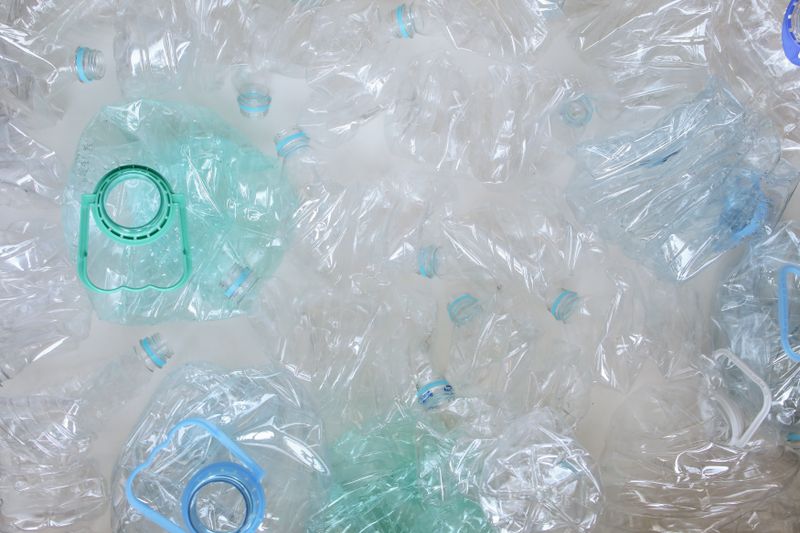
Polyethylene Terephthalate (PET) is a prime candidate for new recycling methods. There are currently 25 billion tons of PET in the world, and an additional 70 million tons are produced annually. PET accounts for approximately 12 percent of global plastic waste, yet only 20 percent of it is recycled. Post-graduate researcher Mary Danielson and her mentor, Anisur Rahman, aimed to develop a process outside of traditional mechanical recycling to recover or increase the value of this waste.
The Experiment: 180 Degrees Celsius and a Yellow Liquid
Plastics are composed of polymers, which allow for a huge diversity of uses but complicate recycling. Mechanical recycling physically breaks apart polymers over time in a way that they cannot be reassembled. The research team sought to chemically break down the plastic and transform it into a new polymer using dynamic covalent bonds—bonds that can break and reform in response to heat or light, acting much like Lego bricks.
The scientists utilized a well-known, cost-efficient process that avoided expensive catalysts. Instead, they added commercially available amines (chemical groups containing nitrogen). They applied the amine to a plastic egg carton and heated it to 180 degrees Celsius (365 Fahrenheit). After about seven hours, the plastic broke down. Once distilled and purified, it yielded a yellow, viscous liquid.
When a Bug Becomes a Feature: The Metal That “Sang”
The resulting liquid was so sticky that Danielson could not remove it from the characterization equipment. Following Rahman’s suggestion to treat the stickiness as a feature rather than a bug, they developed a cross-linker that allowed the liquid to set and dry into an adhesive.
During standard testing, two pieces of metal were stuck together and pulled apart by an instrument. The bond was so strong that the metal “sang” under the extreme tension before separating. Reviewing the data, Rahman confirmed the results were “very, very good.”
The Secret of Marine Mussels and Underwater Application
Since most adhesives fail underwater—making the repair of boat hulls, pipelines, and submarine telecommunications cables incredibly difficult—Rahman proposed testing their new material in water. Because the liquid was already being precipitated with water, the test was a logical next step, and it resulted in unparalleled success.
The secret lies in an unusual chemical structure that mimics how marine mussels attach to rocks. The yellow liquid has a hydrophobic (water-repelling) core and hydrophilic (water-attracting) “arms.” The cross-linker shares these dual properties. Mixing them creates a network that firmly bonds surfaces while preventing water from seeping into the seals. The team confirmed these forces using tools at the Center for Nanophase Materials Sciences, a DOE Office of Science User Facility.
Super Glue’s Future Applications and Continued Innovations
The resulting adhesive is highly versatile and tough. It works in both dry and wet environments (freshwater and seawater), under high pressure, and on structural applications, effectively bonding wood, glass, metal, and paper. Its ability to be removed and reapplied reduces waste and allows for easy error correction. Furthermore, it does not require clean, clear PET; the team successfully used a mix of waste, including egg cartons, fabric, and water bottles.
By adjusting the ratio of liquid to cross-linker, the performance can be fine-tuned. The process can also be used to create a stable “vitrimer” plastic, which boasts better tensile strength and toughness than the original plastic. This vitrimer can even be mixed with carbon fiber and recovered during the recycling process economically.
The team has published two papers and applied for a patent. Danielson (now an assistant research professor at the University of Tennessee Knoxville) and Rahman are continuing their work. They are currently exploring how to create weaker, temporary bonds for removable labels and bandages, as well as addressing the challenge of joining dissimilar materials for the automotive industry.
Source:
Original article: https://www.newswise.com/doescience/stories-behind-the-science-transforming-garbage-into-glue/?article_id=852468&sc=rsla
Official Government Source (DOE): https://www.energy.gov/science/articles/stories-behind-science-transforming-garbage-glue