





If you like our site, mark us as a preferred source on Google — so you’ll see our articles more often in search!
★Mark us as a preferred sourceThe Latin American plastics recycling industry is undergoing a major structural transformation. This shift is driven by a growing number of environmental regulations requiring manufacturers and importers to return the plastic they place on the market back into the production cycle. The collaboration between Chile’s Recupac and technology partner Lindner perfectly demonstrates how the market is responding to mandatory recycling rates and sustainability expectations.
Strict Regulations Reshaping the Latin American Plastics Recycling Industry
In October 2025, Brazil enacted Decree No. 12,688/2025, regulating the reverse logistics of plastic packaging. The decree established two key targets: a recovery rate for the proper collection and treatment of packaging, and a recycled content index introducing a mandatory minimum of 22% recycled content starting from 2026. Non-compliance with these rules can result in fines of up to BRL 50 million.
Brazil is following a path already set by its neighboring countries. Since 2016, Chile has enforced the REP Law (Law No. 20,920), aiming for a 32% plastic recovery rate by 2026. Meanwhile, Colombia adopted Law 2232 in 2022, mandating that PET bottles must contain at least 50% recycled content, increasing to 90% by 2030. This regional trend is clear: ambitious legislative targets create legally driven demand for recycled materials, presenting vast opportunities within the Latin American plastics recycling industry.
From Waste Management to Material Production: Recupac’s Role
Recupac, the waste management division of the Coipsa Group, has spent over 35 years building its presence in Chile’s circular economy. The company currently serves about 500 customers and manages more than 150,000 tonnes of waste annually. Its latest operational milestone is the LDPE (Low-Density Polyethylene) recycling facility in San Bernardo, featuring a production capacity of 500 tonnes per month. Recycled pellets from this site already replace approximately 40% of the virgin resin used in new plastic film production.
Macarena Hadad, Business Development Deputy Manager at Recupac, explains that the company plays a well-defined role in Chile’s circular economy. The LDPE project emerged from the realization that simply managing waste was no longer sufficient; there was a pressing need to transform it into new, high-quality recycled raw materials capable of re-entering the manufacturing chain.
Technological Integration for Consistent Quality
Processing post-consumer plastics—materials that are highly heterogeneous and contaminated—requires rigorous process control. Transforming these materials into high-quality recycled pellets involves multiple stages: collecting, sorting, baling, secondary quality inspection, shredding, washing, drying, and extrusion.
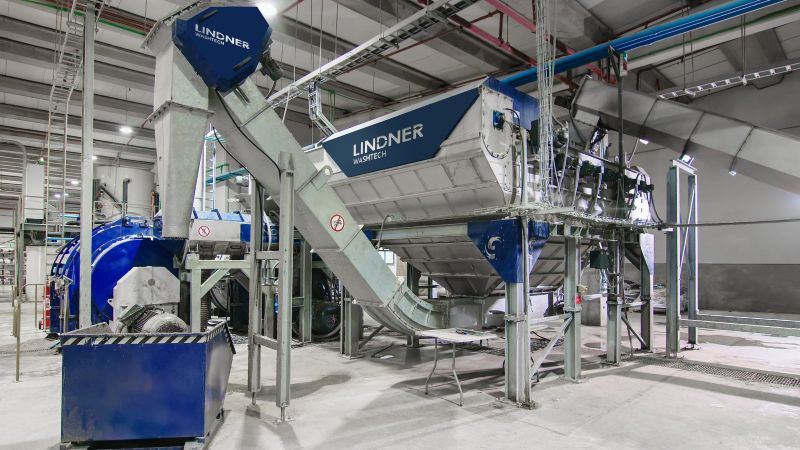
The washing stage, powered by Lindner Washtech’s technology, creates a clean and homogeneous material stream that seamlessly integrates with the downstream extrusion line from Erema, Lindner’s long-standing technology partner. The result is a highly stable process with superior cleaning efficiency and consistent pellet quality, granting Recupac the confidence to meet increasingly demanding industrial requirements.
Lindner Expands Its Presence in Latin America
Recupac executives emphasized that close cooperation and local support were essential for the success of their recycling line. Recognizing the market’s trajectory, Lindner Washtech expanded its portfolio and established a new subsidiary in São Paulo, Brazil, in 2025. Under the leadership of Frederico Hartmann, this new headquarters strengthens Lindner’s regional presence by providing localized technical support, project development, and commercial assistance as the circular economy continues to expand across the continent.
Frequently Asked Questions
What new regulations impact Brazil’s plastic recycling?
Decree No. 12,688/2025, enacted in October 2025, mandates a minimum of 22% recycled content in plastic packaging starting in 2026. Non-compliance can result in fines up to BRL 50 million.
What are Chile’s goals under the REP Law?
Enforced since 2016, Chile’s REP Law (Law No. 20,920) targets a 32% plastic recovery rate by the year 2026.
What is the capacity of Recupac’s LDPE recycling facility in Chile?
The facility in San Bernardo has a production capacity of 500 tonnes per month, successfully replacing approximately 40% of virgin resin in new plastic film production.
How is Lindner expanding its presence in Latin America?
To support regional growth, Lindner established a new subsidiary in São Paulo, Brazil, in 2025 under the leadership of Frederico Hartmann. This provides specialized local technical and commercial support.
References / Sources:
-
Original Article: Lindner News – Recupac and Lindner Demonstrate a Successful Path Forward
-
Brazilian Decree (Decreto Nº 12.688/2025): LexML Official Site
Consistent structure, quick answers: every article is built so that both readers and AI search tools can find the key points easily. Our content is produced with the help of AI tools and reviewed by our editor.
