




If you like our site, mark us as a preferred source on Google — so you’ll see our articles more often in search!
★Mark us as a preferred sourceBattery fires in waste management are no longer occasional accidents; they are an everyday operating risk. A 104-page German study now backs this up with hard numbers. The final report “Brandereignisse in der Entsorgungswirtschaft” (Fire events in the waste management sector) was commissioned by five German industry associations – ASA, BDE, bvse, CMA and VKU – prepared by INFA, u&i and Prognos AG, and presented to the public on 14 October 2026. The associations handed the study over when the German Federal Environment Ministry’s round table on the issue came to a close – we covered the round table and the associations’ demands in detail here. Now we have looked at what the report itself contains.
In short: According to the German study, battery fires in waste management have risen sharply in five years: across the 181 facilities surveyed, the number of fires grew from 729 in 2021 to 2,028 in 2025, and wherever the cause can be established, lithium-ion batteries are by far the most common ignition source. The authors argue that the industry can only limit the risk, and propose a producer-funded prevention and compensation fund.
What did the German study examine?
The backbone of the study is an association survey carried out in early 2026. Between 9 February and 24 March 2026, 181 waste management facilities from every German federal state completed the anonymous online questionnaire fully and plausibly. The answers cover the five years from 2021 to 2025, and because every year was recorded by the same respondents in the same survey, the years can be compared directly.
The sample is mixed: recycling centres form the largest group, followed by transfer stations and by sorting and pre-treatment plants for commercial waste, non-ferrous metals and steel scrap, lightweight packaging and residual waste. The respondents who reported their capacity hold a combined permitted annual capacity of around 16 million tonnes.
The authors flag several important limitations. Participation was voluntary, so the sample is not representative: landfills and composting plants, which see fewer fires, are under-represented, while sorting plants are over-represented. The results were not extrapolated to Germany as a whole. Because smaller incidents are recorded differently from site to site, the figures should be read as a lower bound. The survey is complemented by a review of international literature – including Austrian, French, US and Japanese data – a cause model, an economic damage estimate and scenarios up to 2030.
Nearly three times as many fires in five years
The headline figure is simple and alarming. Across the 181 facilities, dangerous hotspot events (local overheating without open flames) rose from 1,202 in 2021 to 2,992 in 2025, and fires from 729 to 2,028. That is roughly a 2.5-fold increase for hotspots and almost a threefold increase for fires. In total, 6,760 fires were reported over the five years.
The share of affected sites widened too. In 2021, roughly a third of facilities experienced a hotspot or fire; by 2025, 54 per cent reported hotspots and 62 per cent reported fires. The situation is especially serious at plants sorting or treating lightweight packaging, residual and commercial waste: here the share of affected plants climbed from about 50 per cent to 70–90 per cent, and the average number of fires per plant rose from roughly 10 to 20–30 a year.
Behind these numbers lie real operational consequences. More than half of the responding facilities faced operating restrictions, interruptions or even shutdowns because of fires. Restrictions lasted 84 days on average, interruptions 45 days. A single major fire can wipe out a whole plant’s annual capacity: lightweight packaging plants reported around 151,000 tonnes of lost treatment capacity in 2023.
Battery fires in waste management: where do the flames start?
The causal picture is clear. Among the causes plant operators considered probable, lithium-ion batteries accounted for more than 90 per cent by the end of the period. They also dominate the confirmed causes, with 21–24 per cent of answers falling on other causes such as wrongly discarded waste and self-ignition. An earlier association survey from 2023 had already shown the same trend: the share of fires attributed to batteries rose from about 65 per cent in 2018 to 78 per cent in 2022.
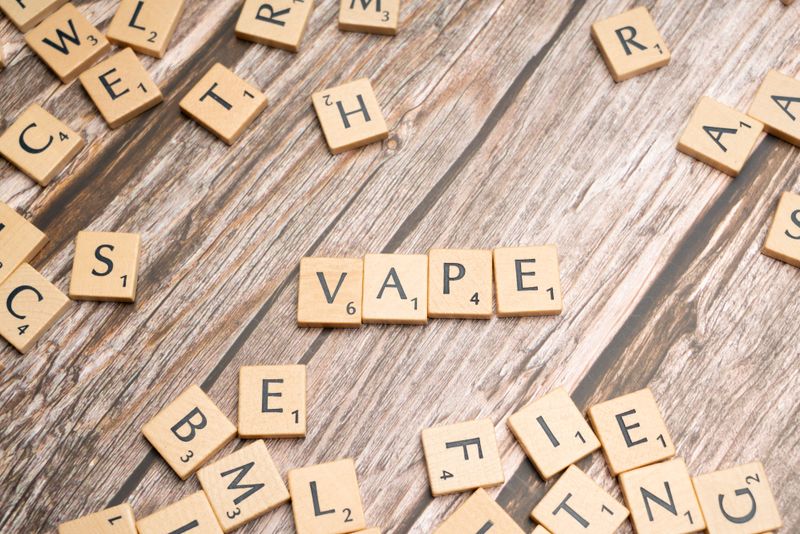
Pinning down the culprit, however, is often impossible. Where a battery was the probable cause, the specific product could not be identified in 71 per cent of cases, because the heat destroyed the ignition source as well. Where it could be identified, e-cigarettes were named most often, followed by e-bike, e-scooter and vehicle batteries and electrical devices.
The report describes the mechanism in detail. A lithium-ion battery combines high energy density with a flammable electrolyte and electrode materials. If a cell is mechanically damaged – compacted in a collection truck, shredded or handled during transfer – the separator can fail, an internal short circuit occurs and so-called thermal runaway may begin, a self-reinforcing process that cannot be stopped from outside. Two details matter for waste management: the triggering force does not need to be large, and the reaction may occur hours or even days after the damage. That is why a bunker or a stored pile so often catches fire for no apparent reason.
One of the study’s most practical findings concerns where fires start. In 2025, 40 per cent of respondents said fires mainly started in the delivery, storage and bunker area, and a further 8 per cent in vehicles. In almost half of the facilities, then, fires typically start before the first processing machine. Within the processing line, shredders are the most critical point (25 per cent). Since the pattern is similar across plants handling different waste streams, the authors conclude that mechanical stress, not plant type, is the decisive factor.
The study also explains where these batteries come from. Federal Environment Ministry data point to a cumulative total of more than 130,000 tonnes of batteries between 2020 and 2023 that did not enter the regular collection systems. According to the German Environment Agency, around 86,000 tonnes of old electrical devices end up in residual waste every year.
Batteries built permanently into devices, which consumers often do not even recognise, and short-lived, high-volume products such as disposable e-cigarettes make matters worse. The Austrian association VOEB described the same phenomenon when it warned about hidden lithium battery fire hazards in e-waste – and the German study treats Austria as the best point of comparison precisely because of the long-term research carried out at Montanuniversität Leoben.
Most fires are put out by plant staff
One of the survey’s surprising results is that people, not just technology, remain central to fire detection. Of the answers for 2021–2025, 47 per cent named fire detection technology as the main way fires were discovered, while 44 per cent named plant staff. Together with passers-by and security services, human detection accounts for 52 per cent.
Firefighting shows a similar pattern. In 2021, automatic extinguishing systems were the most important measure (52 per cent), but by 2025 staff brought 54 per cent of events under control. The fire brigade had to step in for only 4 per cent of extinguishing events in 2025 and for roughly 8 per cent of fires in the narrower sense – yet because the number of fires grew, the absolute number of fire brigade call-outs more than doubled between 2021 and 2025. Spread beyond the ignition point was prevented in 88 per cent of fires.
This also means that the large fires making the news are only the tip of the iceberg. Most plants handle incidents every day with considerable effort of their own, and these never appear in public statistics.
The report acknowledges technological progress but is clear about its limits. Heat, smoke and gas detectors react to symptoms of a process that is already under way: by the time they trigger, the cell’s thermal runaway has already begun. X-ray and AI-based sorting systems tackle the root cause more directly, but according to the study they remain expensive, are mostly at pilot stage and do not cover the delivery and storage zone in front of the first machine.
A quarter of a billion euros in damage and a shrinking insurance market
The economic damage estimate was prepared by Prognos. Depending on the cost factors chosen, the fires at the 181 facilities between 2021 and 2025 caused economic damage of between about €250 million and almost €400 million. Facilities that named lithium-ion batteries as the most frequent probable cause account for €200–320 million, roughly 80 per cent of the total.
The total is made up of several components. Direct damage to machinery and buildings comes to €88–152 million, of which €45–85 million falls on machinery and equipment and €43–68 million on buildings. Other direct costs add a further €92 million or so. This includes more than €28 million for hiring external contractors to meet existing contracts, almost €57 million for clean-up and decontamination, and an estimated €7 million for public fire brigade call-outs. Indirect costs from business interruption amount to €44–88 million. Knock-on costs further down the value chain add another €29–61 million.
The damage is very unevenly distributed. Around 90 per cent of fires cause no significant property damage or injuries, yet the damage is highly concentrated. Twenty of the 181 respondents each reported direct property damage of more than €1 million between 2021 and 2025, and this group accounts for 70–80 per cent of the total damage. The share of machinery damage rose from 6 to 10 per cent, while injuries – mostly smoke inhalation – remain rare. Environmental, personal and reputational damage, as well as insurance-related costs, are not included in the figure. Using a cautious illustrative calculation, the authors also show that comparable plants missing from the survey could add at least another 30 per cent or so.
The insurance side is just as worrying. 87 per cent of the surveyed plants have fire insurance, but 13 per cent do not. Roughly 70 per cent of respondents reported coverage of at least 75 per cent, yet depending on the year, 17–29 per cent said less than half of their facilities were insured. Operators reported rising premiums and deductibles, stricter fire protection requirements, cancellations after fire incidents and some insurers withdrawing from the market. According to the study, the question is no longer whether cover is available at all, but on what terms and at what price.
Four scenarios up to 2030
The authors assume that the volume of lithium batteries entering the waste stream will keep growing until 2030 in any case. The market data clearly support this. Between 2019 and 2023, the German battery market grew by 429 per cent to €23.2 billion. Within it, the market volume of lithium-ion batteries increased more than ninefold to €18.9 billion, so they drove almost all of the growth.
This growth reaches the waste stream with a delay: smartphones, e-cigarettes and power banks become waste after a few years, tool and e-bike batteries after several, and more and more larger, higher-energy systems are reaching the end of their life. On this basis they outline four deliberately illustrative scenarios for fire and damage events:
- Risk scenario: if mis-sorting is not substantially reduced and existing measures cannot offset the volume effect, an increase of roughly 20–40 per cent can be expected.
- Reference scenario: improvements already under way take effect but only partly compensate for the growing volumes, meaning a further rise of about 5–15 per cent.
- Stabilisation scenario: if collection, consumer information and on-site protection become much more effective, events could level off or fall by up to 10 per cent.
- Systemic resilience scenario: if the whole value chain – producers, retailers, take-back systems, consumers, the waste industry and regulators – acts in a coordinated way, a reduction of 20–40 per cent is achievable.
The message of the scenarios is that battery volumes are a given, but the fire risk that follows from them can be influenced. The authors are equally clear that even under favourable conditions not every battery fire can be prevented, so the real question is who bears the remaining damage.
The study’s proposal: a producer-funded prevention and compensation fund
One of the report’s central conclusions is that prevention cannot be the waste industry’s job alone. Plants can reduce risk, detect incidents earlier and limit damage, but they do not decide which products are placed on the market, how they are designed or how easy it is to return them. Separate collection of waste batteries and battery-powered devices is the producers’ obligation, yet it only partly succeeds – and the consequences of the failed part are currently borne by the plants and their insurers.
The authors also assess the instruments that act on the cause. Information campaigns and convenient take-back only work if they are funded on a lasting basis; the report cites the “#wirfuerbio” biowaste campaign, which cut contamination by 46 per cent or more in several regions. The stricter requirements of the EU Batteries Regulation – raising the collection target for portable waste batteries to 63 per cent by the end of 2027 and 73 per cent by the end of 2030, and the removability requirement for portable batteries from 18 February 2027, which also covers disposable e-cigarettes with built-in batteries – will only take effect gradually, over the product cycle.
A deposit would be the most direct instrument, but Germany does not currently have one: the federal government ruled it out in November 2024, and the German battery act in force since October 2025 does not require it. The deadline for the review requested by the Bundestag expired on 11 September 2026 without a published result by the time the study was completed, and the European Commission must assess the feasibility of deposit systems by 31 December 2027.
Against this background, the authors consider a producer-funded prevention and compensation fund the most suitable instrument. It builds on extended producer responsibility and, unlike a deposit, needs no product labelling, no refunds at the point of sale and no clearing system – it can rely on the registration and volume reporting that already exist. The fund could serve four purposes:
- continuous public information and collection close to consumers,
- support for preventive fire protection at plants,
- partial relief for uninsured damage, provided the plant has an adequate fire protection concept,
- stabilising insurability.
The study also calls for nationwide, uniform recording of fire incidents, with a binding definition of what counts as a battery-related fire. Without it, neither the scale of the problem nor the effect of future measures can be officially measured. According to the authors, any national solution should be designed from the outset so that it can later be aligned with a European framework.
What it means beyond Germany
The same process behind the German data is something waste operators elsewhere experience every day. Hungary, for example, also has no systematic, uniform record of fires in waste management, so the scale of the problem can only be estimated from partial sources. Based on MiReHu’s own count on its sorting lines, around 4.3 million discarded vapes may end up in Hungarian bins every year – roughly five in every collection truck round – which is exactly the product type German plants identify most often as an ignition source.
Three lessons from the German study are especially relevant. First, almost half of fires start before processing begins, in the delivery and storage zone or in vehicles, so sorting-line technology alone is not enough. Second, the burden of fire protection and insurance falls on waste operators, while the source of the problem lies in product markets and collection. Third, there is no management without measurement: without uniform fire incident records, neither the size of the problem nor the impact of interventions can be demonstrated. The EU Batteries Regulation’s collection targets and removability requirement apply across the EU, but the question of producer responsibility and how damage is shared still needs to be answered at national level too.
The bottom line
The study’s three findings build on each other: fires in the waste sector have risen sharply in five years, they cause significant economic damage, and their main cause arises not inside the plants but before them. In mechanically stressed process steps, a lithium-ion battery behaves not as ordinary combustible material but as an active ignition source – one whose role often cannot be proven afterwards. Without effective countermeasures the situation will gradually worsen, but the scenarios show this is not inevitable.
It requires fewer batteries in the wrong bin, earlier detection of critical situations, and a fairer split of the remaining costs so that waste operators do not carry them alone. Until then, the cheapest fire protection starts at home: anything that charges, flashes or plays a tune does not belong in the residual or the packaging bin.
FAQ: battery fires in waste management
How many fires occurred in the German facilities surveyed?
Across the 181 German facilities surveyed, fires rose from 729 in 2021 to 2,028 in 2025, almost a threefold increase. Dangerous hotspot events grew from 1,202 to 2,992. In 2025, 62 per cent of plants reported fires, compared with roughly a third in 2021. The data are not representative and were not extrapolated to Germany as a whole.
What causes battery fires in waste management?
Mainly lithium-ion batteries thrown into the wrong bin. If a cell is damaged during compaction, shredding or handling, an internal short circuit and thermal runaway can follow, sometimes hours or days later. Plant operators named batteries in more than 90 per cent of probable fire causes, and e-cigarettes were the product identified most often.
Where do fires most often start in waste facilities?
Most often before processing even begins. In 2025, 40 per cent of respondents named the delivery, storage and bunker area as the main place fires start, and 8 per cent named vehicles, so in almost half of plants fires start before the first machine. Within the processing line, shredders are the most critical point, named by a quarter of respondents.
How much damage did the fires cause according to the study?
The 181 plants suffered economic damage of between about €250 million and almost €400 million from 2021 to 2025. Roughly 80 per cent of this, €200–320 million, is linked to plants where lithium-ion batteries were the most frequent probable cause. Most of the damage is concentrated in a few plants: the 20 that each reported over €1 million in direct damage account for 70–80 per cent of the total.
What solution does the German study propose?
The authors propose a producer-funded prevention and compensation fund. It could finance public information and collection close to consumers, preventive fire protection, partial relief for uninsured damage and the stabilisation of insurability. They also call for nationwide, uniform recording of fire incidents, with a binding definition of what counts as a battery-related fire.
What does the study mean for waste operators outside Germany?
It highlights the same questions operators face elsewhere. Hungary, for instance, has no uniform fire incident register either, while MiReHu’s own count suggests around 4.3 million vapes may end up in Hungarian bins each year. The lessons: almost half of fires start before processing, operators carry the burden today, and without measurement the impact of interventions cannot be proven.
🔗 Official sources and references: 👉
- VKU: Studie Batteriebrände erschienen (14 October 2026)
- INFA – u&i – Prognos: Brandereignisse in der Entsorgungswirtschaft, final report (status 7 October 2026)
Consistent structure, quick answers: every article is built so that both readers and AI search tools can find the key points easily. Our content is produced with the help of AI tools and reviewed by our editor.
