




If you like our site, mark us as a preferred source on Google — so you’ll see our articles more often in search!
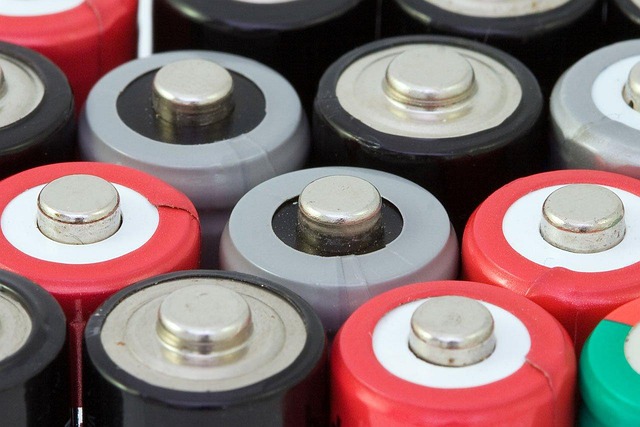
★Mark us as a preferred sourceBattery collection in Austria gained an unusual ally this autumn: between 19 and 31 October 2026, 268 fire brigades – above all their youth sections – gathered used batteries from their own homes, families and friends. The result was 9.4 tonnes, roughly the weight of seven small cars. The campaign, called “Mission Batterie-Recycling”, was organised jointly by ARA, its subsidiary ERA, Duracell and the Austrian Federal Fire Brigade Association (ÖBFV), and ARA published the results on 10 November. The line-up is no coincidence: barely a week ago we reported that battery fires in Europe cause €2.66 billion in damage a year to the waste sector, and a battery thrown in the wrong bin ultimately ends up as work for firefighters.
In short: Battery collection in Austria became a fire brigade challenge in October 2026, when 268 brigades handed in 9.4 tonnes of used batteries in just under two weeks through a joint campaign by ARA, ERA, Duracell and the ÖBFV. The aim was awareness, not volume: batteries are a valuable secondary raw material, but in residual or packaging waste they are a fire hazard.
What was “Mission Batterie-Recycling”?
At its core, the initiative was a nationwide collection challenge. Participating brigades put the batteries they gathered into collection boxes supplied by Duracell, then handed them in at ERA collection points and municipal collection sites, from where they went on to proper recovery.
The four partners had clearly separate roles:
- ARA (Altstoff Recycling Austria): the leading organisation in Austria’s producer responsibility system and one of the campaign’s organisers.
- ERA (Elektro Recycling Austria): ARA’s subsidiary responsible for collecting and recycling batteries and electrical equipment; it provided the expertise and the collection network.
- Duracell: as a producer, it supplied the collection boxes and co-organised the campaign.
- ÖBFV (Österreichischer Bundesfeuerwehrverband): it mobilised the fire brigades and their youth sections.
After the challenge closed, three volunteer fire brigades were drawn from among the participants: Bergheim, Kronabittedt and Steinerkirchen an der Traun each received €1,220. A special prize worth €2,122 for the most creative social media post went to the volunteer fire brigade of Emmersdorf an der Donau. The press release does not say so, but it is hard to miss the 122 in those amounts – the emergency number of the Austrian fire service.
What do the numbers show?
A total of 9.4 tonnes sounds impressive, but it is worth putting into proportion. A few simple calculations of our own:
- Per brigade: an average of around 35 kilograms of used batteries per participating unit.
- In pieces: counting AA batteries only, at about 23 grams each, that is roughly 400,000 batteries – the real number will differ because of the mixed composition.
- Against the annual total: according to ARA, Austria collects around 3,500 tonnes of batteries a year, so the campaign result equals roughly one average day of nationwide collection.
That last figure shows best what the campaign was about. It was not meant to lift the collection statistics, but to shift the batteries that have been sitting at the back of drawers for years – and to get thousands of families talking about where a dead battery belongs.
Why firefighters?
In the press release, ÖBFV President Robert Mayer pointed out that dead batteries often disappear into a drawer or wrongly end up in residual waste or the yellow packaging bin, which carries a considerable fire risk. The association therefore wanted to raise awareness among firefighters and, through them, the general public.
In Austria, this risk is well documented. Reporting on a study by the Austrian waste management association VOEB, we previously wrote that an average collection truck carries roughly 70 potential ignition sources, while the number of publicly known fires in waste management rose from 10 to 147 between 2007/08 and 2024/25. In neighbouring Germany, the industry associations’ fire study found that fires nearly tripled in five years.
Involving the fire service is therefore more than a publicity move. Those who put out the consequences of carelessly discarded power sources can explain credibly why it matters where a button cell or an AA battery ends up. And the youth fire brigades reach exactly the age group that carries habits back into the family.
Battery collection in Austria: a dense network and tightening EU targets
According to ARA, Austria has been a European frontrunner in the separate collection of batteries since 2018. For standard AA and AAA batteries, the country already achieves a collection rate of 83 per cent – a figure reported by ARA.
This rests on a dense take-back network:
- more than 2,000 municipal collection points,
- several thousand return points in retail, for example in supermarkets, electronics shops and DIY stores,
- municipal recycling centres.
Melanie Selzer-Bonanno, Head of System Operations and Material Flow Management at ERA, said that every returned battery is recycled and yields valuable secondary raw materials, but only if it is disposed of correctly: batteries never belong in residual waste, the yellow bag or the yellow bin.
The network will come under more pressure in the coming years. Under the EU Battery Regulation, the collection target for waste portable batteries rises from the current 45 per cent to 63 per cent by the end of 2027 and 73 per cent by the end of 2030. These targets apply to every member state, Hungary included.
Turning knowledge into habit
Infrastructure alone is not enough; it needs continuous information and awareness-raising alongside it. Carolin Ott, Marketing Director for Northern and Central Europe at Duracell, stressed that battery recycling only works if the raw material is handled consciously, and that the goal is to make collection a self-evident habit. In doing so, the producer takes responsibility beyond the use of its products.
This is the practical side of extended producer responsibility: the producer not only contributes to the cost of collection, but also puts its brand and marketing tools at the service of take-back. Meanwhile, the value of the collected material keeps growing, with research now at the point where cells built from mixed battery waste outlast the originals.
What can Hungary learn from this?
Dead batteries pile up in Hungarian drawers just the same, and products containing power sources turn up in the waste just the same. MiReHu’s sorting-line count suggests that around 4.3 million discarded vapes may end up in Hungarian bins every year, roughly five per collection round.
Three lessons follow from the Austrian campaign:
- A credible messenger matters. Firefighters are not part of the waste management system; they deal with the consequences, so their message lands differently from a sorting poster.
- Competition mobilises. A short time frame, a measurable result, prizes and social media: the format could work in local communities, schools and associations in Hungary too.
- Producers can be brought in. Funding collection boxes and communication is a tangible way for a producer to contribute to meeting collection targets.
Used batteries must be collected separately in Hungary as well: they can be handed in at the collection boxes in shops that sell batteries, or at municipal recycling centres.
The bottom line
In volume, “Mission Batterie-Recycling” delivered the equivalent of a single average day of Austrian battery collection; in impact, it is worth more than that. It showed that fire safety and recycling are two sides of the same habit, and that meeting collection targets takes not only a dense network but also allies people actually listen to. On the way to the EU’s 63 per cent target for 2027, other member states will need partnerships like this too.
Frequently asked questions: battery collection in Austria
How many used batteries did Austrian firefighters collect?
They collected 9.4 tonnes in total, roughly the weight of seven small cars. Between 19 and 31 October 2026, 268 fire brigades took part in “Mission Batterie-Recycling”, an average of around 35 kilograms per brigade. The amount equals about one average day of nationwide battery collection in Austria, so the campaign was primarily about raising awareness.
Who organised the “Mission Batterie-Recycling” campaign?
The campaign was organised jointly by ARA, its subsidiary ERA, Duracell and the Austrian Federal Fire Brigade Association (ÖBFV). Duracell supplied the collection boxes, ERA provided the expertise and collection points, and the ÖBFV mobilised the fire brigades and their youth sections. The batteries were handed in at ERA and municipal collection sites and sent for recovery.
Why did firefighters collect the used batteries?
Because batteries thrown in the wrong bin are a fire risk, and firefighters are the ones who face the consequences. According to the ÖBFV president, dead batteries often end up in residual waste or the yellow bin. In Austria, publicly known fires in waste management rose from 10 to 147, and a collection truck carries roughly 70 potential ignition sources.
How does battery collection in Austria work?
Battery collection in Austria is built on a dense take-back network. There are more than 2,000 municipal collection points and several thousand return points in supermarkets, electronics shops and DIY stores, and municipal recycling centres accept batteries too. According to ARA, around 3,500 tonnes are collected each year, and the collection rate for AA and AAA batteries is 83 per cent.
What EU collection targets apply to portable batteries?
Under the EU Battery Regulation, the collection target for waste portable batteries rises from the current 45 per cent to 63 per cent by the end of 2027 and 73 per cent by the end of 2030. The targets apply to every member state, including Hungary. Meeting them takes a dense collection network plus continuous public information, which partnerships like the Austrian campaign can support.
🔗 Official sources and references: 👉
Consistent structure, quick answers: every article is built so that both readers and AI search tools can find the key points easily. Our content is produced with the help of AI tools and reviewed by our editor.
