




If you like our site, mark us as a preferred source on Google — so you’ll see our articles more often in search!
★Mark us as a preferred sourceThe success of Bag-in-Box recycling relies heavily on one crucial prerequisite: whether consumers physically separate the different packaging materials at home. According to a new study across four European countries published by Smurfit Westrock on September 3, 2026, buyers are highly conscious in this regard. The separation rate reaches as high as 97 percent in some markets, proving to be a critical step in supporting circular packaging systems.
The foundation of Bag-in-Box recycling: home separation
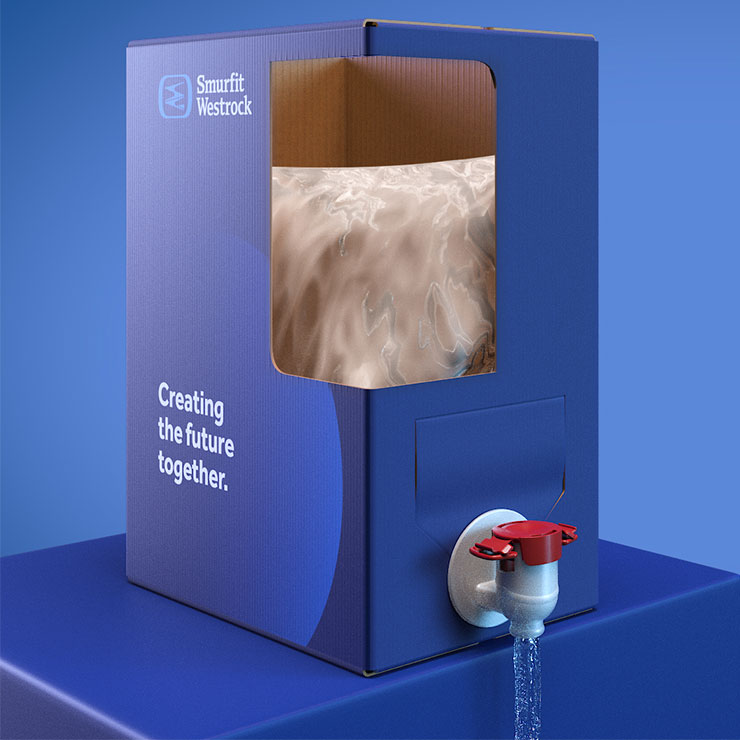
Conducted by Smurfit Westrock Bag-in-Box, the research examined consumer habits in Belgium, France, Germany, and Sweden. The primary focus of the study was whether consumers remove the flexible plastic bag from the surrounding cardboard box after use. The results highlighted that across all four nations, the majority of consumers follow proper recycling practices, separating the distinct components before disposal. In the best-performing market, this separation rate peaked at 97 percent.
Physical separability is only valuable if the user actually performs the action. If a consumer places the entire, unseparated Bag-in-Box into the paper stream, the plastic bag travels with the corrugated cardboard, contaminating the paper waste stream. Conversely, if the whole package is discarded in residual waste, neither component reaches its preferred material recovery route.
The difference between separation, sorting, and recycling
It is important to distinguish between consumer behavior and technological realities. A 97 percent separation rate is a significant achievement, but industry analyses emphasize that this alone does not equate to a 97 percent recycling rate. The recovery process involves multiple stages:
-
The separation rate measures consumer behavior at home.
-
The sorting rate indicates whether local waste facilities can correctly identify and extract the given material.
-
The recycling rate dictates how much of the material is ultimately reprocessed into secondary raw materials.
The recycling realities of the cardboard box and the plastic bag differ greatly. While correctly separated cardboard is efficiently collected and processed by most municipal systems, the flexible plastic bag and its tap require a specific collection and technological route, which varies significantly by country and even by region.
The PPWR regulation and the European circular economy
The study’s findings arrive at a time when Europe is preparing for the full implementation of the Packaging and Packaging Waste Regulation (PPWR). Taking effect on August 12, 2026, the PPWR establishes a single rulebook for packaging across the European Union and applies to all packaging placed on the market, including Bag-in-Box formats.
The regulation mandates that all packaging must be economically recyclable, with stricter requirements taking effect from 2030 and 2035. Among its goals, the legislation targets a minimum of 10% recycled content for contact-sensitive plastic food packaging by 2030. Thus, in the realm of Bag-in-Box recycling, legislative pressure is strongly driving the need for increased efficiency.
Regional variations and the future of consumer education
The study also pointed out significant differences between countries, reflecting variations in waste collection systems, recycling policies, local sorting guidelines, and consumer education. Massimiliano Bianchi, CEO of Smurfit Westrock Bag-in-Box, noted: “Understanding how consumers interact with packaging after use is essential. The study confirms that Bag-in-Box users are generally adopting the right recycling habits, while also showing where additional education and communication can further improve performance.”
Overall, the findings suggest that consumers are increasingly willing to engage actively with recycling systems when packaging is intuitively designed for easy separation and is paired with clear sorting guidance.
FAQ
What does the latest Smurfit Westrock study examine?
The study investigated whether consumers separate the cardboard and flexible plastic components of Bag-in-Box packaging after use to ensure proper waste management.
At what rate do consumers separate the packaging?
In the four European countries surveyed (Belgium, France, Germany, Sweden), the majority of consumers separate the components correctly, with the separation rate reaching as high as 97% in some markets.
Why is separation important for Bag-in-Box recycling?
If the complete package enters the paper bin, the plastic contaminates the paper waste stream. Physical separation is the foundational step to ensure both materials reach their correct respective recycling routes.
What is the PPWR regulation and how is it related?
The PPWR (Packaging and Packaging Waste Regulation), which took effect on August 12, 2026, is an EU regulation mandating that all packaging be economically recyclable and establishing minimum recycled content targets for plastics.
References:
-
Original Press Release: Smurfit Westrock Newsroom
-
Official Government/EU site (PPWR details): European Commission – Packaging Waste
