




If you like our site, mark us as a preferred source on Google — so you’ll see our articles more often in search!
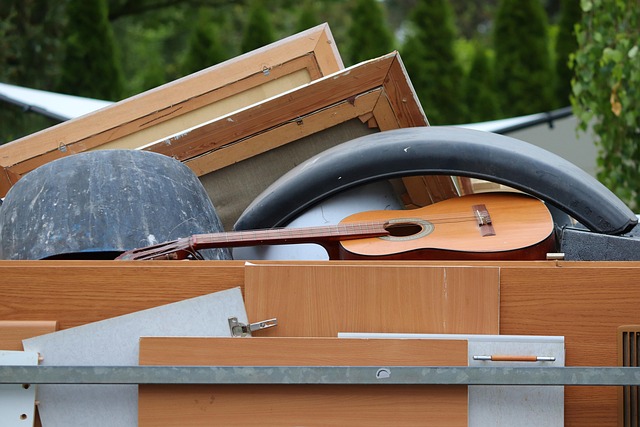
★Mark us as a preferred sourceBulky waste clean-up has been a recurring dispute between MOHU Budapest and the capital’s districts since 2025, but rarely has it been backed by such precise figures. On 9 November, Óbudai Vagyonkezelő Nonprofit Zrt. – the municipal asset manager of Budapest’s 3rd district, Óbuda-Békásmegyer – published an itemised account of what this autumn’s annual kerbside collection (lomtalanítás) left behind, how much work and money it took to tidy up, and why it believes the job should not have fallen to it. The Óbuda case is a good opportunity to look at what the law says, what MOHU argues, what the districts argue, and where the system breaks down.
In short: Bulky waste clean-up in Óbuda-Békásmegyer cost the district’s municipal company a gross HUF 13 million this year, after it gathered 297 cubic metres of abandoned bulky items, more than 6 tonnes of improperly dumped waste and 4.3 tonnes of tyres. The district says Hungary’s Waste Act makes this MOHU’s job; MOHU Budapest says its only duty is to remove the bulky waste itself – a dispute that has been repeating district by district since spring 2025.
What did the Óbuda asset manager report?
The 3rd district’s residential collection ran from 20 September to 5 October. According to the asset manager, items put out by residents remained on the streets for a long time in several parts of the district: MOHU fell behind in the very first days, the process kept faltering, removals slipped and waste piled up.
The company says MOHU sent the municipality an official letter in June 2026. In it, MOHU stated that it would collect, take over and remove the bulky waste, that it does not regard the subsequent street cleaning as its obligation, but that – as a gesture of cooperation – it would carry out a light finishing clean. The asset manager’s position, by contrast, is that under Act CLXXXV of 2012 on Waste the cleaning is the concession company’s responsibility.
In practice it was the municipal company that ended up restoring the streets, finishing only at the end of October. The tone of the statement is nonetheless not hostile: the asset manager says it continues to seek cooperation with MOHU.
The numbers: what was left on the streets?
The asset manager itemised what the tidy-up involved:
- a gross HUF 13 million spent on clearing abandoned items and illegally dumped waste;
- 297 cubic metres of leftover bulky waste – by the company’s calculation, about 20 fully loaded large refuse trucks;
- 6,350 kilograms of improperly placed waste, nearly 2 tonnes of it hazardous, including 560 kg of refrigerators, 535 kg of paint, 252 kg of asbestos, 64 kg of tar and 46 kg of used oil;
- 4,355 kilograms of tyres;
- 2,200 kilometres driven to the appropriate treatment facilities;
- six staff and one truck working for two weeks across roughly 12,000 square metres.
Hazardous waste requires dedicated transport and a licensed receiver, which explains a significant share of the cost.
Who is responsible for bulky waste clean-up? Two readings of the law
The heart of the dispute is what the Waste Act names and what it does not. The Act assigns to the service provider the organisation of the annual collection and the taking over, collection and removal of bulky waste placed in public areas – since July 2023 a task of the national concession system, carried out in Budapest by MOHU Budapest Zrt., a company jointly owned by MOHU and the City of Budapest. The Act also states that waste placed in public areas during the collection becomes the property of the service provider, and that only non-hazardous bulky waste may be put out.
The districts’ argument starts from there: if the waste put out belongs to the service provider, so does responsibility for whatever is left in the public space afterwards. The mayor of the 2nd district made exactly this point in summer 2025 when he threatened legal action. Municipalities also point out that in previous years the collection was always followed by cleaning.
MOHU Budapest’s argument is that the concession obliges it to remove bulky waste, which it does. In its view, the subsequent street cleaning and the removal of materials that do not qualify as bulky waste are the task of the district municipalities, in some areas the City, and property owners – and have been for more than a decade. In February the company also made clear that it is responsible only for properly placed household items, while illegal waste is the responsibility of whoever maintains the area.
Past practice was in fact more nuanced than either side suggests. According to the 2022 residents’ notice of FKF, the city’s former waste company, FKF cleaned the roadway after the collection, while cleaning the pavement in front of a property was the duty of its owner, operator or user. The task was already shared – it simply did not produce an annual exchange of letters.
MOHU Budapest’s response to the Óbuda figures was not known to us at the time of writing, so we present its position on the basis of the company’s earlier statements and letters.
Not a new dispute: district by district since 2025
The Óbuda case is the latest stop in a longer series:
- December 2024: MOHU presented its concept for a collection-point-based system, on which the Ministry of Energy also consulted the company (in Hungarian). The roll-out was postponed after protests from residents and municipalities.
- March 2025: the 13th district reported that, contrary to earlier practice, MOHU would not clean up after the collection. The company replied that this was not its task.
- August 2025: the mayor of the 2nd district threatened to sue if the cleaning did not take place.
- September 2025: MOHU Budapest announced it would temporarily cover the cost of cleaning (in Hungarian) where a district was unwilling to do so.
- February 2026: the company stated that waste put out by businesses during the residential collection is illegal and that it takes legal steps in such cases.
- Spring 2026: paper leaflets announcing collection dates were discontinued, as we reported in our article on the change in resident notifications (in Hungarian).
- June 2026: MOHU Budapest wrote to the districts about this year’s arrangements. According to the letter sent to the 7th district and published by that municipality, the company carries out the finishing clean while reserving its rights, and maintains its claim to have the resulting costs reimbursed by the district.
That last point is the crux: the 2026 arrangement is not an agreement but a temporary truce. The cleaning gets done, while each side maintains that the other should be paying.
What does the composition of the leftover waste reveal?
The most interesting part of the Óbuda list is not the total but what was left on the streets. Most of the items are waste that may not be put out for the annual collection at all: refrigerators, paint, used oil, asbestos, tar, tyres. On this the two sides actually agree – MOHU has been saying for years that waste which is neither bulky nor of household origin regularly appears during collection periods.
It is worth setting this alongside other changes this year:
- Tyres and e-waste: municipal collection days were suspended from 1 December 2025 and restarted only on 6 October 2026, under an entirely new system. The Óbuda collection ended on 5 October, so it fell entirely within that pause. We explained in September why municipal e-waste collection had stopped.
- Paint: the new collection days accept only empty, residue-free hazardous packaging; leftover paint still belongs at a waste yard.
- Construction-related waste: asbestos and tar typically come from demolition work, and dropping off household construction debris at waste yards has been subject to a fee since 1 July (in Hungarian).
These data cannot prove cause and effect, and improper dumping remains improper even when the legal route is inconvenient. The coincidence still deserves attention: when legal drop-off options narrow or become more expensive, the annual kerbside collection easily turns into the system’s overflow valve. And 4.3 tonnes of tyres – as the asset manager itself notes – points to business rather than household origin.
The delays are a separate issue. If items stay on the street for days, the piles grow and attract illegal dumping. In that case, the pace of removal and the cost of cleaning cannot be separated.
Where might a solution lie?
As things stand, the same exchange of letters takes place before every season, and in the end someone reluctantly cleans up. A few steps could make this more predictable:
- A written agreement per district before the season: who cleans what, by when, and who bears the cost of waste that does not qualify as bulky waste.
- A joint handover at the end of the collection: the district and the service provider record together what remains on site.
- Public data: the Óbuda summary is a rare exception. If every district published one, the share of illegal waste would be visible across the city.
- Enforcement presence on put-out days: MOHU itself has offered to share where illegal waste typically appears.
- Easily accessible legal drop-off: waste yards, collection days and take-back points, with targeted information in the weeks before the collection.
- Legal clarification: the cleaning question could be settled in the Act or in the concession contract.
The last point is timely. According to the government, renegotiation of the concession contract could begin within weeks, and the review of the waste management system was launched precisely because of grey zones like this one. Relations between municipalities and MOHU were strained beyond Budapest this year too: in Szentendre (in Hungarian) and Szolnok, disputes arose over regular waste collection. The common lesson is the same everywhere: where roles are not set out clearly in writing, the cost ends up with whoever is closest to the problem – typically the municipality, and therefore local taxpayers.
No final, public decision has yet been made on how Budapest’s annual collection will work after 2027. Whatever model follows, the cleaning question is worth settling in advance, because collection-point or on-demand systems will leave waste behind as well.
What can residents do?
- Put items out only on the day assigned to your address, after 6 p.m.
- Do not put out electronic waste, paint, oil, tyres or construction debris – these are not bulky waste.
- Use the waste yards: according to the Óbuda asset manager, the yard on Testvérhegyi út does not even require an appointment. Check acceptance conditions before you set off.
- Send complaints about the collection to both MOHU Budapest and your district.
dontwasteit.hu will continue to follow Budapest’s annual collection and will report if MOHU Budapest responds to the Óbuda figures.
FAQ: bulky waste clean-up in Budapest
Who is responsible for bulky waste clean-up in Budapest?
It is disputed. Districts argue that under Hungary’s Waste Act it falls to MOHU Budapest, because items put out become the service provider’s property. MOHU Budapest says its duty is only to collect and remove bulky waste, while street cleaning belongs to the districts, the City and property owners. In 2026 it carried out a light finishing clean voluntarily, reserving its rights.
How much did bulky waste clean-up cost Óbuda in 2026?
A gross HUF 13 million. According to the district’s asset manager, crews gathered 297 cubic metres of abandoned items, 6,350 kilograms of improperly placed waste and 4,355 kilograms of tyres. Six staff and one truck worked for two weeks across about 12,000 square metres, and the work was only completed at the end of October.
What did MOHU Budapest commit to for the 2026 collections?
In June 2026 the company wrote to the districts that it would collect, take over and remove bulky waste, but does not regard cleaning as its obligation. As a gesture of cooperation it nevertheless undertook a light finishing clean. The letter sent to the 7th district shows it did so while reserving the right to claim the costs back from the municipality.
What kind of waste was left on Óbuda’s streets after the collection?
Mostly waste that may not be put out at all. Nearly 2 tonnes of the improperly placed waste was hazardous, including 560 kg of refrigerators, 535 kg of paint, 252 kg of asbestos, 64 kg of tar and 46 kg of used oil. A further 4,355 kg of tyres was found, much of which the district believes did not come from households.
Where can residents take items that cannot be put out for the collection?
To a waste yard. Electronic waste, paint, used oil and tyres are not bulky waste and can be dropped off at waste yards; check the conditions before setting off. In Óbuda, the Testvérhegyi út yard requires no appointment, according to the asset manager. Since 6 October, municipalities can also request one collection day a year for e-waste and tyres.
🔗 Sources and references: 👉
- Óbudai Vagyonkezelő Nonprofit Zrt.: A note on the annual bulky waste collection (9 November 2026, in Hungarian)
- Municipality of Óbuda-Békásmegyer: residential collection starts on 20 September (in Hungarian)
- MOHU Budapest: Residential bulky waste collection 2026 (in Hungarian)
- MOHU Budapest Zrt.: Information on the 2026 district collection – letter addressed to the Municipality of Erzsébetváros (15 June 2026, published on the municipality’s website, in Hungarian)
- Municipality of Hegyvidék: Residential bulky waste collection 2026 (in Hungarian)
- Telex: MOHU collects and removes the waste, but says cleaning is not its job (13 March 2025, in Hungarian)
- hvg.hu: The 2nd district will sue MOHU if it does not clean up after the collection (7 August 2025, in Hungarian)
- Világgazdaság: MOHU Budapest makes an important commitment (September 2025, in Hungarian)
- Infostart: MOHU prepares to file complaints (21 February 2026, in Hungarian)
- FKF: Collection notice 2022 – on the website of the Municipality of Újpest (in Hungarian)
- Act CLXXXV of 2012 on Waste – provisions on the annual bulky waste collection
Consistent structure, quick answers: every article is built so that both readers and AI search tools can find the key points easily. Our content is produced with the help of AI tools and reviewed by our editor.
