




If you like our site, mark us as a preferred source on Google — so you’ll see our articles more often in search!
★Mark us as a preferred sourceOn 9 October 2026, the European Commission selected its second round of projects to secure the EU’s supply of critical raw materials: 46 investments in 16 Member States received Strategic Project status. The clearest message of the list is aimed at the waste sector, as more than half of the projects rely partly or entirely on recycling. They aim to recover lithium, cobalt, rare earths and copper from spent batteries, printed circuit boards, solar panels and copper scrap. Once again, no Hungarian project made the list.
In short: Of the 46 new Strategic Projects selected under the EU’s critical raw materials regulation, 19 are pure recycling projects and a further 5 integrated projects also include a recycling step. The projects cover 15 strategic raw materials; neighbouring Slovakia and Romania each have two projects, Hungary has none.
What does Strategic Project status bring?
The framework is the Critical Raw Materials Act (CRMA), adopted in May 2024. The regulation lists 34 critical raw materials, 17 of which are classed as strategic – including lithium, cobalt, nickel, copper, graphite, gallium and the rare earth elements used in permanent magnets.
The CRMA sets four benchmarks for 2030. At least 10% of the EU’s annual consumption should come from domestic extraction, 40% from domestic processing and 25% from recycling, while no single third country should supply more than 65% of EU consumption of any strategic raw material. For most of these materials the EU is still far from those levels; rare earth processing, for example, takes place overwhelmingly in China.
Strategic Project status is not direct funding but priority treatment. The projects are recognised as being in the public interest, their permitting is subject to time limits (a maximum of 27 months for extraction and 15 months for processing and recycling), and they get easier access to EU and national financing and to offtakers. Promoters are supported by national single points of contact, which 26 Member States have designated so far.
The second round in numbers
The second call, which closed in January 2026, attracted 102 applications. The Commission selected 46, in consultation with the Critical Raw Materials Board representing the Member States. The breakdown:
- 19 recycling projects – the largest group,
- 11 processing projects – refining, separation, metal production,
- 8 extraction projects – mines,
- 8 integrated projects – combining several steps (extraction and processing, or processing and recycling).
Germany hosts the most projects (8), followed by Finland, France and Italy with 5 each, and the Netherlands with 4. Together with the first list of 47 EU projects adopted in March 2025 and the 13 projects outside the EU selected in June 2025, there are now 106 Strategic Projects, 93 of them on EU territory.
By material, the list leans heavily towards the battery industry: 12 projects involve nickel, 10 cobalt, 7 battery-grade lithium, 5 manganese and 4 graphite. Defence and aerospace are served by 2 magnesium and 3 tungsten projects, and the permanent magnet value chain by 4 rare earth projects. These are the figures the Commission highlights, but counting through the attached project list shows that the most frequent material is actually copper, which appears in 19 projects. Only two of the 17 strategic raw materials – bismuth and boron – have no project.
Recycling is the new mine for critical raw materials
The real novelty of the second round is that 24 of the 46 projects produce raw materials from waste in some form. The first round was dominated by mines and processors; this time “urban mining” has moved centre stage. The table below groups the main recycling projects by waste stream:
| Waste stream | Project and country | Recovered material |
|---|---|---|
| Lithium-ion batteries (black mass) | cylib (DE), Back to Battery (NL), ECO LIFE STYLE (RO) | lithium, cobalt, nickel, manganese, graphite |
| Batteries in integrated chains | EMME (FR), AMG Lithium (DE), Pure Battery Technologies (DE) | lithium, cobalt, nickel, manganese |
| Magnets | HyProMag (DE), BREES – Rhodia (FR) | rare earth elements |
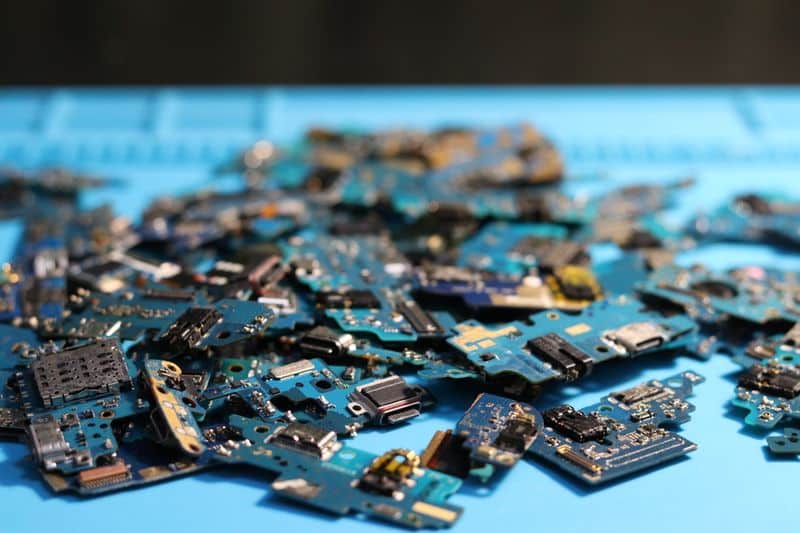
| Printed circuit boards, e-waste | CRITICAL. (NL), TDM Electronics (PL) | copper, aluminium, nickel, germanium, platinum group metals |
| Copper scrap, secondary copper | Aurubis Lünen (DE), ElvalHalcor (GR), Mitsubishi Materials (NL), Comet (BE), KGHM (PL) | copper, nickel |
| Aluminium scrap | ElvalHalcor (GR), Myne Circular Metals (NL) | aluminium, copper |
| End-of-life solar panels | 9-Tech (IT) | aluminium, copper, silicon metal |
| Catalysts, platinum group metals | Refinis (LT), Italrecycling (IT) | platinum, iridium, ruthenium |
| Semiconductor industry waste | CMK – GaRefine (SK) | gallium |
| Hard metal and tungsten scrap | OMCD TEK HUB (IT) | tungsten, cobalt, copper |
| Defence industry by-products | Leonardo – CRM4Defence (IT, PL, FR, UK) | aluminium, magnesium, titanium |
The list shows that a significant share of critical raw materials is already present in our waste streams – the problem is that it never reaches the recyclers. Collection is the bottleneck everywhere: a recent survey found that fewer than 40% of Americans recycle their old tech, and in the EU, too, close to half of all electrical and electronic waste still goes uncollected, taking copper, rare earths, gallium and germanium with it.
Europe is not alone in this race. Japan is subsidising rare earth recycling to reduce its dependence on China, and on the manufacturing side Apple now reports using recycled cobalt and rare earths at record levels. What is new in the EU is that urban mining now comes with legal targets and a priority project list.
Mines and smelters: circularity cannot replace everything
Alongside recycling, the list includes eight new mines. Three are in Finland (Hautalampi, Sokli, Suhanko), with Greece’s Skouries copper mine, KGHM’s Retków-Grodziszcze deposit in Poland, the Borralha tungsten mine in Portugal, Cobre San Rafael in Spain and the Viscaria copper mine in Sweden also selected. Lithium would be extracted by three integrated projects: from geothermal brines in France (Lithium de France) and Germany (Altmark), and from hard rock in Saxony (Zinnwald).
The processing projects strengthen the middle of the value chain, currently its most vulnerable section. Estonia’s Silmet 2.0 rare earth separation plant, Umicore’s cobalt and nickel refinery in Finland, Romania’s Verde Magnesium and Spain’s Abenójar tungsten plant bring steps to Europe that today take place almost exclusively in Asia.
Why are both needed? Because demand is growing faster than the volume that can be recovered from waste. The batteries and electronics placed on the market today will only become waste years from now. Circularity reduces the need for mining in the long run, but it cannot replace it in the short term.
Neighbours on the list, Hungary left out
Several countries in the region are represented. In Slovakia, CMK’s GaRefine gallium recovery project and Slovalco’s primary aluminium production received status; in Romania, a battery recycling plant in Răcari, Dâmbovița County, and the Verde Magnesium project. Bulgaria has Aurubis’s Pirdop copper refinery, and Poland has three projects, two of them from KGHM.
No project from Hungary was selected. This is notable because the country is one of Europe’s largest battery manufacturing hubs: according to an earlier estimate by the Hungarian Battery Association (HUBA), waste from the domestic battery industry could rise to around 286,000 tonnes by 2026. Production scrap of this kind is exactly the feedstock that Dutch, German and Romanian black mass processors are building on.
It is worth stressing, however, that companies must apply for Strategic Project status, so the absence does not mean there are no such investments in Hungary. The next call opens at the end of 2026, giving Hungarian players another opportunity.
What does this mean for household e-waste collection?
All recycling projects among the 46 share one need: a steady supply of good-quality feedstock. That feedstock sits in our drawers, garages and recycling centres – old mobile phones, laptops, e-scooters, power tool batteries and dismantled solar panels.
This is why collection systems are being rethought worldwide, and why it matters that waste is treated as an industrial resource rather than a burden – as with Cameroon’s new national waste exchange platform, which links waste producers directly with recyclers.
Three things anyone can do:
- Hand in unused electronics and batteries at a recycling centre, collection point or retailer – never in the mixed waste bin.
- Keep lithium-ion batteries out of household waste: they are a fire hazard in collection trucks and sorting plants, and the valuable metals are lost.
- Think reuse first: under the waste hierarchy, passing on a working device or reusing its components is even better than recycling.
What comes next?
The Commission has announced a new call for applications by the end of 2026 and plans to select further Strategic Projects outside the EU. A European Critical Raw Materials Centre will be set up to coordinate supply security measures. Member States have so far approved more than €1 billion in State aid for six Strategic Projects.
Overall, the second round signals that Brussels no longer thinks about critical raw materials only in terms of mining and industrial capacity, but sees waste management as part of supply security. According to the Commission, the projects selected so far could together meet the extraction benchmarks for lithium, nickel, rare earths, magnesium and tungsten, and the processing benchmarks for lithium and rare earths. Whether the capacities on paper become real plants will depend on permitting, financing – and, not least, on how much waste is actually collected.
Frequently asked questions about critical raw materials Strategic Projects
What are Strategic Projects for critical raw materials?
Strategic Projects for critical raw materials are extraction, processing or recycling investments that the European Commission grants priority status under the Critical Raw Materials Act. Their purpose is to help the EU cover a substantial share of its lithium, cobalt, rare earth and other strategic raw material needs from its own sources by 2030 and reduce dependence on any single country.
How many new Strategic Projects did the EU select in October 2026?
On 9 October 2026, the European Commission selected 46 new Strategic Projects in 16 Member States from 102 applications. Of these, 19 are recycling, 11 processing, 8 extraction and 8 integrated projects. Together with the first round of 2025 and the 13 projects outside the EU, there are now 106 Strategic Projects, 93 of them on EU territory.
Why is recycling important for the supply of critical raw materials?
Recycling matters because a large share of critical raw materials is already contained in spent batteries, electronic devices and metal scrap. On the new list, 24 projects produce raw materials from waste, including lithium, cobalt, rare earths and copper. Under the regulation, 25% of the EU’s annual consumption should come from recycling by 2030.
Is there a Hungarian project among the new Strategic Projects?
No, no project from Hungary received Strategic Project status in the second round. From the region, Slovakia and Romania have two projects each, Bulgaria one and Poland three. Companies must apply for the status themselves, so the absence does not mean there are no relevant investments in Hungary; the next call opens at the end of 2026.
What benefits does Strategic Project status bring?
Strategic Project status mainly means faster permitting and easier access to finance, not direct funding. The projects are recognised as being in the public interest, and permitting may take no longer than 27 months for extraction and 15 months for processing and recycling. National single points of contact, designated so far by 26 Member States, support the procedures.
What can households do to help recover critical raw materials?
The most important step is proper disposal: unused electronics and batteries should be taken to a recycling centre, collection point or retailer. Lithium-ion batteries in the mixed waste bin are a fire hazard, and their valuable metals are lost. Even better is passing on working devices or reusing their components before anything is recycled.
🔗 Official sources and references: 👉
- European Commission press release (IP/26/2113): Commission selects 46 new Strategic Projects to bolster the EU’s supply of critical raw materials
- European Commission: CRMA Strategic Projects 2026 – Factsheet, Publications Office of the European Union, 2026 (doi:10.2873/0267289)
Consistent structure, quick answers: every article is built so that both readers and AI search tools can find the key points easily. Our content is produced with the help of AI tools and reviewed by our editor.
