





If you like our site, mark us as a preferred source on Google — so you’ll see our articles more often in search!
★Mark us as a preferred sourceOn July 10, 2026, DEScycle officially opened its first demonstration plant at the Wilton Centre in Teesside. The investment marks a significant milestone in strengthening the UK’s domestic critical mineral supply chain, focusing on the local processing of complex electronic waste instead of exporting it overseas, thereby supporting the nation’s sustainability, innovation, and manufacturing goals.
Strategic Importance and State Support
The UK Government’s Critical Minerals Strategy has set an ambitious target for recycling to meet 20 percent of the annual domestic critical mineral demand by 2035. The launch of the Teesside metal recovery facility aligns perfectly with this objective, as critical and precious metals are essential for modern manufacturing, clean energy, the technology sector, and national security. Prior to the plant’s launch, Minister for Industry Chris McDonald visited the site to announce a £50 million government investment package aimed at supporting the domestic production of critical minerals. The Redcar facility was officially opened by Anna Turley, MP for Redcar, and Lord Ben Houchen, Tees Valley Mayor, in the presence of local dignitaries, investors, and key industry stakeholders.
Quantitative Data and Technological Capacity
The Teesside demonstration plant currently operates at a 250-kilogram batch scale. During this pilot and demonstration phase, the facility is capable of processing between 50 and 100 tonnes of electronic materials annually. The successful commissioning of the plant signifies that DEScycle’s technology has reached Technology Readiness Level 7 (TRL7). The primary goal of the project is to generate vital operational data within a real industrial environment, ensuring a smooth transition from pilot operations to repeatable, full-scale commercial deployment.
Recovered Metals and Industrial Partnerships
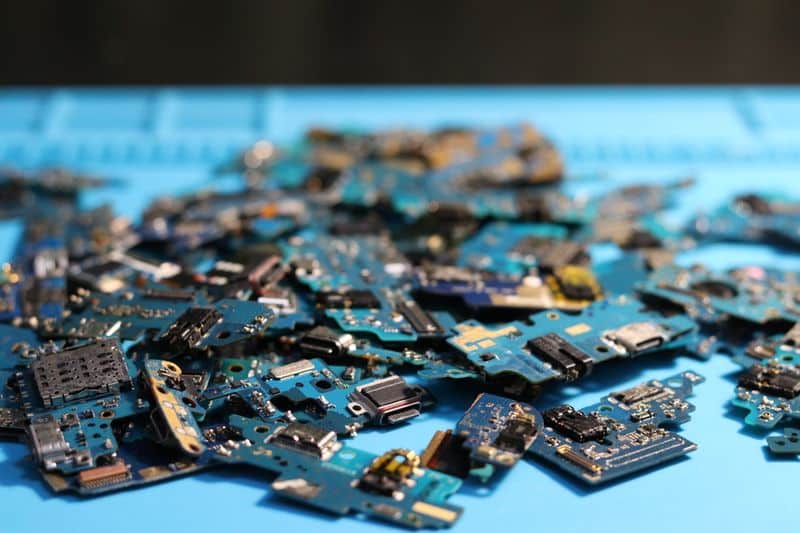
During its initial operations, the plant will focus on processing printed circuit boards and other complex electronic feedstocks. These raw materials are supplied by the company’s UK joint venture partner, GAP Group, a major player in the recycling sector. The initial products extracted through the metal recovery process will be gold, copper, silver, and palladium. Meanwhile, the company is actively developing recovery capabilities for tin, iron, and aluminum.
The investment is backed by extensive professional and commercial partnerships. Cisco is collaborating to provide raw materials for the facility, while Mitsubishi Corporation is conducting an offtake study to evaluate optimal commercial market routes for the domestically processed metals. The innovative chemical process used by DEScycle is based on chemistry discovered by researchers at the University of Leicester (supported by UKRI), while scaling from the laboratory phase to industrial deployment was achieved in collaboration with the UK’s Centre for Process Innovation (CPI).
Location Choice and Future Expansion Opportunities
The selection of the Wilton Centre was a strategic decision. The site offers advanced industrial infrastructure and the ideal technical capabilities required for pilot plants, seamlessly integrating into Teesside’s growing industrial innovation cluster. As part of the Pioneer Group ecosystem, the center provides a “plug-and-play” environment and technical development support for future scale-up.
Leo Howden, CEO of DEScycle, noted that the facility is the first operational blueprint of their distributed metals processing model. The data and experience gained here will prove that this modular technological capacity can be successfully replicated and deployed across other industrial clusters in the UK, the United States, Europe, and Japan.
References and Related Sources:
-
Original Article: DEScycle opens Teesside demonstration plant to strengthen UK critical minerals processing capacity
-
Official GOV.UK Announcement regarding the £50m fund: UK to secure critical minerals boosting economic resilience and cutting reliance on imports
