





If you like our site, mark us as a preferred source on Google — so you’ll see our articles more often in search!
★Mark us as a preferred sourceHungarians’ e-waste habits are clearly improving: in just one year, the share of people who keep an unused mobile phone at home fell from 60 to 48 percent. According to a new survey by Yettel and Impetus Research, published in October 2026, more and more people are willing to hand in their old devices, trust in refurbished phones is growing, and a rising number would rather have a broken phone repaired than replace it. We have also compared the results with similar studies covered recently on dontwasteit.hu.
In short: Yettel’s new survey shows that Hungarians’ e-waste habits are moving in a positive direction: 48 percent of respondents keep an unused phone at home, down from 60 percent last year. Willingness to hand in devices is rising, 11 percent of phones in use are already refurbished, and nearly seven in ten people would rather repair a broken device.
How have Hungarians’ e-waste habits changed?
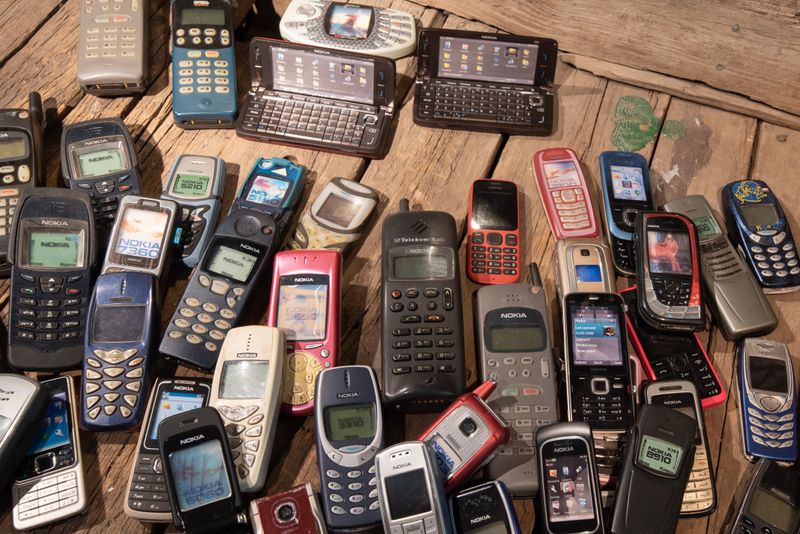
According to the survey, the average Hungarian owns two mobile devices, and the older one is usually kept as a backup in case the new one breaks, gets lost or is stolen. However, the share of people keeping an unused phone at home dropped by 12 percentage points in a year, to 48 percent – one of the most encouraging findings of the study.
Awareness of operators’ take-back programmes is remarkably high: 84 percent of respondents have heard that mobile companies accept used devices. 22 percent have already handed in an old phone this way, and more than half (59 percent) would consider trying it.
Knowledge of the risks of storing e-waste at home has remained broadly unchanged. The older the respondent, the more likely they are to know that a discarded phone counts as hazardous waste and must not go into household rubbish, while also containing valuable, recoverable raw materials.
Hungarians keep their phones longer than Serbians
Yettel also compared the Hungarian results with similar data from Serbia and Bulgaria, revealing major differences in replacement habits. 22 percent of Hungary’s urban population replace their phone at least every two years, compared with 44 percent in a similar target group in Serbia.
Even more telling, 33 percent of Hungarian respondents use their device until it breaks, while in Serbia this applies to only about a tenth of the population. Hungarian consumers are therefore more inclined to extend the lifetime of their phones.
From an environmental perspective, this is good news, since a large part of a smartphone’s environmental footprint is generated during manufacturing. As we reported in our article on Telekom’s summer take-back campaign, producing an average smartphone requires around 268 kilograms of raw materials, and a device may contain up to 63 elements of the periodic table. Every extra year a phone stays in use spreads that burden over a longer period.
Receipts, data deletion and cash: what drives people to hand in phones
The survey also asked what motivates people to hand in their old devices. Cash for the device comes first (38 percent), followed by vouchers or loyalty points (27 percent), and third, the assurance that data will be deleted from the returned phone (25 percent).
Attitudes towards the way devices are handed in have shifted notably. The share of people likely to use a collection box placed in operators’ shops rose from 46 to 58 percent in a year. The increase is even more striking among those who would hand over their old device to a staff member in exchange for a receipt: from 45 to 72 percent.
The message is clear: people do not simply want to “drop off” their phones; they want to know the device is in safe hands and their data will not fall into the wrong ones. The same insight lies behind regulatory efforts in Germany: in our article on stricter electronic waste take-back rules in Germany, we explained that certified data destruction – with a certificate confirming permanent deletion – is a central element of the pilot projects there.
Hungary already has a practical tool for this as well: under a government decision, retailers must provide customers with a free data deletion code when they buy a durable storage product. Details are available on the website of the National Media and Infocommunications Authority (NMHH).
Refurbished phones: reliability is the key question
79 percent of the phones currently in use were bought new, 11 percent are refurbished and a further 10 percent reached their owners second-hand in some other way. This stands out in a regional comparison: in Serbia and Bulgaria, the share of new-device buyers approaches 90 percent, while refurbished phone users account for only 1.5–3 percent.
Openness is high, too: half of Hungarian respondents (51 percent) would consider buying a refurbished device, compared with only a third in Bulgaria. The conditions, however, are strict. 86 percent expect the previous owner’s data to be completely erased, and 85 percent want a warranty similar to that of a new phone. The main concern is reliability, mentioned by 62 percent.
In this area, Yettel points to its partnership with Rejoy, launched last year: alongside trade-in for used phones, the operator also offers devices tested and refurbished by Rejoy.
Repair instead of replacement
One of the survey’s most important findings is the significant rise in willingness to repair. 67 percent of respondents would have a broken phone repaired even outside warranty, up from 54 percent in the previous survey.
Longer warranties also matter more and more. 81 percent would rather buy from an operator offering a three-year extended warranty instead of the usual two years, and 37 percent would definitely choose such a provider. Yettel provides an additional one-year voluntary warranty on top of the two-year manufacturer warranty for phones and tablets bought from it.
The regulatory environment points the same way: the EU directive on the right to repair has been in force in Hungary since 31 July 2026. Declared intentions should still be treated with caution, though. In our analysis of the real state of the right to repair, we showed that in Germany, owners have on average only a third of broken smartphones repaired, and repairability is a decisive factor for only 35 percent of buyers when choosing a new device. The gap between intention and actual behaviour is often wide.
What did earlier surveys show?
Yettel’s study is not the first of its kind: several Hungarian surveys have recently examined what happens to discarded electronic devices in Hungarian households.
A Magyar Telekom study published last spring – which we covered in our article on the 2.7 million phones lying in Hungarian drawers – estimated an average of 1.7 unused mobile devices per household, around 2.7 million in total. 66 percent of respondents kept their old device, yet 58 percent would hand it in without any compensation if they knew exactly where and how.
This spring we presented a MediaMarkt survey in our article on handing in electronic waste properly. It found that the most common reason for keeping old devices is a sense of security, while 18 percent of respondents do not hand in their devices because they lack information about the options. 15 percent of shoppers have already used trade-in.
These surveys used different methodologies, question wording and samples, so their figures are not directly comparable. The direction, however, is consistent: the willingness to hand in devices is there, and the main barriers are lack of information, inconvenience and distrust around data security. Yettel’s new data suggest that where operators offer in-person handover, receipts and data deletion, these barriers are gradually breaking down.
An expert view: why it matters where an old phone ends up
The 48 percent figure is an improvement, but it still means that nearly half of mobile users keep one or more discarded devices at home. A phone stored in a drawer not only removes valuable metals – gold, silver, palladium, copper – from the circular economy, but can also become a risk over time, as an ageing lithium-ion battery may swell or become damaged.
From a waste management perspective, the biggest problem arises when an old phone ends up in mixed or separately collected recyclable waste. During compaction and mechanical processing in collection vehicles and sorting plants, damaged lithium-ion batteries can cause fires – an increasingly serious operational safety challenge for the sector. An old mobile phone therefore belongs exclusively in the dedicated collection route for electronic waste.
What can you do with the phone in your drawer?
- Back up the data that matters to you, then restore the phone to factory settings and, if possible, use a reliable data deletion solution.
- If the device still works, pass it on, sell it, or use trade-in when buying a new phone.
- If it no longer works, take it to a collection point at a mobile operator or electronics retailer, or to a waste collection yard.
- Never put the phone or its battery in the mixed or recycling bin.
- If you choose a refurbished device instead of a new one, ask for a written warranty and find out how data deletion was carried out.
About the survey
The survey was conducted by Impetus Research between 4 and 11 August 2026 with 1,000 participants, using an online questionnaire (CAWI). It is representative of the Hungarian population aged 16–65 who own a mobile phone and a mobile subscription, by gender, age, region, settlement type, education, economic activity and primary mobile operator. People using only a company phone were not part of the target group.
Frequently asked questions about e-waste habits
How many Hungarians keep their old mobile phone at home?
According to Yettel’s 2026 survey, 48 percent of respondents keep an unused mobile phone at home. This is a significant improvement on the 60 percent measured a year earlier. Hungarians own two mobile devices on average, and the older phone is usually kept as a backup in case the new one breaks down.
What motivates Hungarians to hand in their old phones?
Cash for the device is the strongest motivator (38 percent), followed by vouchers or loyalty points (27 percent) and the assurance that data will be deleted from the returned phone (25 percent). In-person handover also matters: 72 percent would hand in an old phone if a staff member gave them a receipt for it.
How many people use refurbished phones in Hungary?
According to Yettel’s survey, 11 percent of phones currently in use are refurbished, 79 percent were bought new, and 10 percent reached their owners second-hand in another way. This is far higher than in Serbia and Bulgaria, where refurbished phones account for only 1.5–3 percent and new devices for nearly 90 percent.
What would make people buy a refurbished phone?
Among Hungarians open to buying a refurbished phone, 86 percent expect the previous owner’s data to be completely erased and 85 percent want a warranty similar to that of a new device. The biggest concern is reliability, mentioned by 62 percent of respondents. Overall, 51 percent would consider buying a refurbished phone.
How many people would repair a broken phone?
According to Yettel’s 2026 survey, 67 percent of respondents would have a broken phone repaired even outside warranty, up from 54 percent previously. Longer warranties also matter: 81 percent would rather buy from a provider offering a three-year extended warranty instead of the usual two years, and 37 percent would definitely choose one.
Why shouldn’t old phones go into household waste?
A mobile phone is electronic waste containing hazardous substances and a lithium-ion battery. If it ends up in mixed or recycling bins, the battery can be damaged and cause fires in collection vehicles or sorting plants. Phones also contain valuable, recoverable metals that are lost to the circular economy without proper recycling.
Source:
Yettel press release – Fewer and fewer old phones remain in the drawer (in Hungarian)
