


If you like our site, mark us as a preferred source on Google — so you’ll see our articles more often in search!
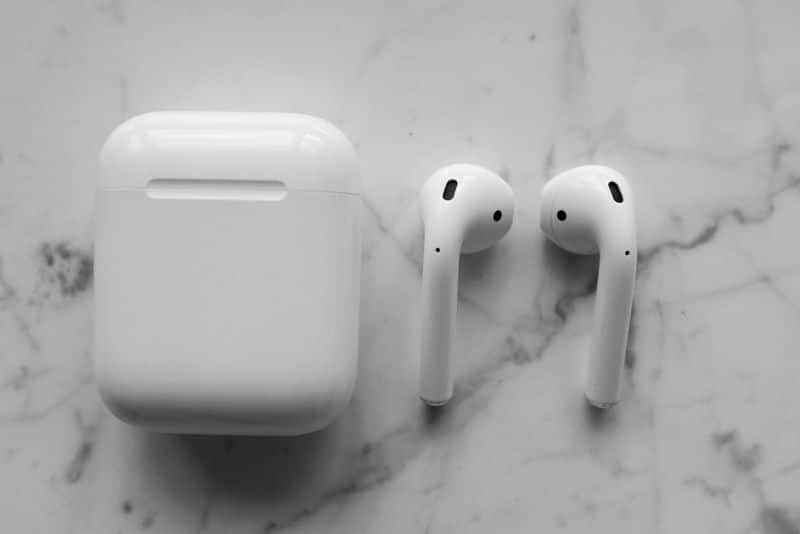
★Mark us as a preferred source14 October is International E-Waste Day, and this year the WEEE Forum has put the spotlight on something most of us could find in our own kitchen drawer: fast tech. The term covers small, inexpensive electronic devices – chargers, cables, LED strips, mini fans, earbuds, electronic toys – that we buy quickly, use briefly and replace just as quickly. The name is a deliberate nod to fast fashion.
The newly published consumer study, covering 10,245 adults in 12 European countries, does not lecture. Instead, it shows why we buy these products, why we are satisfied with them even though they fail early, and where they end up once we no longer need them. Some of the findings are surprising, and from a waste management point of view, genuinely worrying.
In short: Buying fast tech – small, inexpensive electronic devices – has become completely routine in Europe: 86.8% of adults surveyed in 12 countries own at least one such product. Buyers know these items will not last long and are satisfied anyway, but once they are done, the gadgets often end up in a drawer, in general waste or in the plastics bin.
What is fast tech, and how was the survey carried out?
There is no single official definition of the term, so the researchers made a clever choice: the word “fast tech” never appeared in the questionnaire. Respondents were asked about “small and inexpensive electronic devices” instead, so the label would not nudge them towards environmentally conscious-sounding answers.
The products were grouped into three families:
- Charging and lighting (under €10): chargers, cables, adapters, LED strips, bulbs, small lamps.
- High-tech devices (under €20): earbuds and other audio products, power banks, wearables, computer accessories, game controllers.
- Gadgets and lifestyle items (under €20): small appliances, electronic toys, beauty devices, home and pet gadgets.
Disposable e-vapes were included in some questions but kept separate throughout the analysis.
The study was commissioned by the WEEE Forum and 14 of its member organisations and carried out by Bellegarde Scientific Consulting, a French behavioural science consultancy. The 10,245 adults completed the online survey in July 2026 in France, Belgium, Romania, Poland, Ireland, Switzerland, Norway, Greece, the Netherlands, Portugal, Spain and the United Kingdom. Results were weighted by age, gender and population size.
An important limitation: Hungary was not part of the sample, and the authors themselves stress that the answers are self-reported, so they reveal associations rather than cause and effect. Data from Romania and Poland nevertheless offer a useful reference point for readers in Central Europe.
Cheap, handy and “does the job” – the implicit deal
The first surprise is sheer prevalence. Across the three product families, 86.8% of respondents own at least one such device (excluding e-vapes), and at least 44.1% have more than five at home. 87.4% have bought one at some point, and 77.6% did so in the previous 12 months (August 2025 to July 2026). According to the authors, this is no longer an exceptional choice but a routine part of shopping.
Why do people choose these over pricier alternatives? 55.2% of buyers cited price, 35.8% promotions and 28.5% the fact that the products are easy to find and prominently displayed. The researchers argue that a low price lowers the amount of thinking a purchase requires: if something costs only a few euros, you do not need to be confident that it is excellent or will last for years. Part of the promise, then, is that the cost of being wrong is small.
Most purchases do, however, have a practical purpose. The most common reasons were:
- a temporary replacement (40%),
- a spare device (39.6%),
- work, study or everyday use (36.4%),
- wanting a newer version (34.4%).
At the same time, 22.7% of buyers admitted buying something in at least one category without really needing it. As the authors put it, the issue is not that all fast tech is unnecessary, but that affordability makes it easier to cross the line between useful and tempting. Around half of buyers shop for these items online or in physical stores, and only 6.1% bought some at an airport or train station.
Most non-buyers (51.7%) simply did not need the product or already owned something similar. 26.8% prefer a higher-quality, longer-lasting alternative, while only 10.6% mentioned environmental concern.
Short lives, satisfied buyers
The researchers asked respondents to recall the device they had used for the shortest time. The answer is telling: 57.9% recall an item that lasted no more than six months, and 38.6% one they discarded unused, after a single use or within a month.
Note that this measure captures the worst remembered case, not an average lifespan. It does not mean most of these products fail within six months – but it does show that extremely short use is a familiar experience for a large share of European consumers.
You might expect this to cause widespread dissatisfaction. It does not. Only 8.4% of buyers are dissatisfied, 60.9% are satisfied and 30.7% neutral. Most say their devices met or exceeded expectations for lifespan (73.2%) and quality (76.5%). The explanation is simple: success is not measured by long life, but by adequate performance at a low price for as long as it is needed.
Durability still matters. 80.3% of respondents would have paid more for a longer-lasting version of at least some of the devices they bought. Yet when asked what they would do if such a device broke, 59.1% would buy another inexpensive one (39.5% a different cheap device, 19.6% the exact same model). Only 33.2% would switch to a more expensive alternative, and 6.5% would not replace it. Durability, in other words, is competing not with indifference but with a convenient, familiar and immediately available default.
We see the durability trade-off, not the environmental cost
This is one of the study’s key insights. Compared with more expensive alternatives, 45.8% of respondents expect cheap devices to have a shorter lifespan, but only 21% consider them more harmful to the environment. The remaining 79% assume equal or lower environmental impact. Just 16.2% see these products as both shorter-lived and more harmful.
Put simply, short lifespan is not linked to environmental impact in consumers’ minds. According to the researchers, communication needs to make exactly this chain visible: short life → frequent replacement → more production and raw materials → more electronic waste.
And consumers do know what they are buying: 82.7% are aware that these small devices contain electronic components. The gap is not in what we know about the product, but in what we know about its fate.
Drawer, bin, plastics container: where do discarded gadgets go?
Once a device is no longer used, no single route dominates. Here is what respondents did with gadgets they stopped using (multiple answers were possible):
- kept it at home: 29.3% – the most common answer,
- took it to a recycling centre or municipal facility: 27.4%,
- returned it to an in-store collection point: 18.9%,
- threw it in general household waste: 22.5%,
- threw it in the plastics bin: 20.8%,
- threw it in a street bin: 6.5%,
- gave it away or donated it: 11.2%, sold it: 3.4%.
Because people could report more than one route, these behaviours coexist: someone may recycle one device, keep another in a drawer and discard a third incorrectly. The researchers also built four mutually exclusive profiles: 31.9% used only recycling or reuse routes, 26.9% only waste-disposal routes, 15.5% only kept their devices, and 25.6% combined routes.
The most striking data concern the reasons behind these choices. Habit is the most frequent explanation (38.6%), followed by environmental protection (34%) and convenience (33.6%). Among those who used only waste bins, 20.6% said they did so to protect the environment. The answer is likely sincere – it simply rests on a mistaken belief about the right route. A charger or light-up toy thrown into the plastics bin does not get recycled; in a sorting plant it is a contaminant, and with a battery inside it is outright dangerous.
Hungarian data show an improving trend, at least for mobile phones: according to a Yettel survey, the share of people keeping their old phone at home fell from 60% to 48% in a single year – we covered this in detail in our article on e-waste habits.
Small device, big fire risk
A discarded cable or LED bulb is first of all a lost resource: plastics, copper and other metals that could be recovered. But a growing share of fast tech products now contain lithium-ion batteries – wireless earbuds, power banks, light-up toys, mini fans, disposable e-vapes.
When such a device ends up in general or packaging waste, it can be crushed or punctured in the collection vehicle, sorting plant or treatment facility and start a fire. According to the WEEE Forum’s Batteries Roundtable, 36% of e-waste operators surveyed experienced a battery-related fire at their facilities in the previous year. In France, the number of lithium battery–linked fires at waste treatment facilities doubled between 2019 and 2023.
We have looked at this risk from several angles before: our article on hidden lithium battery fire hazards uses Austrian data to explain why anything that sings or flashes must be collected separately, while our report on German industry associations’ fire-safety demands shows what immediate steps the sector is calling for. Disposable e-vapes deserve a story of their own: the Costa del Sol vape collection campaign recovered more than 600 kilograms in six months.
Large differences between countries
Cheap electronics are widespread everywhere, but not to the same degree. The share of respondents who have ever bought such products ranges from 82.6% in France to 95.6% in Greece. Purchasing in the previous 12 months ranges from 70.1% in the Netherlands to 88.8% in Greece, followed by Ireland (87.7%) and Romania (86.6%), with France (70.6%) and the Netherlands at the lower end.
The spread is even wider when it comes to what happens to devices afterwards. The share using only recycling or reuse routes is 25.7% in Romania and 25.8% in Poland, compared with 46.1% in Norway and 47.8% in Switzerland. Inappropriate waste disposal only is highest in Poland (33.3%) and lowest in Switzerland (11.7%), while keeping devices only is most common in Romania (23.4%).
The authors caution that country figures are not weighted within countries, so they should be read as indicative patterns rather than nationally representative numbers. The direction is still clear: where a dense, convenient take-back network has existed for years, the correct route is also more common.
Age is one of the strongest factors. 93.1% of 18–29-year-olds bought fast tech in the previous year, compared with only 61.3% of those aged 65 and over. The typical buyer’s mean age is 47.7, the typical non-buyer’s 59.5; buyers live in slightly larger households and are more often employed, while non-buyers are more often retired.
The statistical models show three factors that best distinguish buyers: age, their own attitude towards buying, and how much they feel the people around them approve. A more favourable attitude is linked with a 5.4-percentage-point higher probability of buying, stronger perceived approval with 2.4 points more, while a typical increase in age is linked with 6.5 points less.
The social environment offers little resistance. 51% of respondents expect neither approval nor disapproval from people important to them, 35.3% expect approval and only 13.7% disapproval. Almost half feel that more and more people are buying these products, and nearly three-quarters of buyers come across them at least weekly. Against this background, it is no surprise that 63.9% do not intend to reduce their fast tech purchasing.
There is one encouraging link, though: people who see these products as shorter-lived than pricier alternatives report lower intentions to buy in the future. Making durability visible really does matter.
“If you sell it, help recycle it” – the responsibility of online platforms
The survey also asked about a little-known rule. Online platforms selling electronic devices are legally required to contribute financially to e-waste collection and recycling – yet only 29.1% of respondents knew this, 13.8% had heard of it without knowing the details, and 57.1% were unaware of it.
According to the WEEE Forum, this is a structural problem. If an online seller is not registered under national producer responsibility legislation, recycling fees and take-back obligations may go unmet, leaving collection and treatment systems to deal with these products without the matching funding. Pascal Leroy, Director General of the WEEE Forum, calls fast tech “the blind spot of the e-waste world”. The organisation argues that anyone making money by selling electronics into a country should also contribute to the cost of collecting and recycling them – because compliant producers bear costs that non-compliant competitors avoid.
Before Black Friday: what can we do as shoppers?
It is no coincidence that International E-Waste Day falls a few weeks before Black Friday and the holiday season, when the largest wave of cheap electronics enters our homes. The WEEE Forum asks shoppers to look beyond the price tag and ask a few questions first:
- Do I really need it, or do I already have something similar at home?
- Can I get it second-hand or borrow it?
- Can the item I want to replace be repaired?
- Where will I return it when it is done?
The researchers also suggest a simple trick: look at what a device costs per year or per use. A more expensive charger or pair of earbuds that works for years often turns out cheaper on this basis than a cheap one replaced after six months.
For devices already at home, the campaign sets out three steps:
- Recognise it: anything with a plug, cable, circuit board or battery is electronic waste at the end of its life, however small or cheap. It does not belong in general waste, nor in the packaging waste container.
- Return it: to official collection points, retailer take-back locations or dedicated e-waste drop-off sites. In the European Union, retailers – including online retailers – have take-back obligations. Donation, repair and reuse are good alternatives too.
- Demand responsibility: regulators, retailers, platforms and consumers together can make sure sellers pay what collection and treatment require.
In Hungary, household e-waste can also be dropped off at waste yards in the MOHU network, and since 6 October municipalities can once again request residential collection events for electronic waste, batteries and accumulators – see our article on MOHU’s new system. Anyone keen to organise a community event can join the European Week for Waste Reduction 2026, with registration open in Hungary until 9 November.
What does the survey tell the waste sector?
Perhaps the most important lesson is that the problem is not ignorance. Consumers know they are buying electronics, they know these will not last long, and they accept the deal. That is why information alone will not change the dynamic.
According to the authors, durability, cost per year and end-of-life consequences need to become visible at the moment of choice – where the decision is made: in web shops, on marketplaces and through the content creators younger people follow. Take-back options should likewise be offered at the time of purchase, not only when the old device is about to land in the bin. For buyers, the goal is to interrupt and redirect a habitual choice; for non-buyers, it is to reinforce repairing, keeping and choosing durable products as socially valued options.
A cheap gadget is not a waste-free gadget: behind the few-euro price tag there are still metals, plastics and, increasingly, a battery – and their place is at the collection point.
Frequently asked questions about the fast tech survey
What does the term fast tech mean?
Fast tech is an umbrella term for small, inexpensive electronic devices that we buy quickly, use briefly and replace easily. The WEEE Forum survey covered three groups: chargers, cables and lamps under €10, plus audio products, power banks, electronic toys and small household gadgets under €20. The name is a deliberate reference to fast fashion.
How many Europeans buy fast tech devices according to the survey?
86.8% of the 10,245 adults surveyed in 12 countries own at least one fast tech device, and 77.6% bought one in the previous 12 months. At least 44.1% have more than five at home. Young people buy the most: 93.1% of 18–29-year-olds bought such a product within a year, compared with only 61.3% of those aged 65 and over.
Why are buyers satisfied even though the devices fail quickly?
Because success is measured not by long life, but by adequate performance at a low price for as long as needed. Although 57.9% recall a device used for six months or less, 60.9% of buyers are satisfied and only 8.4% dissatisfied. The researchers call this an implicit deal: a cheap, immediately useful and easily replaceable product with modest expectations.
Where do discarded fast tech devices end up?
No single route dominates: 29.3% keep unused gadgets at home, 27.4% take them to a recycling centre and 18.9% to an in-store collection point. Many, however, use the wrong route: 22.5% general household waste, 20.8% the plastics bin and 6.5% a street bin. Among those using only waste bins, 20.6% even believe they are protecting the environment.
Why is it dangerous to throw small electronic devices into general waste?
Because more and more cheap devices contain lithium-ion batteries, which can catch fire when crushed or punctured in a collection vehicle, sorting plant or treatment facility. According to the WEEE Forum, 36% of e-waste operators surveyed had a battery-related fire in the previous year. On top of that, metals and plastics thrown into general waste are lost as resources.
Where can unwanted small electronic devices be dropped off in Hungary?
Household e-waste can be dropped off at waste yards in the MOHU network and at retailer take-back points, since in the EU retailers, including online retailers, have take-back obligations. Since 6 October, municipalities can once again request residential collection events for electronic waste, batteries and accumulators. Small electronics do not belong in general or packaging waste.
Sources:
- WEEE Forum: International E-Waste Day 2026: ‘Fast Tech’ Fuels Growing E-Waste Concern (14 October 2026)
- Bellegarde Scientific Consulting – WEEE Forum: Fast Tech Consumer Study – Final Full Report (September 2026)


