
'/%3E%3C/svg%3E)



If you like our site, mark us as a preferred source on Google — so you’ll see our articles more often in search!
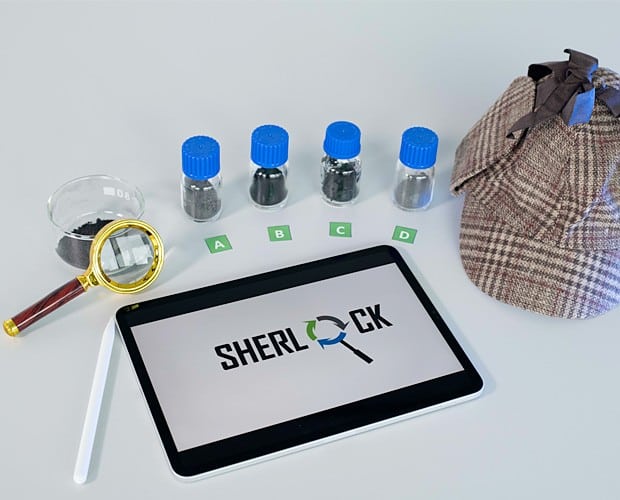
★Mark us as a preferred sourceThe Sherlock battery recycling project has officially launched to revolutionize the processing of secondary raw materials from lithium-ion batteries. Driven by stringent European Union regulations and the rapid expansion of e-mobility, establishing a sustainable and economically viable circular economy has become critical for the European industry. The project promises precise data and new industrial standards.
EU Guidelines and the Background of the Sherlock Battery Recycling Initiative
The current EU Battery Regulation mandates ambitious recycling quotas for member states and industry players. The ultimate goal is to establish a resilient and sustainable value chain, particularly for German and European electric mobility providers. To tackle these specific challenges, the Sherlock battery recycling research initiative has been established. The full title of the project is “Systematic and high-precision evaluation of black masses from lithium-ion battery recycling and processing for optimized and smart circular management.” Operating from April 2026 to March 2029, the initiative is backed by a substantial budget of 2,652,000 Euros (€2.65 million) under the government grant ID “FKZ 03XPB043A-G.”
The Challenge of “Black Mass”
A fundamental prerequisite for efficient recycling is the application of intelligent processes and the high-quality treatment of materials recovered from lithium-ion batteries. A central intermediate product in this value chain is known as “black mass.” However, the composition of black mass is highly variable. Existing impurities have historically complicated further processing, leading to significant efficiency losses and quality compromises in the final recycled materials. The primary objective of the project is to develop new analysis and characterization methods that enable a precise, reproducible evaluation of this material.
Innovative Analytical Methods and Technological Approaches
During the research, specialists will analyze both real industrial black masses and specifically manufactured model materials with predefined properties. This dual approach allows for the systematic investigation of the effects of specific impurities and the targeted validation of various analytical methods. A particular focus is placed on understanding how impurities affect direct and hydrometallurgical recycling processes. The project utilizes highly advanced analytical techniques, including synchrotron X-ray fluorescence analysis (SR-XRF), total reflection X-ray fluorescence analysis (TXRF), optical emission spectrometry, inductively coupled plasma mass spectrometry (ICP-OES/MS), and time-domain nuclear magnetic resonance (TD-NMR).
Hybrid Processes and Industrial Standardization
Researchers are also evaluating the potential of hybrid recycling process chains that specifically combine direct and hydrometallurgical approaches. This strategy aims to leverage synergies and further maximize the efficiency of material recovery. Consequently, the project will generate a comprehensive catalog of criteria for evaluating black masses, which will facilitate a process-optimized selection of recycling pathways in the future. A major deliverable will be a transferable and industrially scalable technical specification—standardized guidelines covering sample preparation, calibration strategies, and measurement conditions. This specification will be officially submitted to the DIN and ISO standards committees.
Consortium Partners and Environmental Impact
The project paves the way for a data-driven, quality-assured circular economy. The optimized recycling process and the efficient return of secondary raw materials to the production cycle can contribute to reducing greenhouse gas emissions by up to 25 percent. The strong consortium features the University of Münster (MEET Battery Research Center), the Physikalisch-Technische Bundesanstalt (PTB, Berlin), the Federal Institute for Materials Research and Testing (BAM, Berlin), the Fraunhofer Institute for Silicate Research ISC (Würzburg), and the Öko-Institut e.V. (Darmstadt). Associated partners from the recycling industry actively support the consortium by providing black masses and thematic advisory support.

FAQ
What is the Sherlock battery recycling project?
It is a comprehensive research initiative aimed at the systematic and high-precision evaluation of black masses from lithium-ion battery recycling to foster a smart circular economy.
What is the budget and timeline of the project?
The project runs from April 2026 to March 2029 and is supported by a total budget of 2,652,000 Euros.
Who are the partners in the Sherlock consortium?
Key partners include Fraunhofer ISC, the University of Münster, PTB, BAM, and Öko-Institut, supported by associated partners from the recycling industry.
What is “black mass” in this context?
It is a central intermediate product generated during battery recycling that contains valuable secondary raw materials, but its variable composition and impurities currently complicate efficient processing.
References:
-
Original Source: Fraunhofer ISC Press Release
-
State/Government Partner: Federal Institute for Materials Research and Testing (BAM)
Consistent structure, quick answers: every article is built so that both readers and AI search tools can find the key points easily. Our content is produced with the help of AI tools and reviewed by our editor.
