




If you like our site, mark us as a preferred source on Google — so you’ll see our articles more often in search!
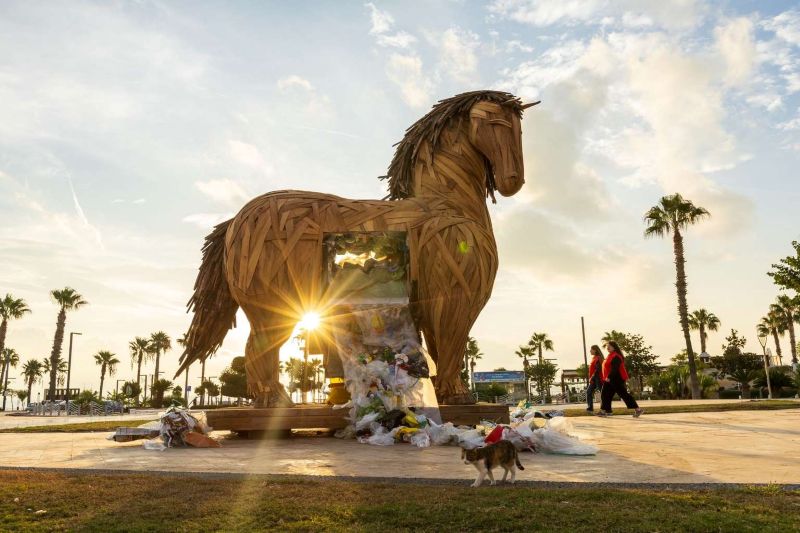
★Mark us as a preferred sourceThe Greenpeace COP31 Trojan Horse installation brought a stark visual warning to the United Nations climate conference in Antalya, Türkiye, highlighting how the fossil fuel and petrochemical industries rely on plastic expansion to protect their profits. Standing six metres tall in front of the Konyaaltı Municipality building, the recycled-material sculpture spilled plastic waste from a trapdoor in its belly as campaigners called for production caps and a ban on plastic waste imports.
In short: On 13 November 2026, Greenpeace and Danish artist Thomas Dambo unveiled a 6-metre-high and 4-metre-wide Trojan Horse sculpture made from recycled materials during the UN COP31 climate conference in Antalya, Türkiye. The action highlights that 99 percent of plastics are produced from fossil fuels, warning that oil and gas companies are increasing plastic output to compensate for declining fuel demand. Ahead of the March 2027 Global Plastics Treaty negotiations, Greenpeace is urging world leaders to cut plastic production at its source, halt new petrochemical investments, and ban plastic waste imports to achieve a genuine Zero Waste policy.
What Happened During the Greenpeace COP31 Trojan Horse Action in Antalya?
On 13 November 2026, during the 31st Conference of the Parties to the United Nations Framework Convention on Climate Change (COP31) held in Antalya, Türkiye, Greenpeace unveiled a giant Trojan Horse sculpture to expose the deep ties between the petrochemical sector, fossil fuels, and global plastic production. Set up in front of the Konyaaltı Municipality (Konyaaltı Belediyesi) building in central Antalya, the structure was built for Greenpeace’s plastics campaign in collaboration with Danish artist Thomas Dambo, who is internationally recognized for constructing large-scale sculptures exclusively from recycled materials and trash.
Measuring six metres in height and four metres in width, the installation was inaugurated with a live performance by Greenpeace Türkiye activists. When the trapdoor located in the belly of the wooden horse was opened, plastic waste poured out onto the ground. According to the official press release by Greenpeace, the artwork delivered a direct message to world leaders gathered for the climate negotiations: plastic is the fossil fuel industry’s Trojan Horse.
Ninety-Nine Percent Fossil Fuel Origin: Plastic as Big Oil’s Escape Hatch
The quantitative core of the demonstration rests on the fact that 99 percent of plastics are manufactured from fossil fuels. As global demand for oil and gas declines, the fossil fuel industry is ramping up plastic production to safeguard its profits, thereby keeping the global economy locked into fossil fuel dependence. Behind everyday products and familiar packaging lies an industrial strategy that pushes for higher polymer output, undermining essential climate action.
Furthermore, plastic contributes to the climate crisis across its entire life cycle, starting from the extraction of fossil fuels, continuing through the refining and manufacturing stages, and ending with waste disposal.
Thomas Dambo, creator of the Trojan Horse installation, explained that he builds his sculptures strictly from recycled materials and discarded waste to prompt people to reflect on overproduction and the sheer volume of plastic being manufactured. He noted that at COP31, the Trojan Horse exposes what everyday plastic conceals: its direct connection to oil and gas. While political leaders negotiate the world’s climate future, the fossil fuel sector continues to expand through plastics. Dambo expressed hope that the sculpture would spark curiosity and convey a clear message that achieving a healthier climate requires cutting plastic production.
Türkiye’s Zero Waste Initiative and the Call to Ban Plastic Waste Imports
Promoting the Zero Waste (Sıfır Atık) initiative is among the key priorities for Türkiye as it holds the COP31 Presidency. Addressing the demonstration in Antalya, Berk Butan, Social and Economic Systems Campaigner at Greenpeace Türkiye, connected the installation to the ancient history of the region. He pointed out that just like in the legend of Troy, the horse appears to be a harmless gift from the outside while concealing something inside that threatens human lives.
Butan emphasized that the fossil fuel industry is using plastic as an escape hatch, even as plastics deepen the climate crisis from production to disposal and pollute the soil, air, and coastlines. He stated that while Türkiye is showcasing its Zero Waste initiative to the international community at COP31, a comprehensive Zero Waste policy must include placing strict limits on plastic production and closing national borders to plastic waste from other countries. We have previously examined the data behind cross-border waste shipments in our analysis on Turkey Plastic Waste: Europe’s Export Terminus.
Through its “Zirveye Taşı” (Take It to the Summit) campaign, Greenpeace Türkiye brought specific policy demands to Antalya:
-
Expanding the Zero Waste vision to cover the production phase and cutting plastic production at its source.
-
Halting all new petrochemical investments as well as stopping new coal projects.
-
Banning plastic waste imports to achieve genuine Zero Waste targets.
-
Supporting reuse and refill systems within international regulatory frameworks.
Road to the March 2027 Global Plastics Treaty Negotiations
Beyond national waste policy, the Antalya installation serves as a milestone ahead of the next official round of the Global Plastics Treaty negotiations, which is scheduled to take place in March 2027. Greenpeace is calling on governments to adopt a legally binding treaty that reduces plastic production at the source and accelerates a just transition away from fossil fuels.
Jacob Kean-Hammerson, Global Plastics Policy Lead at Greenpeace USA, stated that plastic acts as Big Oil’s Trojan Horse—functioning as a mechanism to continue profiting from fossil fuels, ongoing climate emissions, and environmental pollution. He warned that governments cannot effectively combat the climate crisis while permitting unchecked plastic production to endanger communities, human health, and the future.
Through the six-metre Trojan Horse in Antalya, Greenpeace challenged leaders at both COP31 and the upcoming March 2027 negotiations to confront the fossil fuel interests driving polymer expansion, emphasizing that a healthy climate and a truly Zero Waste future depend on cutting plastic production and prioritizing people and the planet over polluters’ profits.
Frequently Asked Questions (FAQ)
What are the exact dimensions of the Greenpeace Trojan Horse at COP31?
Created in collaboration with Danish artist Thomas Dambo using recycled materials and trash, the Trojan Horse installation stands six metres high and four metres wide, and was exhibited in front of the Konyaaltı Municipality building in Antalya on 13 November 2026.
What percentage of plastic is produced from fossil fuels according to the report?
According to Greenpeace’s press release, 99 percent of plastics are made from fossil fuels, contributing to greenhouse gas emissions and the climate crisis throughout their entire life cycle from extraction and manufacturing to disposal.
What is Greenpeace Türkiye demanding regarding Türkiye’s Zero Waste policy?
Greenpeace Türkiye is demanding that the Zero Waste vision be expanded to restrict production at its source, halt new petrochemical investments and new coal projects, and enforce a complete ban on plastic waste imports into the country.
When is the next round of Global Plastics Treaty negotiations scheduled?
The next official round of negotiations for the Global Plastics Treaty is scheduled to take place in March 2027.
Consistent structure, quick answers: every article is built so that both readers and AI search tools can find the key points easily. Our content is produced with the help of AI tools and reviewed by our editor.
