


If you like our site, mark us as a preferred source on Google — so you’ll see our articles more often in search!
★Mark us as a preferred sourceWM (formerly Waste Management) announced in an official press release that, due to growing safety risks within its waste management network, it is overhauling its recycling guidelines. The previous three fundamental principles are being supplemented with a fourth, critical rule in the company’s Recycle Right® program: from now on, batteries must not be placed in either recycling or general waste bins. The strict measure aims to educate the public, prevent fires at waste processing facilities, and protect the people working there daily.
Expanding the Recycle Right® Program
For years, WM’s Recycle Right® program has focused on three simple, widely known rules to help the public recycle correctly: recycle clean, dry, and loose (unbagged) materials. Now, however, the company is adding a fourth rule to the list due to new challenges emerging in the waste stream. Introducing the “no batteries” principle brings attention to a ballooning problem that is rapidly increasing due to the proliferation of everyday, battery-powered consumer goods. The harmful effects of this trend are already manifesting in daily waste management operations.
Alarming Industry Statistics and Quantitative Data
The rule change is justified by severe industry and market data. According to estimates by the National Waste & Recycling Association, approximately 5,000 battery-related fires occur annually in American recycling facilities nationwide. The vast majority of these incidents are caused by power sources thrown into standard trash or recycling bins.
Future outlooks require even greater attention: according to Market Reports World data, alkaline batteries currently make up the majority of single-use batteries, while Statista forecasts show that market demand for lithium-ion batteries will increase nearly sevenfold (7X) by 2030. The drastically surging volume of batteries multiplies the chances of improper disposal, thereby increasing the risk of fires in collection trucks, landfills, and recycling centers.
Why Are Discarded Power Sources Life-Threatening?
By their physical design, batteries store energy. If their casing is damaged, the energy trapped inside can release extremely quickly and unpredictably, causing an immediate fire.
Damage is almost guaranteed during completely normal collection and processing routines. Incoming materials are compacted in trucks, then sorted on conveyor belts and moved at high speeds in the facilities. Under such physical impacts, batteries can easily break, overheat, or spark. The most common and dangerous risk scenarios include:
-
Physical compaction and crushing of batteries inside waste collection trucks.
-
Crushing or puncturing inside automated sorting equipment.
-
Direct contact with metals or other batteries causing a short circuit.
-
Exposure to high heat during processing.
Ryan Nordt, WM’s Managing Director of Recycling Operations, emphasized in the announcement: “Keeping batteries out of recycling and trash helps prevent fires and protects the people and facilities that handle recyclables and waste every day.”
What Everyday Devices Are Affected?
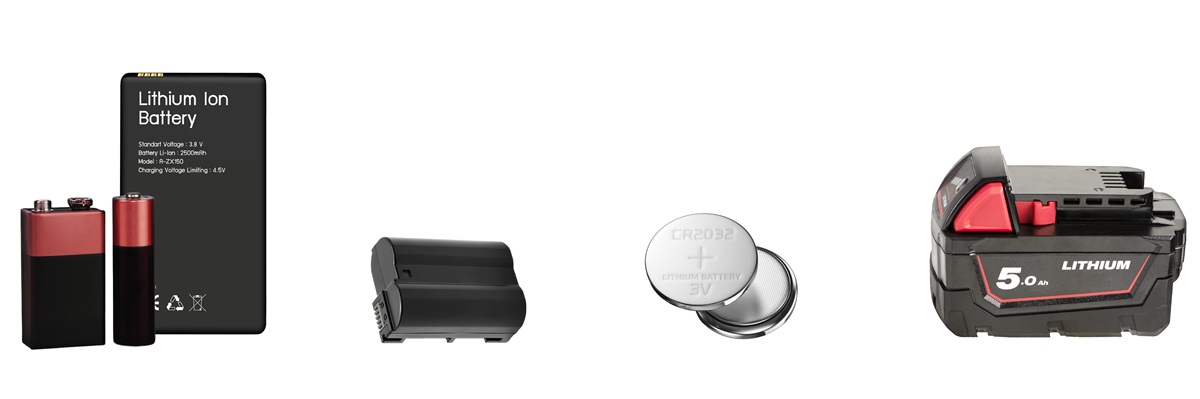
Although most of the public primarily associates lithium-ion batteries with mobile phones and laptops, these dangerous power sources are present in countless other items. Examples include wireless earbuds, electric toothbrushes, battery-powered tools, electronic musical instruments, musical greeting cards, Bluetooth trackers, and small household appliances.
However, attention must be paid not only to lithium power sources: traditional alkaline batteries used in remote controls, wall clocks, children’s toys, and flashlights also carry significant fire and accident risks if disposed of improperly. It is an important fact that even batteries that can no longer power a device may store enough residual energy to spark a fire.
Steps for Safe Waste Management
Based on WM’s official recommendation, the following steps must be followed for the safe disposal of batteries:
-
Never place power sources in curbside general waste or recycling bins.
-
Visit the batterysafetynow.org educational portal to find official drop-off locations.
-
Use take-back programs at hardware and electronic retail stores.
-
Inform yourself about and utilize local government household hazardous waste collection programs.
-
Before storage and transport, the terminals (poles) of the batteries must always be taped with a piece of electrical tape.
References:
-
Original reference: WM Media Room – New Recycling Rule: Don’t Put Batteries in the Bin
-
Government/State educational and procedural reference related to the campaign cited in the source: US Forest Service & batterysafetynow.org joint educational program | Wood County Ohio – Battery Drop-off Guidelines


