




If you like our site, mark us as a preferred source on Google — so you’ll see our articles more often in search!
★Mark us as a preferred sourceRecycling away from home is one of the least visible yet biggest untapped reserves in waste management. Fresh figures now back this up: according to WRAP Cymru’s 2026 research, 94 percent of people in Wales regularly recycle at home, but once they step outside the front door, the good habit fades surprisingly fast. A BBC Wales report explored the workplace side of the story. And Wales is no ordinary case: it is currently ranked the second-best recycling nation in the world. If the gap between the kitchen bin and the festival bin is this wide even there, we in Hungary have plenty to learn from it.
In short: Recycling away from home in Wales lags well behind recycling at home: 94 percent of people regularly recycle at home, but only 65 percent do so at attractions and days out, and just 32 percent of them do it very often. The bins are mostly there, people simply don’t notice them, and trust in the system is weak.
A routine at home, an exception outside
Since 2004, WRAP (the Waste and Resources Action Programme) has surveyed public attitudes, knowledge and behaviour around recycling every year. This is the Recycling Tracker. The 2026 Welsh edition looked in detail for the first time at what happens when people generate waste outside their homes.
The numbers are clear:
- at home, 94 percent of respondents recycle regularly,
- at attractions, visitor destinations and days out, only 65 percent say they often recycle,
- and of those, just 32 percent do so very often.
From a professional point of view, this is no surprise. At home, the same bins stand in the same place every day, the system is familiar and the decision is automatic. On a beach, in a museum or at a concert, the system is unfamiliar, the bin colours and labels differ, we are in a hurry, our hands are full of food and drink, and nobody is watching where the cup goes. The habit does not travel with us on its own.
The bins are there, but nobody sees them
Since April 2024, the law in Wales has required every organisation to provide separate recycling facilities for staff and visitors. Workplaces, visitor centres, festivals, public venues: in principle, recycling bins should be everywhere.
Practice tells a different story. Or rather, people’s memory does:
- only 56 percent of respondents recall seeing recycling facilities at visitor attractions,
- at music events, the figure drops to just 36 percent.
This is an important distinction. The problem is not necessarily that there are no bins, but that they are not prominent, not clear, or not where the waste is generated. A recycling bin tucked into a corner with a tiny label effectively does not exist for a visitor. WRAP draws the same conclusion: improving visibility is one of the cheapest and quickest ways to raise recycling rates.
Recycling is weaker at work and university too
The survey also examined workplaces and education settings. According to the BBC Wales report and Nation.Cymru:
- at work, only 61 percent of respondents recycle very often,
- just 30 percent say they see plenty of recycling facilities at their workplace, and one in five cannot recall seeing any,
- among college and university students, the share recycling very often is 45 percent,
- and 38 percent of students cannot recall seeing any recycling option at their institution.
All this more than two years after the workplace rules came in. Under these rules, businesses in Wales must separate their waste into the same categories as households, six streams in total. Compliance is still mixed. Natural Resources Wales, which oversees the rules on behalf of the Welsh Government, told the BBC that 56 percent of businesses complied during the first two years. No workplace has been penalised so far: the regulator has focused on advice and support, and most non-compliant companies have taken action.
According to WRAP, it is up to businesses to provide the right bins, while confusing, inconsistent signals make correct sorting harder. Organisations are using more and more tools to close the gap: clearer signage, dedicated recycling points, and engaging staff and students. Collection services can differ from area to area.
Vale of Glamorgan Council, for example, offers businesses three service tiers depending on their size and the amount of recyclables they produce, and says the change has led to higher-quality recycling. Cardiff University, for example, aims to make recycling as simple as possible and to put clear information in the places where students and staff spend their days. Universities matter in a special way, because the habits formed there can last long after graduation.
When sorting isn’t part of the job description
Why do we behave differently at work than at home? Waste consultant Rebecca Colley-Jones told the BBC that at home we are responsible for our own waste, and the neighbours can see what we put out. That gentle social pressure is missing at work, and many people simply don’t think recycling is part of their job. She added that tourism and hospitality businesses have an extra task in guiding their guests. She also acknowledged that the change has cost businesses money, and that differing collection arrangements can sometimes be confusing.
People asked on the street in Wales confirmed this. A 56-year-old man from Barry admitted he rarely recycles when out and about, because every unfamiliar bin means working out what goes where. A 30-year-old man often takes his rubbish home, because his workplace only collects cardboard separately. A 47-year-old woman working in a hospital, however, recycles as much at work as at home, because the bins are everywhere there.
A good example is the Newport office of recruitment firm Acorn by Synergie. When they moved in in 2003, they produced six large bins of waste a week. Today, thanks to sorting that also covers food waste, one collection a week is enough. The biggest change was removing desk and personal bins and setting up central recycling points in every department instead. Director Mark Rudge admitted this met strong resistance at first, as many people were attached to their own little bin. After a few months, however, staff brought their home habits to work, compliance improved significantly, and new colleagues now join in straight away. The company says the higher recycling costs are offset by sending less waste to landfill.
Without trust, there is no good sorting
Placing the bins is only half the story. WRAP’s research shows that it is just as important whether people trust the system and understand what happens to their waste after collection.
Even in Wales, one of the best-performing systems in the world, only 20 percent of people feel very confident that their recycling is actually recycled. Roughly one in five (22 percent) are unsure or not confident.
Respondents said their confidence is undermined most by:
- stories about recycling being sent abroad,
- not seeing what happens after collection,
- seeing other people not recycling.
Sound familiar? In Hungary we regularly hear that “they tip it all into the same truck anyway”. This myth works exactly like the Welsh mistrust: if people don’t believe it matters, they won’t pay attention, especially in an unfamiliar place where sorting already takes more effort.
Where does recycling collected in Wales go?
To build trust, WRAP chose the simplest tool: showing the numbers. According to My Recycling Wales, 92 percent of recycling collected in Wales is processed within the UK, and more than half stays in Wales.
By material:
- plastic: 81 percent in the UK, 41 percent in Wales,
- glass: 100 percent in the UK, 44 percent in Wales,
- metal: 83 percent in the UK, 40 percent in Wales,
- food waste: 100 percent in Wales, most of it turned into renewable energy.
These figures underpin WRAP Cymru’s first campaign designed specifically for recycling away from home, Be Mighty. Recycle. This summer’s campaign follows the journey of everyday items recycled at locations across Wales, to make it tangible that a bottle, can or cup in the right bin really does get a new life.
What can Hungary learn about recycling away from home?
The Welsh situation differs from the Hungarian one in several respects. In Hungary, MOHU has been responsible for collecting and treating municipal waste since July 2023, and since January 2024 the mandatory deposit return system (REpont) has taken a large share of drinks bottles and cans out of public bins altogether. The lesson is still the same: recycling away from home does not depend on whether the option exists in principle, but on whether it is noticeable, clear and credible.
For event organisers, festivals and visitor sites:
- the recycling bin should always stand next to the general waste bin, never on its own in an out-of-the-way spot,
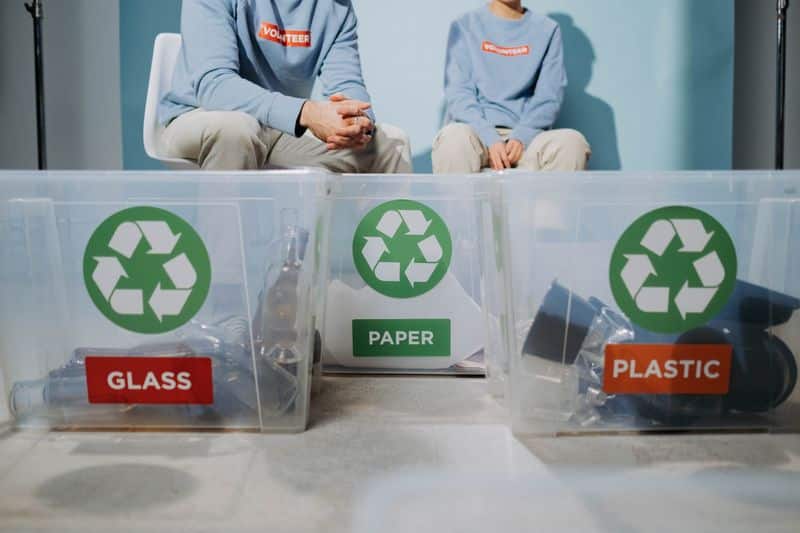
- it should be large, colourful and recognisable from a distance, showing with pictures what goes in,
- it should be where the waste is generated: next to food stalls, bars and exits,
- after the event, it is worth telling visitors how much material was collected and what happened to it.
For workplaces, schools and universities:
- a uniform system is needed throughout the building, with the same colours and labels,
- recycling points belong near kitchens, canteens and printers, not at the end of the corridor,
- replacing desk and personal bins with central recycling points works: the Newport example shows people get used to it within a few months,
- engaging staff and students is worth more than any poster.
And for all of us: when in doubt, read the label on the bin rather than guessing. Wrongly sorted waste lowers the quality of everything else in the bin. A good habit at home only really counts when it comes along in our bag.
About the research
The 2026 Welsh results of WRAP’s Recycling Tracker are based on an online survey of 1,004 adults in Wales. Fieldwork took place between 26 February and 13 March 2026, the sample was weighted by age, gender and region to represent the Welsh adult population, and statistical testing was carried out at the 99 percent confidence level. Alongside the long-running questions, this year’s survey looked specifically at trust in recycling, recycling away from home and at work, public knowledge, and the factors influencing recycling behaviour.
FAQ about recycling away from home
How much weaker is recycling away from home in Wales than at home?
The gap is significant. According to WRAP Cymru’s 2026 survey, 94 percent of people in Wales regularly recycle at home, but only 65 percent usually recycle at attractions and days out, and just 32 percent of them do so very often. At work, 61 percent recycle very often, and among university students the figure is 45 percent.
Why do fewer people recycle when they are not at home?
Mainly because they don’t notice the bins. Since April 2024, every organisation in Wales has been required to provide separate recycling facilities, yet only 56 percent recall seeing recycling bins at visitor attractions and just 36 percent at music events. Uncertainty also holds people back: many don’t know what goes in the bin or what happens to it afterwards.
How often do people in Wales recycle at work and at university?
At work, 61 percent of people in Wales recycle very often, while among college and university students the figure is only 45 percent. Just 30 percent of workers see plenty of recycling facilities at their workplace, and one in five cannot recall seeing any. In addition, 38 percent of students cannot recall a recycling option at their institution.
How can workplace recycling be improved?
The Newport office of Acorn by Synergie shows that replacing desk and personal bins with central recycling points in every department makes a big difference. The change met resistance at first, but within a few months staff brought their home habits to work. Six large bins of waste a week have shrunk to one collection a week, helped by clear labelling.
How much do people in Wales trust that their recycling is actually recycled?
Not very much. Only 20 percent feel very confident that their recycling is actually recycled, while 22 percent are unsure or not confident. Trust is undermined by stories about recycling being sent abroad, by not seeing what happens after collection, and by seeing other people choosing not to recycle.
What can event organisers do to improve recycling?
Visibility comes first: the recycling bin should always stand next to the general waste bin, be large, colourful and clearly labelled, and be placed where waste is generated, such as next to food stalls and bars. It also helps a lot if organisers tell visitors after the event how much material was collected and what happened to it.
Sources:
- WRAP: New research reveals Wales’ biggest recycling challenge isn’t at home (23 July 2026)
- BBC News (Iolo Cheung, BBC Wales): report on workplace recycling in Wales
- Nation.Cymru: Welsh recycling rates decline outside the home
- Welsh Government: Workplace recycling
- My Recycling Wales
