




If you like our site, mark us as a preferred source on Google — so you’ll see our articles more often in search!
★Mark us as a preferred sourceBaghdad and Karbala have officially inaugurated the first smart waste collection system in Iraq, deploying an underground pipe network across 17 designated areas in Karbala province to modernize municipal waste management, curb environmental pollution, and lower carbon emissions. Introduced through a partnership between Iraqi state bodies, diplomatic representatives, and private-sector companies, the system transports household waste directly from residential units to transfer stations for sorting, recycling, and energy generation.
In short: Iraq has deployed its first smart waste collection system, rolling it out across 17 areas in Karbala province. Introduced on Saturday (September 26, 2026) by the National Investment Authority in cooperation with the Ministry of Environment and the Spanish Embassy in Baghdad—with technical support from Al-Maher Economic Group and the Spanish company URD—the system moves waste from designated openings inside homes through underground pipes to transfer stations. There, waste is sorted for recycling or waste-to-energy processing. The initiative reduces reliance on collection trucks and supports Karbala’s smart-city transition, particularly crucial given that the province removes over 750,000 tons of waste during the annual Arbaeen pilgrimage.
Public-Private and International Cooperation for Sustainable Iraqi Cities
According to a report by Shafaq News, the newly launched infrastructure was introduced on Saturday by Iraq’s National Investment Authority in coordination with the Ministry of Environment and the Spanish Embassy in Baghdad. Technical support for the development of the project was provided by the Al-Maher Economic Group alongside representatives of the Spanish company URD.
Speaking at the official launch conference, Salar Mohammed Amin, Deputy Head of the National Investment Authority, described the initiative as an important milestone in the transition toward smarter, cleaner, and more sustainable Iraqi cities. He emphasized that deploying the smart waste collection system in Iraq goes beyond merely introducing new technology into the waste management sector; rather, it represents a comprehensive venture requiring active cooperation among government institutions, investors, and the private sector.
Amin linked the deployment of the underground network to broader national efforts aimed at improving environmental conditions, raising public service standards, and making urban centers and residential complexes more efficient. He noted that investment is not restricted to constructing buildings, but extends to building sustainable cities capable of providing a better quality of life for citizens.
To ensure institutional oversight and compliance, key regulatory roles have been established between state entities:
-
Approvals for New Developments: The National Investment Authority, working in coordination with the Ministry of Environment, helped secure official approvals to deploy the system across new cities and investment housing complexes.
-
Inter-Agency Oversight Committee: A dedicated committee representing relevant government bodies is overseeing the implementation process while addressing technical and operational requirements.
-
Environmental Standards: The Ministry of Environment helped establish the technical requirements and standards for the system and serves on the oversight committee to ensure the project fulfills environmental regulations and sustainability goals.
How the Smart Waste Collection System in Iraq Operates
The operational mechanics of the underground infrastructure were detailed to Shafaq News by Mona Sabah Al-Jabri, a consultant to the National Investment Authority. Instead of relying on conventional curbside disposal, the system utilizes an underground network to move waste directly from residential units to central transfer stations. Residents dispose of their household waste through designated openings located inside their homes, from which the waste travels through underground pipes to a transfer station.
Once the waste reaches the transfer station, it is sorted by type and directed into two primary processing streams:
-
Material Recycling: Recyclable materials are separated and dispatched to specialized recycling facilities.
-
Energy Generation: Non-recyclable and other waste streams are processed at dedicated plants where they can be utilized to generate energy.
As global municipalities increasingly adopt automated technologies—mirroring trends highlighted in recent smart waste management market developments—public participation remains essential for operational success. Al-Jabri explained that the first phase of the Iraqi project includes targeted efforts to educate residents about separating waste at the source. She noted that the practice of source separation in Iraq is currently “weak, limited and not present at the required level.”
Cutting Emissions and Managing Karbala’s 750,000-Ton Pilgrimage Waste Burden
The environmental and emission-reduction benefits of the underground architecture were underscored by Maher Al-Zubaidi, Head of the Al-Etimad (Al-Imaar) Economic Group. Speaking to Shafaq News, Al-Zubaidi linked the project directly to efforts aimed at reducing air pollution and carbon emissions. He explained that the underground system reduces reliance on waste collection trucks and street containers, thereby cutting the greenhouse gas emissions generated by vehicle movement and operation. Confirming that Karbala has approved the system for 17 areas, Al-Zubaidi expressed hope that other Iraqi provinces would also adopt the project.
At the municipal level, Karbala Governor Nassif Jassim Al-Khattabi stated that the underground collection network will become an integral component of the city’s new smart-city project. The governor pointed to the province’s recent progress in treating waste without allowing it to reach rivers, alongside ongoing initiatives to expand green spaces and introduce smarter waste collection methods.
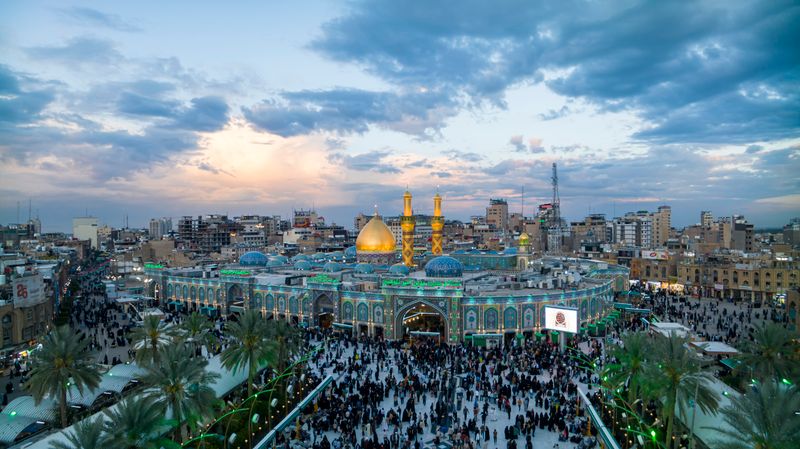
Quantitative data shared by the governor highlights the scale of the municipal challenge in Karbala: the province faces a particularly heavy waste management burden during the annual Arbaeen pilgrimage, a period during which the province removes more than 750,000 tons of waste. Integrating automated underground collection across 17 areas forms part of Karbala’s strategy to modernize urban sanitation and manage high-volume waste generation sustainably.
Frequently Asked Questions (FAQ)
Where is the first smart waste collection system in Iraq being deployed?
The system is being rolled out in Karbala province, where authorities have approved its implementation across 17 areas. Official approvals have also been secured to use the system in new cities and investment housing complexes.
Which institutions and companies developed the project?
The system was introduced by Iraq’s National Investment Authority in cooperation with the Ministry of Environment and the Spanish Embassy in Baghdad, with technical support from the Al-Maher Economic Group and representatives of the Spanish company URD.
How does the underground waste collection network function?
Residents dispose of waste through designated openings inside their homes. The waste travels through underground pipes to a transfer station, where it is sorted by type: recyclable materials are sent to recycling facilities, while other waste is processed at plants to generate energy.
How much waste does Karbala remove during the annual Arbaeen pilgrimage?
According to Karbala Governor Nassif Jassim Al-Khattabi, the province removes more than 750,000 tons of waste during the annual Arbaeen pilgrimage.
