





If you like our site, mark us as a preferred source on Google — so you’ll see our articles more often in search!
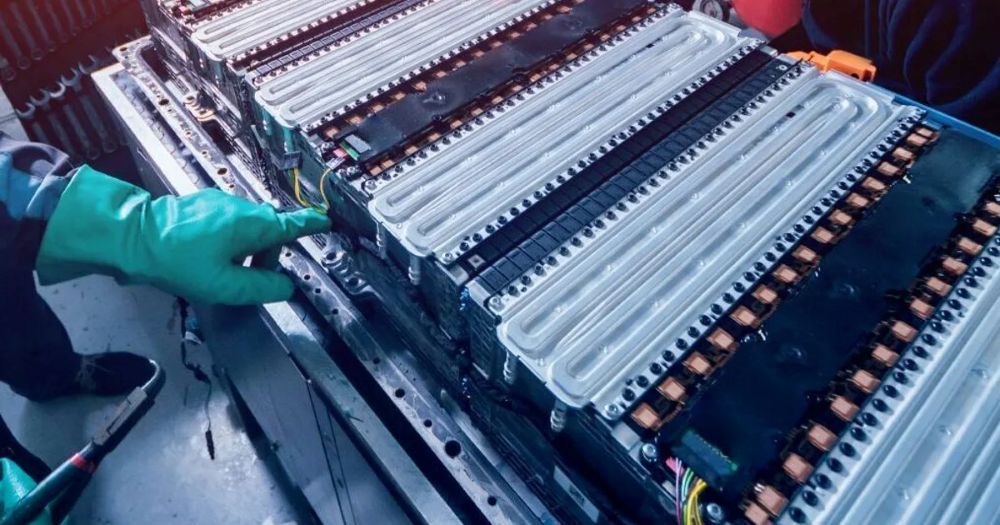
★Mark us as a preferred sourceUS battery recycling has spent years working around rules written long before the lithium-ion era. On 15 September 2026, the US House of Representatives passed three bills by voice vote on a bipartisan basis, all aimed at promoting the domestic recovery and recycling of critical minerals — including from end-of-life lithium-ion batteries (LIBs).
One clarification up front: these are not yet law. All three were introduced on 9 July 2026, considered by the House Energy and Commerce Committee, and sent to the Senate after the floor vote — GovInfo records the Senate referral of H.R. 9616 on 16 September 2026. They only become law if the Senate passes them and the President signs. The industry still treats the vote as a milestone, because one of the bills would correct a long-criticised regulatory flaw that imposes real physical costs on recyclers — with no environmental benefit whatsoever.
The two-yard absurdity built into US battery recycling
The most consequential bill is H.R. 9615, known as the BRACE Act (Battery Recycling for America’s Competitive Economy), introduced by Rep. Mariannette Miller-Meeks (R-IA-1). To understand what it fixes, you first have to see the problem.
The foundation of US hazardous waste law is RCRA (the Resource Conservation and Recovery Act). One of its provisions effectively forces companies processing lithium-ion batteries to split their operations across two non-adjacent sites:
- one site may only store the batteries ahead of processing, and operates without a hazardous waste permit under the lighter “universal waste” rules;
- a second, nearby but physically non-adjacent site does the actual recycling, and must receive the material “just in time” so that it too avoids triggering a hazardous waste storage permit.
There is no environmental logic to this split. What it produces is extra cost, complicated logistics and — most importantly — increased transport and handling risk. Every transfer, every lift onto a truck is another opportunity for a damaged cell to go into thermal runaway. Anyone familiar with fire statistics in the waste sector knows this is not a theoretical concern: lithium batteries ending up in municipal waste are the household-side version of the same problem, and sorting plants are now deploying AI-based systems to pull stray cells out of the stream.
The BRACE Act’s fix is narrow and technical. Under the bill text, in place of the requirements in 40 CFR 273.60(a), a destination facility that stores lithium-ion batteries prior to recycling them would instead follow the rules for a large quantity handler of universal waste. In plain terms: the recycler could store incoming batteries on its own site, under the same conditions that apply to storage-only facilities, without a hazardous waste permit. Same rulebook, one location — fewer journeys, fewer transfers, less risk.
A mandatory EPA rulemaking within 18 months
The bill goes further. It would direct the US Environmental Protection Agency (EPA) to issue a rule within 18 months of enactment revising the universal waste requirements for lithium-ion batteries. That rule could:
- make the interim correction above permanent;
- tailor storage requirements specifically to lithium-ion chemistries;
- close gaps in current safety requirements;
- introduce further changes that support recycling while protecting human health and the environment.
It is worth pausing here. Industry’s reaction has been cautiously positive, and for good reason: the BRACE Act is compromise legislation. It delivers genuine short-term relief while triggering an agency rulemaking that could bring more relief — or could impose stringent new requirements, for example around fire risk. The sector is essentially trading a small certain gain for a larger uncertain bet.
The EPA has in fact been working on such a rulemaking since late in the Biden Administration. The federal regulatory agenda lists the lithium battery and solar panel item under RIN 2050-AH32, and on that schedule the proposal should already have been published. The agency does not yet appear to have submitted it to the White House Office of Management and Budget for review — which suggests a draft for public comment is unlikely before early 2027 at the earliest.
The state preemption question: a 1996 law that stalls reform
The BRACE Act’s third section runs under the heading of “technical updates”, but it is arguably the most significant in practice. Section 104(a) of the 1996 Mercury-Containing and Rechargeable Battery Management Act states that lithium-ion batteries are to be regulated under the original 1995 universal waste rule, notwithstanding any state or local law.
That wording creates two problems. First, it casts doubt on whether the EPA can amend the 1995 rule at all. Second, it is unclear whether any amendment would be adopted by the 49 states that now run their own authorised hazardous waste programmes in lieu of the federal RCRA programme. The bill would resolve this by specifying that the revised universal waste rules preempt state law.
For a European reader this is a familiar dilemma with the sign reversed: here the problem is not a lack of harmonisation but uneven enforcement. The EU battery regulation applies directly in every member state — and strengthening the Hungarian enforcement side is one reason a new national environmental authority is being established from 2027.
The other two bills: contaminated sites and a national strategy
H.R. 9616, the EMRTAI Authorization Act (Environmental Monitoring and Remediation Technology Assessment Initiative), gives statutory authority to a research programme. It was introduced by Rep. August Pfluger (R-TX) with Rep. Greg Landsman (D-OH). Under it, the EPA would investigate, evaluate and support processes, methods and systems that both identify sources of critical materials at contaminated sites (contaminated media and solid wastes) and enable their recovery.
The bill defines its terms precisely. A critical material is any non-fuel mineral, element or substance that the Department of Energy determines carries a high supply chain disruption risk and serves an essential function in energy technologies, plus any mineral designated as critical by the US Geological Survey. Three criteria govern awards: how far the assistance strengthens national security through domestic critical material supply chains, how far it supports remediation of contaminated sites — especially those on the Superfund National Priorities List — and how far it protects human health and the environment. Assistance is open to companies, state, local and Tribal government entities, and nonprofit organisations.
The scale is deliberately modest: ten years, capped at $10 million per fiscal year, with no single grant recipient receiving more than $3 million. This is seed funding, not industrial intervention — but its logic matches what European research keeps finding: the volume of critical raw materials sitting in existing waste streams dwarfs what we actually recover.
H.R. 9617, the CHARM Act (Coordinating and Harnessing America’s Recovery of Minerals), would add a new Section 2009 to Subtitle B of the Solid Waste Disposal Act (42 U.S.C. 6911 et seq.), directing the EPA Administrator, in consultation with other federal agencies, to develop and carry out a National Critical Mineral Recovery Strategy. It was introduced jointly by Rep. Gary Palmer (R-AL-6) and Rep. Paul Tonko (D-NY-20), ranking Democrat on the Environment Subcommittee, and reported out of Energy and Commerce by 47-0.
The sponsors singled out electronic waste, legacy mine sites and coal ash as target streams. The strategy would map both the opportunities for expansion and the legal, technological and other barriers in the way, with the EPA reporting to Congress every two years. The Congressional Budget Office estimated the cost at about $1 million over 2026-2031, subject to appropriations, with no change in direct spending or federal revenues. Notably, the CHARM Act creates no new obligation for companies or consumers: it is a coordination instrument, not a collection mandate.
What it means from a European perspective
The first lesson is the price of regulatory friction. The two-site arrangement is a textbook case of a rule whose letter drifted away from its purpose and became pure overhead. European experience shows the same thing from another angle: research indicates that recycling EV batteries is currently economically unviable, with transport costs driven by strict safety requirements among the biggest cost items. Regulation has to target actual risk, not paper compliance.
The second is sequencing. The US is now starting to sort out what the EU settled in 2023: the EU battery regulation sets uniform collection rates, recycling efficiency targets, material recovery quotas and, from 2027, a digital battery passport. In America, extended producer responsibility is instead being built state by state, from the bottom up. The European model creates legal certainty faster; the American one experiments more flexibly. Which yields more recovered lithium will be settled over the next five years.
The third is competition. All three bills rest on the same recognition: recovering critical minerals is no longer an environmental question but one of supply security and industrial policy. The sponsors say so openly — Palmer justified his bill by pointing to dependence on China. The same logic is driving new lithium recovery capacity in Europe — Germany’s Accurec lithium recovery plant, for instance — and it sits behind the amendment of the European waste list that clarified the classification of “black mass”, the shredded battery fraction. The material itself moves globally; what matters is which continent can process it most effectively. The technology side is advancing quickly, from closed-loop industrial processes to very low-chemical laboratory methods — regulation often lags behind.
Finally, the process itself is worth noting. A bipartisan environmental package passed by voice vote, backed 47-0 at committee, is a rarity in American politics today. That critical minerals were the subject to achieve it says a good deal about where this issue now sits on the priority list.
What happens next? The three bills are before the Senate. If they pass there and are signed into law, the EPA will have 18 months to deliver substantive rulemaking. Until then, it is worth watching the agency’s existing universal waste rulemaking covering lithium batteries and solar panels — that is where the real detail will be decided.
Frequently asked questions about the new US battery recycling bills
Are these bills already law?
No. The House passed the three bills on 15 September 2026 and they went to the Senate — GovInfo records the Senate referral of H.R. 9616 on 16 September. They only become law if the Senate passes them and the President signs. Until then the existing US rules stand, so recyclers must continue operating under current RCRA requirements.
Why does US battery recycling currently require two sites?
Because of a provision in the existing RCRA rules. One site may only store batteries, operating without a hazardous waste permit under lighter conditions, while a separate facility receives the material “just in time” for processing so it also avoids a storage permit. The arrangement delivers no environmental benefit but adds cost, logistical complexity and transport risk.
What would the BRACE Act require of the EPA?
The bill would direct the EPA to issue a new rule on universal waste requirements for lithium-ion batteries within 18 months of enactment. That rule could make the interim fix permanent, tailor storage requirements to lithium chemistries and close safety gaps. It could equally introduce stricter requirements, for example on fire risk.
How does this compare with EU regulation?
The EU adopted a directly applicable battery regulation in 2023, setting numerical collection and material recovery targets and introducing a digital battery passport from 2027. In the United States, producer responsibility is being built state by state, and federal rules are only now catching up with the technology.
Does this affect Hungarian recyclers directly?
Not directly — the EU battery regulation governs operations in Hungary. Indirectly it matters, because black mass and battery waste trade on a global market, so expanding US processing capacity influences feedstock availability and pricing for European plants.
Official sources
- H.R. 9615 (BRACE Act), full text — Congress.gov: https://www.congress.gov/bill/119th-congress/house-bill/9615/text
- H.R. 9615 as passed by the House — GovInfo: https://www.govinfo.gov/app/details/BILLS-119hr9615eh
- H.R. 9616 (EMRTAI Authorization Act), Senate referral — GovInfo: https://www.govinfo.gov/app/details/BILLS-119hr9616rfs
- H.R. 9617 (CHARM Act), as reported — docs.house.gov: https://docs.house.gov/billsthisweek/20260914/h9617_rh_xml.pdf
- CBO cost estimate for the CHARM Act: https://www.cbo.gov/system/files/2026-09/hr9617.pdf
- EPA’s pending rulemaking (RIN 2050-AH32) — reginfo.gov: https://www.reginfo.gov/public/do/eAgendaViewRule?pubId=202510&RIN=2050-AH32
Background analysis: The National Law Review / Beveridge & Diamond PC (17 September 2026)
