




If you like our site, mark us as a preferred source on Google — so you’ll see our articles more often in search!
★Mark us as a preferred sourceOver the past year and a half, the Lithuanian capital of Vilnius has faced severe environmental and infrastructural challenges. Stemming from a massive fire in 2025, the current situation now threatens to become a state-level emergency, as tens of thousands of tons of unprocessed garbage have accumulated in and around the city, causing significant financial and ecological damage.
In short: The Vilnius waste crisis began after a major waste processing plant caught fire in 2025, leaving the region’s 700 tons of daily garbage without proper treatment. By mid-2026, over 20,000 tons of unprocessed waste had piled up. The contract with the facility operator was terminated, while locals suffer from foul odors and nighttime noise. Restoration could take years and cost residents an estimated 150 million euros over the next decade.
Origins of the Vilnius waste crisis
The root of the Vilnius waste crisis dates back to April 27, 2025, when a severe fire broke out at the city’s primary waste processing plant. This facility was a crucial element of the capital region’s infrastructure, responsible for receiving and sorting mixed waste from the entire area. A year and a half has passed since the incident, yet the plant has not returned to normal operations.
The operating company, Energesman, initially committed to rebuilding the facilities and restarting the sorting lines at its own expense. However, the firm failed to fulfill this promise due to a lack of funds. As a result, waste that the plant could no longer handle began accumulating on the premises. Given that the Vilnius region produces approximately 700 tons of garbage every day, the idle plant caused this mass to grow continuously.
Environmental and public health threats
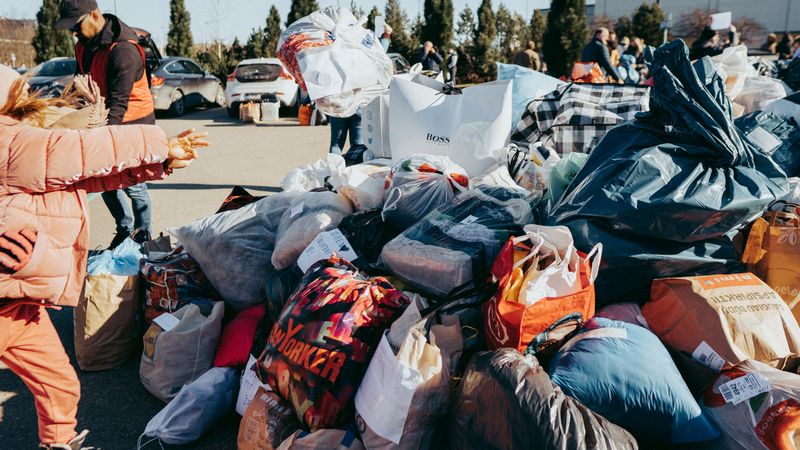
By July 2026, the volume of untreated waste exceeded 20,000 tons. The garbage filled the plant’s buildings, open storage yards, and even the edges of access roads. An unbearable stench rose from the accumulated piles, spreading across the city. Environmental experts identified the primary concern as the risk of a secondary fire, as large amounts of highly flammable materials, including used tires and oil residue barrels, were stored on the site.
When the main facility reached maximum capacity, the garbage was secretly transported to residential areas, specifically Pramonės street in the Naujoji Vilnia (eastern Vilnius) district. This alternative site was officially permitted only for construction debris. Local residents continuously reported foul odors and noise to the authorities. While officials initially claimed it was a temporary solution, the mountains of garbage continued to grow. Following intense public protests, municipal authorities ordered the removal of the waste, and clean-up operations began on August 31, 2026. However, this introduced new challenges: trucks operated exclusively at night, and the undisclosed disposal methods generated foul-smelling smoke that affected nearby schools, kindergartens, a disability center, and the local river’s water catchment area.
Legal disputes and political fallout
The crisis quickly escalated into legal battles. On July 10, 2026, the Vilnius County Waste Management Center (VAATC) unilaterally terminated its contract with Energesman. The head of the center explained that all avenues for dialogue had been exhausted, as the company failed to meet its obligations despite repeated warnings. In response, the operator filed two lawsuits attempting to overturn the termination. The municipality’s leadership publicly criticized the company for essentially holding the city hostage.
An investigative report published in September revealed that the local municipality also bore responsibility for the situation. City officials had long been aware of the operator’s poor financial standing yet delayed taking decisive action. Complicating matters further, Energesman won a 14 million euro modernization tender from VAATC in May 2026. However, officials blocked the advance payments, suspecting the funds would be used to cover the company’s outstanding debts. Although Lithuania has seen immense success in other waste management sectors such as its deposit return system, the capital’s infrastructural shortcomings have highlighted deep systemic vulnerabilities.
Future consequences of the crisis
Currently, the situation is stabilized only on paper. The Naujoji Vilnia site is closed, but the original processing plant remains non-operational, and court proceedings are ongoing. The foul smell persists, particularly in the Gariūnai district, where eastern winds carry the scent of rotting waste. Authorities plan to increase the capacity of the Vilnius Cogeneration Power Plant in October, but the process is hindered by the rapid clogging of the incinerator’s filters.
The national government has intervened, with discussions regarding the declaration of a state-level emergency. While the declaration is paused for now, crisis management officials note it remains a distinct possibility. Experts estimate that the crisis will last at least two more years, placing a heavy financial burden on the public. Parliamentary calculations suggest residents will overpay by at least 150 million euros for waste processing over the next 10 years. In the meantime, garbage is being processed via two mobile sorting lines. Due to technical limitations, these are less effective at recovering recyclable materials, increasing the load on landfills and incinerators, and heightening the risk of air, soil, and water pollution.
FAQ
What caused the current Vilnius waste crisis?
The crisis originated from a massive fire on April 27, 2025, at the city’s primary waste processing plant. The incident halted operations, leaving the region’s 700 tons of daily waste without proper treatment.
How much garbage has accumulated?
By July 2026, more than 20,000 tons of unprocessed waste had piled up at the main facility and unauthorized temporary storage sites across the city.
How does this situation impact local residents?
Residents have been suffering from unbearable odors, nighttime noise from transport trucks, and the illegal dumping of waste in residential districts. The crisis poses severe health and environmental risks, including potential water and soil contamination.
What will be the financial cost to the public?
Experts and parliamentary figures estimate that the prolonged crisis and increased processing costs will force residents to overpay by at least 150 million euros over the next decade.
Source:
