




If you like our site, mark us as a preferred source on Google — so you’ll see our articles more often in search!
★Mark us as a preferred sourceFor years, the circular model was merely explained as an alternative to the traditional “take, make, and dispose” logic. Today, however, that definition falls too short. In an era marked by raw material shortages, rising costs, and increasingly strict regulations, industrial players stand at a crossroads: how can they continue to grow without relying on a model that treats finite resources as if they were infinite?
In its simplest definition, the circular economy represents a new industrial logic. It is a comprehensive method of designing, manufacturing, using, and recovering products, materials, and processes in a way that allows them to generate true value again and again. In a context defined by unprecedented pressure on raw materials, soaring operational costs, new rigorous regulatory demands, and a massive surge in market appetite for sustainable solutions, companies are forced to act. This is where real transformation begins.
The circular economy as the new foundation of industrial logic: from waste to resource
When a company asks what the circular economy truly means, the answer must go far beyond simple recycling. The concept is based on a deceptively simple yet profoundly transformative idea: every material has more than one life—provided it is properly designed, managed, and recovered.
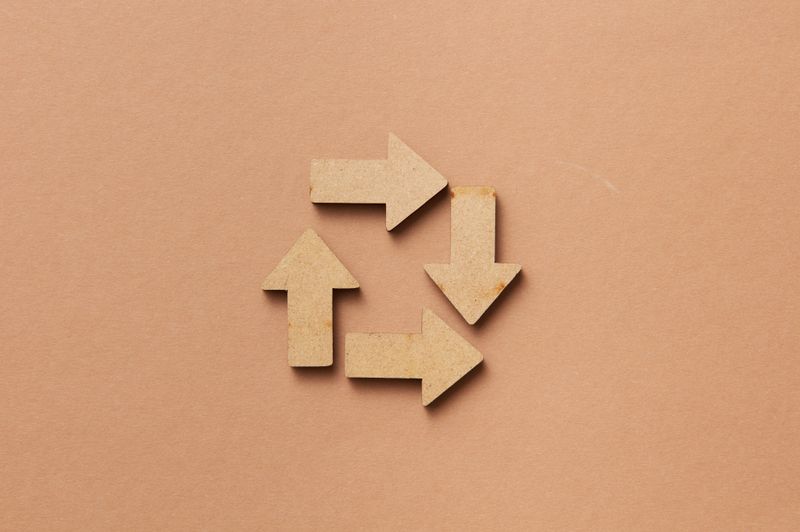
In practice, this means no longer viewing waste as the end of a linear process, but rather understanding it as the starting point for a new opportunity. The logical progression is built as follows:
-
A product can be fully reused.
-
A specific part can be repaired.
-
A material can once again become a raw input.
-
A process can be optimized to drastically reduce scrap, energy usage, financial costs, and environmental impact.
Circularity entirely shifts the fundamental question. The central issue is no longer just what we do with a product when its useful life ends; rather, it is how we design it from the very first moment so that it lasts longer, circulates more efficiently, and ultimately creates far more value for everyone involved.
Regulations and the new dimension of competitiveness
Today’s industries are operating in a highly demanding and continuously evolving environment. Europe has significantly strengthened its regulatory framework to forcibly accelerate the transition toward more sustainable, highly efficient, and circular products.
The European Union’s Ecodesign for Sustainable Products Regulation establishes a brand new, stringent framework to anchor strict requirements concerning product durability, repairability, reusability, resource efficiency, recycled material content, pure recyclability, and the mandatory availability of comprehensive product information. Simultaneously, national initiatives, such as the Spanish Strategy for Circular Economy (“España Circular 2030”), set a clear roadmap to advance toward much more efficient production and consumption models. This is further supported by the Spanish Law 7/2022 on Waste and Contaminated Soils for a Circular Economy, which actively strengthens the foundational principles of waste prevention, reuse, recycling, and ultimate recovery.
This strict regulatory context confirms something that the industrial sector is already beginning to accept as fact: circularity is no longer a reputation-driven, optional luxury, but has strictly become a mandatory market condition. Customers demand absolute traceability. Regulators require elevated accountability. Investors closely monitor ESG (Environmental, Social, and Governance) metrics. Supply chains desperately need operational stability. Discussing circularity in business, therefore, means talking directly about core competitiveness, structural resilience, and long-term adaptability.
The role of ecodesign: better design for a sustainable future
Talking about sustainability inevitably means talking about design. A vast majority of a product’s environmental impact is definitively decided long before it is even manufactured. The drawing board is where critical choices are finalized:
-
What specific material is selected.
-
How the overall weight is optimized.
-
What the expected operational lifespan will be.
-
How it can be repaired in case of failure.
-
How its individual components can be safely separated in the future.
-
What happens when the primary cycle of usage concludes.
-
How the item can be effectively recovered and reintroduced into the system.
Ecodesign allows companies to make vastly superior decisions right from the start. When these crucial decisions are deeply linked with engineering, manufacturing, logistics, waste management, recycling, and reintroduction, circularity ceases to be just an idea—it officially becomes a functional, integrated system.
Quantitative shift: From the traditional 3Rs to the complex 7R model
For years, the circular economy was simply explained through the well-known 3R rule: reduce, reuse, and recycle. These three basic principles fundamentally helped shift the initial understanding of global consumption, waste, and resource utilization.
However, today’s modern industry demands a much broader perspective. Speaking of circularity today requires leaping to the 7R model—an advanced approach that incorporates critical new decisions before, during, and after a product’s useful life. The elements of the 7R framework are:
-
Redesign (neu gestalten)
-
Reduce (reduzieren)
-
Reuse (wiederverwenden)
-
Repair (reparieren)
-
Renew/Refurbish (erneuern)
-
Recover (zurückgewinnen)
-
Recycle (recyceln)
This profound quantitative and qualitative evolution enables the massive shift from a linear management model focused solely on the end of the cycle to an anticipatory strategy that starts much earlier: directly in the initial design phase, material selection, and primary production processes.
Practical industry example: The RTS system by Erum Group
The practical mechanics of circularity are best understood when observed through a concrete industrial product. In the retail sector, a clothes hanger might appear to be a very simple element. But when it is managed on a massive scale, it becomes the absolute key to understanding exactly how an industrial circular business model operates.
In Erum Group’s RTS (Return to Source) system, hangers used in the retail sector are systematically collected, transported, and rigorously sorted based on their physical condition. From that point, every single unit follows the specific path that preserves the highest possible value. The quantitative logic functions as follows:
-
Hangers in good condition: Reuse. The hanger returns directly to the circular system, completely avoiding the manufacturing of a new one.
-
Hangers needing intervention: Repair or Refurbish. Its functionality is restored, successfully extending its overall lifespan.
-
Hangers at the end of their life: Recycle. The material is meticulously transformed into a raw resource for brand new processes.
-
Unfit for direct use: Technical classification. The best possible destination is determined to ensure maximum retained value.
This precise process perfectly summarizes the logic: preventing a product from automatically becoming waste, extending its lifespan to the maximum, and aggressively feeding value back into the system instead of losing it completely.
The dawn of the new industrial economy
This systemic shift effectively impacts every sector: retail, automotive, packaging, household goods, traffic safety, agrivoltaics, logistics, and waste management. While every single industry naturally has its own unique challenges, they all share the exact same compelling need: to utilize resources far more intelligently and build robust, highly efficient, and undeniably future-proof business models.
“Rethinking the circular era” encapsulates a distinct way of working: looking back at problems that already seemed solved. Can a product last even longer? Can a raw material have another life? Can the supply chain generate less impact while generating more competitiveness? The answers define the new circular era, where industries no longer just compete to produce more; they compete to produce better.
FAQ
What is the circular economy in the industry?
The circular economy in the industry is a new operational logic where products, materials, and processes are strictly designed, manufactured, and recovered to continuously create value, rather than automatically becoming waste after a single use.
What is the core difference between the 3R and the 7R models?
While the traditional 3R model only focused on reducing, reusing, and recycling, the complex 7R model is expanded to include redesigning, repairing, renewing, and recovering, thus starting the sustainability process right at the design phase (ecodesign).
How is the European Union regulating circularity?
The EU is heavily tightening expectations through measures like the Ecodesign for Sustainable Products Regulation, which sets mandatory requirements regarding product durability, general repairability, and total resource efficiency.
Sources and References:
-
Original Article: Erum Group – Was ist die Kreislaufwirtschaft und warum sie in der Industrie nicht mehr optional ist
-
Official EU Hub: European Council explanation on Circular Economy
