




If you like our site, mark us as a preferred source on Google — so you’ll see our articles more often in search!
★Mark us as a preferred sourceWhen an association representing landfill operators comes out in favour of ending part of what landfills do, it is worth paying attention. The position published by the European Landfill Association (ELA) on 25 August 2026 does exactly that: it states that the landfilling of biodegradable waste without treatment cannot continue, and backs the European objective of phasing the practice out. The statement responds to the July revision proposal for the EU Emissions Trading System — and it repays close reading from a Hungarian perspective.
Why the landfilling of biodegradable waste is a problem
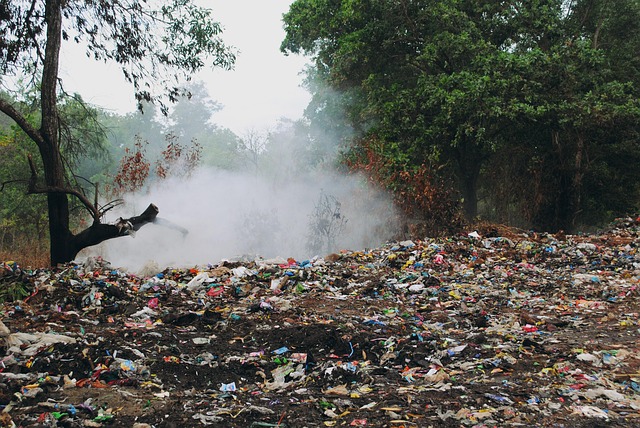
In a landfill, organic matter decomposes without oxygen, and the main product of that process is methane. In its own statement, ELA stresses that methane’s climate impact is roughly twenty-eight times that of carbon dioxide — which makes landfill methane not a secondary line item in the waste sector’s climate footprint, but the dominant one.
The association’s logic is straightforward. If methane comes from landfilled organic matter, then preventing the emissions starts with keeping that matter out of the landfill in the first place. Anything that can be collected separately, composted, digested into biogas or otherwise treated should not be deposited. This is essentially the waste hierarchy restated in climate terms.
What the Commission proposed, and how ELA responded
On 17 July 2026 the European Commission tabled its proposal to revise the EU ETS, setting the legal framework for the system’s fifth phase, running from 2031 to 2040. Two elements matter most for the waste sector:
- Municipal waste incineration enters the ETS from 2031, phased in gradually: operators must surrender allowances for 25% of their verified emissions in 2031, 50% in 2032, 75% in 2033 and 100% from 2034. Member States may opt out temporarily until 2035 if they meet at least two of three conditions — an equivalent national carbon tax, being on track for recycling targets, and being on track for landfill targets.
- Landfills do not enter the ETS. Instead, monitoring, reporting and verification (MRV) obligations would apply to non-hazardous waste landfills, with a review clause on whether the system could later be extended to landfilling itself.
ELA supports the methane monitoring element, arguing that reliable and comparable data will help identify where large quantities of untreated biodegradable waste are still being landfilled.
It attaches one important caveat, however. Most of the facilities its members operate are not landfills receiving untreated municipal waste: inert waste landfills, hazardous waste landfills and many non-hazardous landfills have fundamentally different methane-generation profiles. ELA therefore asks for proportionate, risk-based monitoring focused where methane emissions can reasonably be expected. Hartmut Haeming, ELA’s president, argues that Europe needs reliable data but also a level playing field that keeps untreated, recyclable waste out of landfills.
That is a convenient meeting point between industry self-interest and technical logic — but it does not invalidate the argument.
The methane that can no longer be prevented
The strongest idea in the statement concerns waste already in the ground. ELA argues that methane from waste deposited in the past cannot be prevented retrospectively and must instead be appropriately managed. FEAD, the European waste management association, adds that there is currently no standardised method for measuring and quantifying diffuse methane emissions — a serious practical obstacle to introducing a reporting obligation.
Together, these two points define the real room for manoeuvre. Looking forward, the intervention point is the input: what goes into the cell. Looking back, it is gas capture, oxidising cover layers and the quality of aftercare. That distinction is where the Hungarian situation becomes concrete.
Why this hits Hungary particularly hard
Hungary is one of the few EU waste systems where landfilling remains the dominant treatment route. The numbers speak for themselves.
The landfill rate. According to the baseline data in Hungary’s National Waste Management Plan 2021–2027, 49.6% of municipal waste generated in 2018 went to landfill. European Environment Agency figures indicate the share rose further in 2020, to around 54%. In EU terms this is exceptionally high: Eurostat put the EU average landfill rate at 22.5% in 2024, and in 2023 eleven Member States were already below 10% — the level the Landfill Directive sets for 2035.
A derogation that buys time, not a solution. Hungary meets the derogation criteria, so it must reach the 10% landfill ceiling by 2040 rather than 2035. That is five extra years of legal headroom — and zero extra years of climate physics. Methane generation from organic matter landfilled during the 2020s peaks in the 2030s and 2040s, regardless of which deadline appears in the legislation.
What actually goes into the cell. Hungarian mixed municipal waste is estimated to be roughly half biodegradable if paper is included, with kitchen and garden waste forming the largest fraction. Hungary’s statistical office recorded 4.1 million tonnes of municipal waste generated in 2023, with one third of the collected volume gathered separately. Separate collection of bio-waste has been mandatory since 31 December 2023, but the system is not yet operating at a level that would meaningfully cut the organic load reaching landfills.
The large number of landfills — but not in the sense one expects. Hungary went through major consolidation in the two decades after 2000: at the end of 2008 there were still 132 municipal landfills due to close by the EU deadline of 15 July 2009, and several hundred abandoned sites were rehabilitated under EU co-financed programmes. Most facilities operating today are modern regional landfills with engineered containment and gas collection.
But that also means most of Hungary’s landfill stock is not operating — it is closed. And those are precisely the sites that fall into ELA’s category of emissions that cannot be prevented retrospectively. A cell opened in the 1980s without engineered containment, long since rehabilitated, keeps generating methane for decades even if no further waste is ever delivered. For this stock there is currently no measurement database in Hungary capable of serving the MRV logic set out in the Commission’s proposal.
The Hungarian angle is therefore twofold. On one side there is current landfilling, exceptionally high by EU standards, whose organic content directly determines future methane emissions. On the other there is a large, fragmented and largely closed landfill stock whose methane output is mostly invisible in the statistics, because it is modelled rather than measured.
Incineration gets more expensive, landfilling does not — where’s the trap?
Here lies the most contested point in the proposal, and it bears directly on Hungary.
Under the proposal, waste incineration is progressively brought under carbon pricing from 2031, while landfilling is not: landfills face only a reporting obligation, which expert analyses put at 2034 onwards. In other words, in the very year incinerators must surrender allowances for all of their verified fossil emissions, landfills will still only be filing data.
Industry players — including the waste-to-energy sector and Clean Air Task Force — warn precisely about this. If the cost of incineration rises while the cost of landfilling stays flat, some residual waste could be pushed back to landfill, increasing methane emissions and undermining decades of progress on the waste hierarchy.
In Hungary this risk is not theoretical. A single large municipal waste incinerator operates, in Budapest, with capacity of around 420,000 tonnes a year; the overwhelming majority of residual waste already goes to landfill. If relative costs shift against incineration, the very percentage points that would bring the landfill rate down become harder to win.
There is a further, less discussed dimension. The conditions for a national opt-out on incineration include being on track for recycling and landfill targets. Hungary lags on both: the European Commission’s early warning assessment found no meaningful improvement in municipal waste recycling over recent years, with a significant share of waste still landfilled. That implies the Member State most in need of flexibility may be the one that fails to qualify for it — unless it can meet the equivalent-national-carbon-tax condition instead. This is a reading of the proposal rather than an official finding, but it is a conclusion the professional debate will struggle to avoid.
What could be done?
ELA’s position calls for rapid implementation of the Landfill Directive’s requirements in all Member States, and for appropriate standards within the BAT framework for landfills. Seen from Hungary, three priorities follow:
- Tighten the input. Genuinely extend separate bio-waste collection, expand mechanical-biological treatment capacity, and raise the landfill levy to a level that makes pre-treatment economically more rational than disposal.
- Manage the existing stock. Review gas capture at closed and rehabilitated sites, and where landfill gas volumes no longer support energy recovery, apply oxidising cover layers or flaring.
- Measure rather than model. If an EU reporting obligation arrives in 2034, preparation has to start now. The absence of an agreed measurement methodology is not grounds for delay — it is an argument for pilot projects.
Summary
ELA’s position is not revolutionary and does not aim to be. What it does is state plainly that landfilling organic waste is a closed chapter as a practice, while landfills retain a role in the safe disposal of material that cannot be recycled or otherwise recovered.
For Hungary, the real question is not whether we agree. It is what an EU reporting system will show in 2034 when it shines a light on the methane coming out of the national landfill stock — and how much time is left to change that picture before it does.

Landfilling of Biodegradable Waste: Frequently Asked Questions
Why would a landfill association support ending the landfilling of biodegradable waste?
Because most landfill methane comes from deposited organic matter, and the only way to prevent it is to restrict what goes in. ELA argues that landfills retain a role in the safe disposal of material that cannot be recycled or recovered — but not in accepting untreated biodegradable waste.
Will landfills be brought into the EU ETS?
Not under the Commission’s July 2026 proposal. Landfills would face monitoring, reporting and verification obligations, with a review clause on whether the system could later be extended to landfilling. Carbon pricing applies for now to municipal waste incineration, phased in from 2031.
What is Hungary’s landfill rate?
According to the National Waste Management Plan, 49.6% of municipal waste generated in 2018 went to landfill, and European Environment Agency data indicate the share rose to around 54% in 2020. The EU average was 22.5% in 2024, meaning Hungary’s figure is more than double it.
Why isn’t the 2040 derogation enough for Hungary?
Because the derogation moves the legal deadline, not the methane generation. Emissions from organic matter landfilled during the 2020s peak in the 2030s and 2040s, regardless of which year appears in the legislation. For climate impact, today’s landfilling decisions are what count.
What about methane from closed landfills?
Methane from waste deposited in the past cannot be prevented retrospectively, only managed — through gas capture, oxidising cover layers or flaring. Hungary has several hundred rehabilitated sites for which no measurement database currently exists that could serve an EU reporting system.
Sources: ELA Position on the EU-ETS 1 and monitoring methane for landfills, European Landfill Association, 25 August 2026 — European Commission EU ETS revision proposal, 17 July 2026 — FEAD, ESWET and Clean Air Task Force positions, July 2026 — Hungarian National Waste Management Plan 2021–2027 — Hungarian Central Statistical Office, Circular Economy, 2025 — Eurostat and EEA municipal waste data
