




If you like our site, mark us as a preferred source on Google — so you’ll see our articles more often in search!
★Mark us as a preferred sourceA fresh European report warns that the European Union’s upcoming Circular Economy Act (CEA) risks entrenching the use of toxic incinerator waste in roads, buildings, and public infrastructure unless strict safeguards are introduced. The press release by Zero Waste Europe and its underlying study quantify the massive volume of residues from waste incinerators, while drawing attention to the severe and long-term risks posed by hazardous substances leaching into the environment.
“A Toxic Legacy” and Incinerator Residues
The publication titled “A toxic legacy: Bottom ash in Europe’s circular economy” finds that incinerator bottom ash (IBA)—the solid residue left after burning municipal waste—contains heavily polluting, hazardous components. These include heavy metals, persistent organic pollutants (POPs), PFAS (“forever chemicals”), and microplastics, all of which can gradually and inevitably leach into soil and water sources over time.
An Annual Burden of 12 Million Tonnes and Recycling Practices
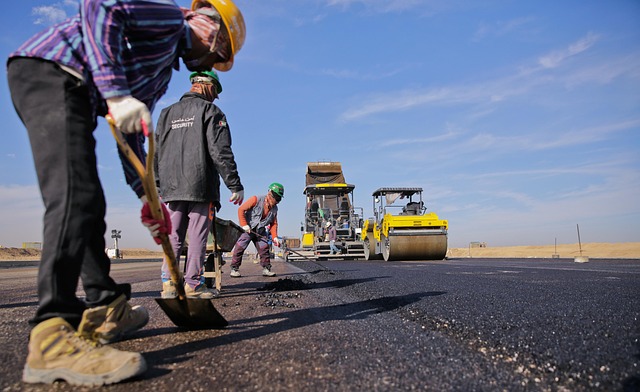
In light of the figures, the scale of the problem is far from negligible: European municipal waste incinerators generate more than 12 million tonnes of IBA every year. The press release highlights that while around half of this quantity is currently disposed of in controlled landfills, the remaining massive portion is already widely used across Europe in road construction, concrete, cement blocks, and other building and civil engineering applications.
This practice is facilitated by a fragmented and often weak European regulatory framework. The study also underscores the telling fact that the use of IBA in construction is primarily driven by avoiding high landfill disposal costs, rather than by any actual environmental benefits.
A Major Contradiction in the EU’s Environmental Agenda
The warning is particularly timely, as the European Commission is currently preparing its new Circular Economy Act (CEA), which officially aims to increase the use of secondary raw materials and boost circular material use rates. However, according to the report’s authors, without stronger safeguards from legislators (background documents for the law’s April 30 stakeholder event already explicitly referred to the recovery of metals and mineral fractions from incineration residues), the legislation could unintentionally accelerate the spread of toxic substances throughout the built environment.
Janek Vähk, Zero Pollution Policy Manager at Zero Waste Europe, spoke sharply regarding the phenomenon: “This is a major contradiction at the core of the EU’s circular economy agenda. We are increasing incineration capacity, generating hazardous residues, and then attempting to circulate those residues back into the economy through construction materials.”
Scientific Facts and Shortcomings in Current Regulation
Drawing on recent scientific evidence and comprehensive European case studies, the analysis points out key physical and regulatory shortcomings:
-
IBA is chemically unstable and continues to release contaminants over long timescales.
-
Existing testing methods systematically underestimate real-world environmental risks.
-
PFAS and microplastics are largely unregulated in current IBA applications.
-
Current industrial processing techniques cannot reliably remove these hazardous substances.
“If a material contains hazardous substances, it should not be used in roads, buildings or public spaces,” Vähk continues. “These residues should be properly contained, not dispersed throughout the environment. At present, controlled landfill remains the safest available option.”
Recommendations for the European Commission and Decision-Makers
Based on the paper’s findings, the report urges the European Commission—coinciding with a joint statement signed by more than 40 organizations (including Zero Waste Europe) addressed to Environment Commissioner Jessika Roswall—to ensure that circular economy policies are fully aligned with the objective of achieving a toxic-free environment.
The key policy recommendations are as follows:
-
Apply the precautionary principle strictly to incineration residues and do not incentivize the use of IBA.
-
Establish harmonized, EU-wide rules for the classification, testing, and long-term monitoring of incinerator bottom ash.
-
Ensure EU legislation fully addresses PFAS, microplastics, heavy metals, POPs, and other hazardous substances in incineration residues.
-
Prevent the spread of hazardous residues by prioritizing safe containment over their use in roads, buildings, and construction materials.
-
Recognize that waste incineration inherently generates hazardous residues, thereby avoiding policies that increase incineration capacity and bottom ash generation.
-
Ensure municipal waste incineration is fully included in the EU ETS to help reduce waste burning and the associated generation of hazardous residues.
References and Sources:
-
Original source: Zero Waste Europe Press Release (21 May 2026)
-
Official state/EU related link: Jessika Roswall – European Commission, Commissioner for Environment, Water Resilience and a Competitive Circular Economy Official Page
